
Original briefings. Zero spin.
Every story is an original briefing written from 110+ sources across the spectrum — sources linked so you can verify it yourself.
 energy
Low Interest (4/10)
Event date: September 1, 2026
energy
Low Interest (4/10)
Event date: September 1, 2026
SpaceX Preps Friday Starlink Launch as US Famine Tracker Stays Dark and China Hackers Hit Cisco Routers
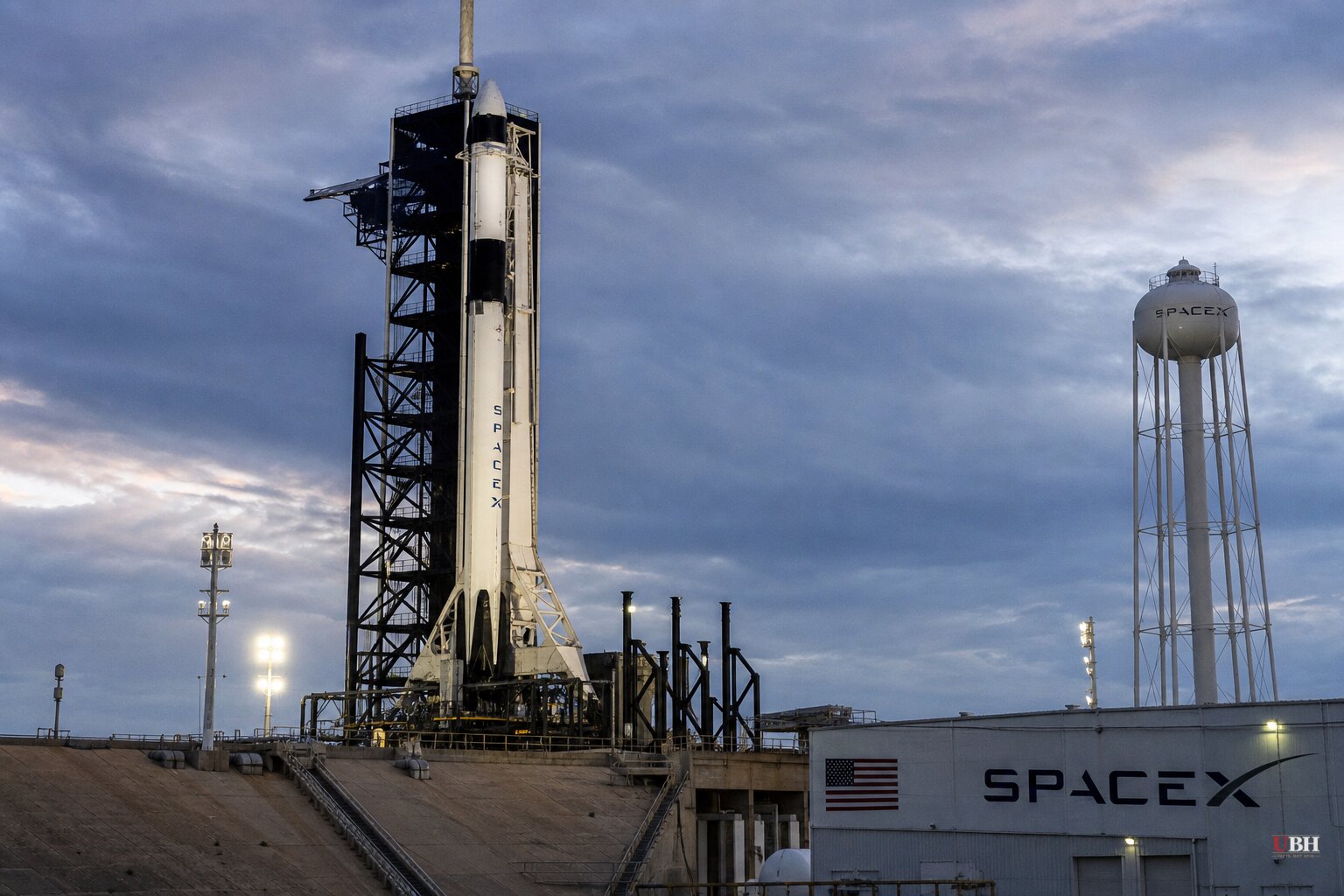
SpaceX Keeps the Pace Up
SpaceX plans to launch 27 more Starlink V2 Mini satellites Friday, September 4, aboard a Falcon 9 from Cape Canaveral Space Force Station, according to Tech Times. The launch window opens at 11:28 UTC (7:28 a.m. ET) and stays open until 15:28 UTC. The company's 103rd orbital flight of 2026 will also be its 686th overall.
The mission follows a nearly identical launch on September 1 from Vandenberg Space Force Base, also carrying 27 V2 Mini satellites, per Tech Times. Booster recovery for Friday's flight is expected on an Atlantic drone ship.
SpaceX has filed with the Federal Communications Commission targeting September 15 for Starship Flight 14, the first Starship mission licensed to deploy the next-generation V3 satellites, Tech Times reports. Each V2 Mini currently weighs roughly 525 kilograms in its optimized form and delivers about four times the throughput of the older V1.5 satellites it replaced. Tech Times reports the V3 satellite is designed to raise that capacity roughly tenfold. Friday's launch represents one of the final entries in a platform that's about to be retired.
A Famine Tracker Still Missing Somalia
While SpaceX builds out orbital broadband, a separate U.S.-funded satellite-and-data system meant to track hunger crises has gone quiet on the country that needs it most. NPR reports that FEWS NET, the Famine Early Warning System Network, has not updated its Somalia profile since before July 2026, despite an estimated 6.5 million people facing a worsening food crisis there, according to Jeremy Konyndyk, president of Refugees International and a former senior USAID official.
Somalia, Afghanistan, and Yemen were also dropped entirely from FEWS NET's August 14 "Peak Food Assistance Needs Outlook Brief," NPR reports. All three countries had aid funding cut by the Trump administration, even as all three continued to experience widespread food insecurity, according to NPR's reporting.
The State Department told NPR in a statement that FEWS NET's country-level reporting has always shifted "based on changes in need, policy priorities, access, cost-efficiency, and other factors." This frames the gap as a resource-allocation call rather than a cover-up. Konyndyk sees it differently, telling NPR: "If they allow FEWS Net to continue reporting, they're basically documenting the damage of their own decisions." The Rockefeller Foundation and former USAID staff have also objected to the pause, per NPR.
Both things can be evaluated on their own terms. The State Department's cost-efficiency argument is a real budget consideration for a government running trillions in deficits. Konyndyk's concern, that gutting the one tool that shows the consequences of aid cuts looks convenient for the people who made those cuts, is also fair on its face. Neither claim has been proven or disproven by an independent audit in the reporting reviewed here. What's confirmed is that the Somalia data gap is real and the funding cuts happened first.
China's Cyber Reach Grows
On the security side, the Epoch Times reports that cybersecurity firm Sygnia found China-linked hackers had hidden inside Cisco routers, stealing administrator credentials, recording network traffic, and using the compromised hardware to probe other high-value systems. Separately, the Department of Homeland Security has cited China-linked security cases, including visa fraud, biological-material smuggling, and alleged ties to the People's Liberation Army, as part of its rationale for a new student visa vetting rule ending open-ended status, according to the Epoch Times.
These are DHS's stated justifications for a policy change, not criminal convictions. No charges tied to the specific student-visa rationale are described in this reporting. Paired with the Cisco router intrusion, the pattern fits a broader theme conservatives have pushed for years: hardening U.S. networks and institutions against a strategic competitor that isn't playing by the same rules.
Europe's Plant-Health Satellite
On the science side, the European Space Agency's FLEX mission is scheduled to launch September 15 from Kourou, French Guiana, aboard a Vega-C rocket, according to Fraunhofer IOF and Phys.org. The satellite carries a spectrometer called FLORIS, built with silicon double-slit components manufactured in Jena, Germany, to precision tolerances of plus or minus one micrometer, according to Dr. Falk Kemper, the project's manager at Fraunhofer IOF.
FLORIS is designed to detect the faint fluorescence plants emit during photosynthesis, which indicates drought or heat stress before a plant visibly wilts or yellows. ESA says the mission will produce global vegetation-fluorescence maps at roughly 300-by-300-meter resolution.
What to Watch
Two dates fall within days of each other: SpaceX's FCC-filed target of September 15 for Starship Flight 14, and ESA's scheduled September 15 launch of FLEX. Whether either holds on schedule is worth monitoring. The open question is whether FEWS NET restores full Somalia reporting and whether the State Department's cost-efficiency rationale survives scrutiny once outside groups get a full accounting of what data went missing and why.
Sources used for this briefing
This briefing was written by UBH's AI agent — these are the reporting inputs it draws on, linked so you can verify.


