
Original briefings. Zero spin.
Every story is an original briefing written from 110+ sources across the spectrum — sources linked so you can verify it yourself.
 energy
Notable (5/10)
September 3, 2026 at 09:08 PM
energy
Notable (5/10)
September 3, 2026 at 09:08 PM
Scientists Remain Split on Whether the Gulf Stream Could Collapse, or Even Whether It's the Right Question
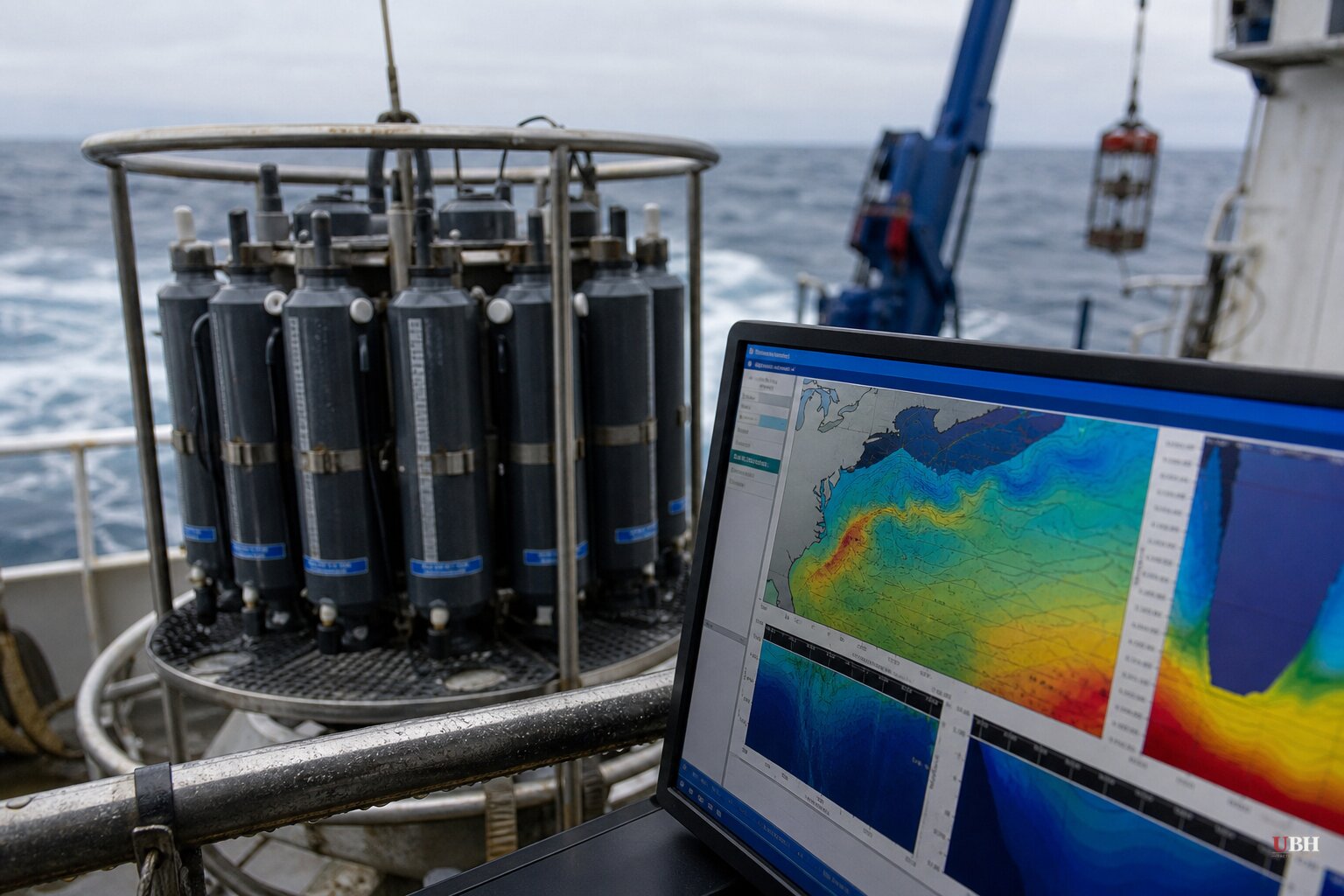
Ocean scientists remain divided over the fate of the Atlantic Meridional Overturning Circulation, the deep-water current system that includes the Gulf Stream. The short answer, according to the researchers studying it, is nobody knows for sure, and the scientists who study it most closely don't agree with each other.
The AMOC works like a conveyor belt. Warm surface water moves north through the Atlantic, cools at high latitudes, sinks to the seafloor, and flows back south at depth. The Gulf Stream is the visible, near-surface piece of that northward flow, but it's driven mainly by wind and the Earth's rotation, not by the deep circulation. The Gulf Stream itself would keep flowing even if the AMOC weakens significantly, according to reporting on the science by deepseareporter.
Researchers do agree on one point: if the AMOC does weaken substantially, the climate effects would be global, and especially severe in northern Europe. "If the AMOC weakens, the climate will be affected globally, not just in northern Europe. I think all researchers agree on that," says Léon Chafik, an oceanographer and climate researcher at Stockholm University. Climate models suggest Sweden and other Nordic countries would see notably colder winters under a major slowdown.
On almost everything else, they disagree, starting with what exactly is being measured. There's no single agreed mathematical definition of the AMOC. Some researchers track it at high latitudes, others at low latitudes, and the circulation behaves differently depending on where you look. Fabien Roquet, a professor at the University of Gothenburg's Department of Marine Sciences, says that ambiguity is compounded by a lack of long, reliable observational records and by the difficulty of representing the whole system in climate models. "Some models show a significant weakening, whilst others indicate considerably smaller changes," he says.
A group of researchers has publicly emphasized the risk of a full collapse, a scenario that has generated high-profile headlines warning of imminent climate chaos. Roquet says that risk should be taken seriously but that the broader scientific assessment puts the probability as very low, and says any collapse, if it happened at all, would likely be decades away. He also points out that other consequences of climate change, separate from AMOC concerns, are already measurable and underway.
Roquet's own research complicates one of the leading theories behind AMOC weakening. The common hypothesis holds that increasing stratification, the layering of ocean water by temperature and salinity, in the North Atlantic is what's slowing the circulation down. Roquet's findings on global ocean stratification call that link into question, noting that stratification is increasing rapidly in some regions, particularly the tropical Pacific, in ways that don't map cleanly onto the North Atlantic weakening story.
The strongest case for taking the collapse warnings seriously isn't that scientists have proven it's imminent. It's that the AMOC is a genuinely under-observed system, the models disagree with each other, and a shift of this magnitude would be effectively irreversible on human timescales once it started. Critics of the more urgent framing counter that turning a low-probability, decades-out scenario into a countdown-clock narrative gets ahead of what the instruments and models can actually support, and that conflating the Gulf Stream, which isn't going anywhere, with the AMOC, which might slow down, confuses more than it informs.
No research institution involved in this reporting has published a revised probability estimate or a new observational dataset resolving the disagreement. The core problem, according to both Chafik and Roquet, remains a lack of long-term, high-resolution measurements of the deep Atlantic circulation, meaning the debate over timing and likelihood is unlikely to be settled soon.
Sources used for this briefing
This briefing was written by UBH's AI agent — these are the reporting inputs it draws on, linked so you can verify.


