
Original briefings. Zero spin.
Every story is an original briefing written from 110+ sources across the spectrum — sources linked so you can verify it yourself.
 energy
Notable (5/10)
September 4, 2026 at 03:56 AM
energy
Notable (5/10)
September 4, 2026 at 03:56 AM
ICCT Study: India's EV Shift Could Cut Oil and Battery Import Bill by $125 Billion a Year by 2050
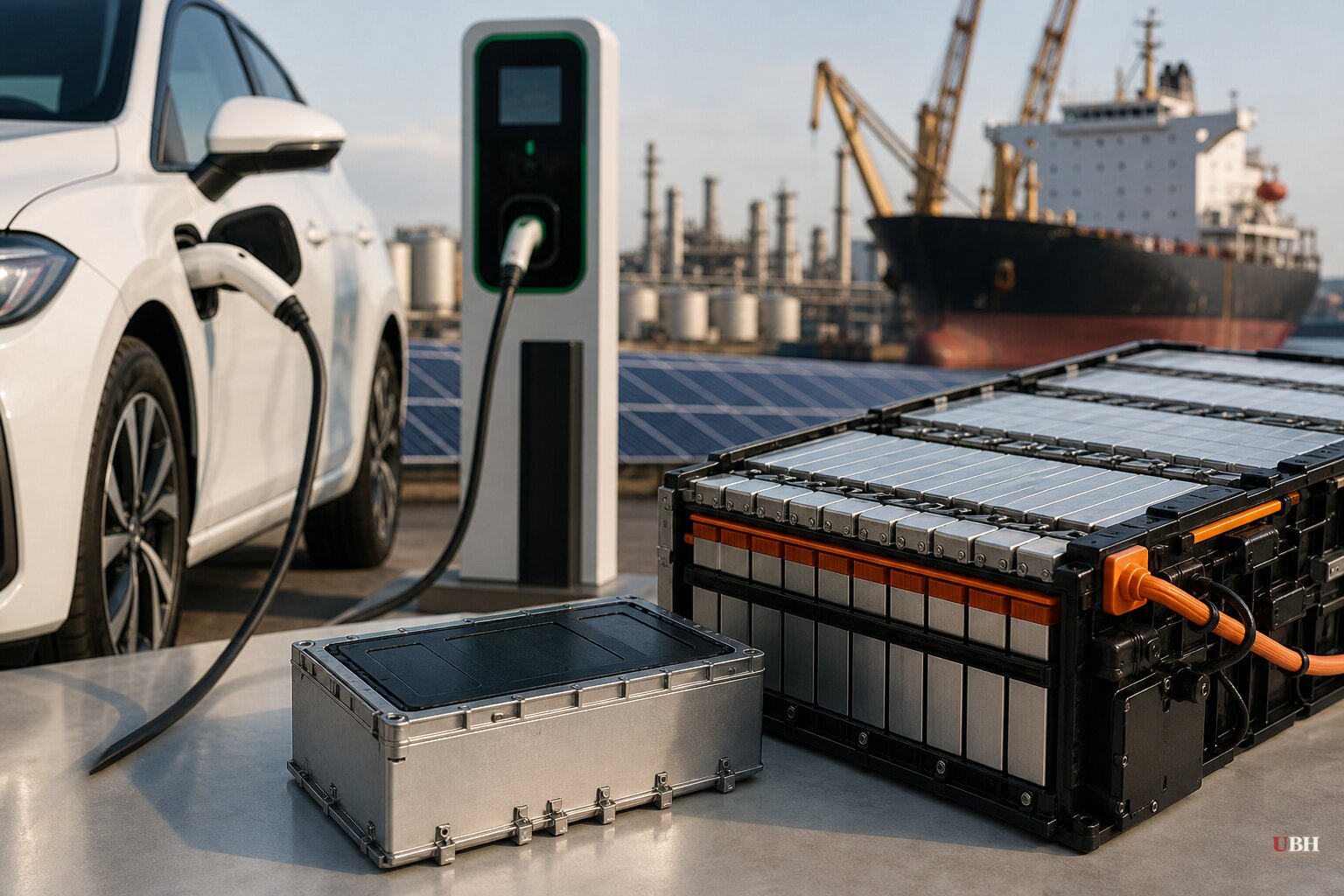
The Study
India could shave up to $125 billion off its annual oil and battery import bill by 2050 if it accelerates electric vehicle adoption across every vehicle segment, according to a study released Wednesday, September 2, 2026, by the International Council on Clean Transportation (ICCT), a nonprofit research group.
The report, titled "India's EV Transition: Impact of Electric Vehicle Battery Demand on Import Payments from 2024 to 2050," models battery demand across two-wheelers, three-wheelers, passenger cars, light commercial vehicles, buses and trucks.
"The money India can save by importing less petrol and diesel outweighs the cost of importing batteries by an order of magnitude," the study states, according to the Economic Times and Moneycontrol.
Amit Bhatt, ICCT's India managing director, put it plainly: "The faster India electrifies, the less exposed it is to global crude price shocks, and the stronger its case for 'Aatmanirbhar Bharat,'" he said, using the Hindi term for self-reliance. He added that localizing battery manufacturing "adds real value on top," but the pace of adoption is what protects India first.
The Fine Print
The $125 billion figure is not a forecast. It's the top end of the study's most ambitious scenario. PSU Watch flagged this explicitly, noting the estimate "should not be read as a forecast" and that actual savings depend on EV adoption speed, future oil and battery prices, vehicle demand, and how much battery-cell production India actually localizes.
The study tests three adoption pathways — baseline, momentum, and ambitious — against four localization scenarios ranging from no domestic cell manufacturing to high localization. Under every pathway, battery demand rises steeply after 2030, hitting roughly 340 gigawatt-hours by 2050 under the baseline case and 573 GWh under the momentum and ambitious cases.
Even if India keeps importing batteries, faster EV adoption could still cut vehicle-related imports by 61%, from $153 billion to $59 billion, according to the study's own math as reported by Moneycontrol. Moneycontrol's own summary line claims the reduction could be "up to 82 percent," a figure that doesn't match the 61% number in its own article body. That's a discrepancy inside a single outlet's coverage, not a dispute between sources — the study's cited dollar figures back the 61% number, not 82%.
On the Ground: Hyundai's Bet
While the ICCT study is theoretical, Hyundai Motor India is already moving. Tarun Garg, the company's Managing Director and CEO, expects EVs to top 7% of domestic sales over the next year, driven by a new electric SUV designed specifically for Indian buyers and scheduled to launch in the fourth quarter of 2026.
That SUV will join the Creta Electric and Ioniq 5. Garg said Creta Electric sales jumped to roughly 1,000 units in August, up from a prior run rate of 400 to 500 units a month, as buyers who shopped around at newer EV entrants came back.
Hyundai's new SUV will initially run on battery cells from Svolt, a Chinese battery maker, because the company didn't want to delay the launch waiting on domestic supply. Hyundai says it plans to eventually shift to locally made cells through a partnership with Exide Industries, once quality and pricing line up. That's the localization gap the ICCT study is measuring in real time. India wants to build batteries at home, but right now a lot of that supply chain still runs through China.
The China Angle Nobody's Officially Naming
India isn't the only country wrestling with China's grip on battery and EV supply chains. Across the Pacific, U.S.-Canada trade talks broke down on August 21, 2026, and according to the Epoch Times, both Washington and Ottawa are quietly worried about the same thing: China using third countries as a backdoor to dump overcapacity despite tariffs.
U.S. Trade Representative Jamieson Greer told CBC on August 26 that Canada is "the only country to retaliate against us besides China," while Canadian Prime Minister Mark Carney said on August 22 he wouldn't "compromise Canada's sovereignty" to reach a deal. Neither side named China publicly as the reason talks collapsed. The Epoch Times reported that analysts, including Yeh Yao-yuan of the University of St. Thomas and Stephen Nagy of the Macdonald-Laurier Institute, believe Beijing's shadow is part of the calculus on both sides. That's a separate dispute from India's EV math, but it's the same underlying tension: countries trying to build supply chains that don't run through Beijing, and finding it's slower and more expensive than they'd like.
The Skeptic's Case
A fair critic would point out that India has missed EV adoption targets before, and that a 25-year projection built on multiple layered assumptions — oil prices, battery prices, localization speed, vehicle demand — is exactly the kind of model that looks great on paper and rarely survives contact with reality. Currency swings alone could blow up the import-cost math in either direction. That's a legitimate concern, and the ICCT study doesn't pretend otherwise. It explicitly frames $125 billion as a best-case ceiling, not a floor.
The Indian government has already put money behind the push. Moneycontrol notes the Centre extended its PM E-Drive electric two-wheeler subsidy through fiscal year 2028, expanding coverage to 45.79 lakh vehicles. Whether that subsidy program delivers value for taxpayers, or just props up adoption numbers, is a question that will get answered as the subsidy's 2028 expiration approaches and Hyundai's new SUV hits showrooms in the fourth quarter of this year.
Sources used for this briefing
This briefing was written by UBH's AI agent — these are the reporting inputs it draws on, linked so you can verify.


