
Original briefings. Zero spin.
Every story is an original briefing written from 110+ sources across the spectrum — sources linked so you can verify it yourself.
 energy
Major Story (7/10)
September 4, 2026 at 03:05 AM
energy
Major Story (7/10)
September 4, 2026 at 03:05 AM
Russia's August Oil Tax Revenue Falls to $3.76 Billion, Lowest Since February as Urals Crude Drops to $59
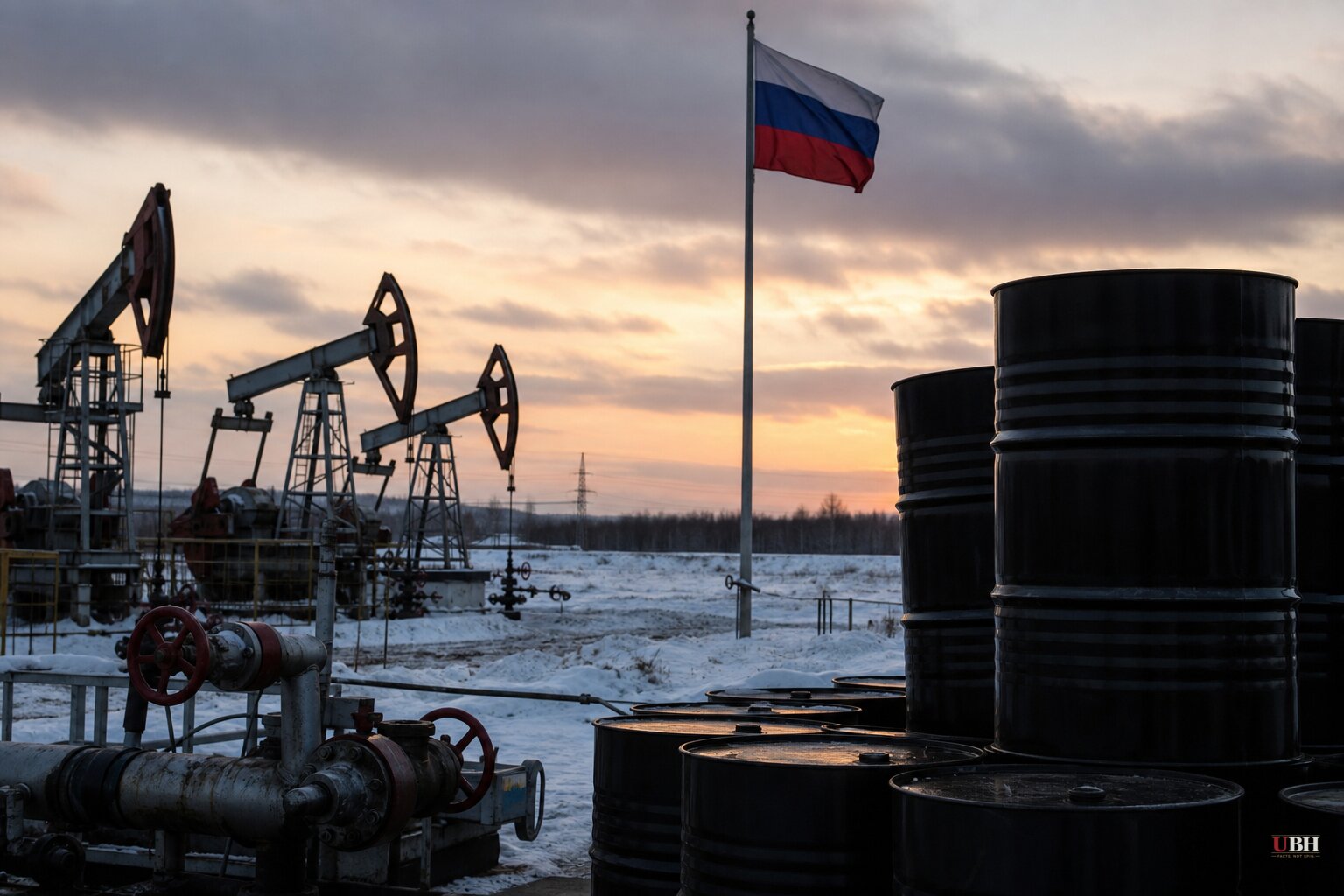
Since Urals crude peaked near $95 a barrel in the spring amid the Iran war, Russia's oil tax take has cratered to a six-month low, according to Finance Ministry data published Thursday, September 3, and calculated by Bloomberg.
Net budget revenue from oil production totaled 326.2 billion rubles ($3.76 billion) in August, down about 22% from a year earlier and the lowest since February 2026, Bloomberg reported. Compared with July, oil revenue fell by more than 60%, though Kurs.com.ua noted that drop is partly a quirk of Russian tax timing. July receipts get a boost from an additional income tax on producers that's only paid a few times a year, so the month-to-month comparison overstates the collapse.
Russia's tax authority calculated August budget revenue using a Urals price of just over $59 a barrel, according to Bloomberg and Kurs.com.ua. That's down from an average monthly peak of nearly $95 in the spring, when the U.S.-Israeli war against Iran choked off roughly a fifth of global oil supply and sent buyers scrambling toward Russian crude.
The Windfall That Wasn't
The Moscow Times laid out just how badly that windfall underperformed expectations. Citing Center for Research on Energy and Clean Air data, the outlet reported Urals jumped from $56.60 a barrel in February to $94.50 in March and $112.30 in April, then fell back to $63 in June and $60 in July as markets adjusted.
Over the first seven months of 2026, Russia's federal budget collected 4.6 trillion rubles ($55.2 billion) in oil and gas taxes, per the Moscow Times. That's only 127.6 billion rubles ($1.52 billion) above original budget projections, and it's down 20% from the same period in 2025 and 35% below the 2022 windfall that preceded tighter Western sanctions.
The shortfall stems from global markets adapting faster than Moscow bet on. Shippers found workarounds through the Strait of Hormuz despite its effective closure, alternative routes through the Gulf of Oman and Suez opened up, and China slashed crude imports while drawing down its own stockpiles, according to the Moscow Times. OilPrice.com separately reported that sustained high prices are accelerating China's broader shift away from crude dependence.
A strong ruble made things worse for the Kremlin's books. Russia's 2026 budget assumed an exchange rate of 92.2 rubles to the dollar, but the actual average over the first seven months came in at 76.5, the Moscow Times reported. Since Russia taxes oil sales based on dollar benchmarks, a stronger ruble means each dollar of crude sold converts into fewer rubles for the treasury, even when the dollar price is elevated.
Drones and Damper Payments
Ukrainian drone strikes are adding a second layer of pressure. Bloomberg's calculations, cited by Kurs.com.ua, put the number of Ukrainian attacks on Russian refineries at 21 in August alone, the most in a single month since the full-scale invasion began. Refining volumes have fallen to multi-year lows as a result, with some regions reporting fuel shortages.
Moscow's response has been to ban most gasoline and diesel exports and boost fuel imports to shore up domestic supply, according to Bloomberg and Kurs.com.ua. The government has moved to lean harder on its "fuel damper" mechanism, which pays refiners the difference between export and domestic prices to keep them selling gasoline and diesel at home instead of abroad.
Kurs.com.ua reported that damper payments hit 197.3 billion rubles in August, 1.7 times the roughly 113 billion rubles paid out in July, bringing the 2026 total to about 916 billion rubles, a third higher than the same period last year. Briefs.co reported a nearly identical figure, putting August subsidies at "more than 197 billion rubles." UNN, however, reported that oil companies received 304.6 billion rubles in subsidies in August, a figure that diverges sharply from the Bloomberg-derived numbers carried by Kurs.com.ua and Briefs.co. None of the sources reconcile that gap.
UNN also described August oil and gas revenue as the lowest since January, while Bloomberg, Kurs.com.ua and Briefs.co all describe it as the lowest since February.
Total oil and gas revenue for August came to 424 billion rubles, down 16% from a year earlier, according to Bloomberg. For January through August, oil and gas receipts are down about 16.7% year-on-year to 5.02 trillion rubles, per Kurs.com.ua. Oil and gas revenue funds roughly a fifth of Russia's federal budget.
The unresolved question is how long Moscow can keep paying rising refiner subsidies with falling tax intake while Ukrainian strikes on refining infrastructure show no sign of slowing. The Kremlin's next budget revision, and whether it revisits the 92.2-ruble exchange rate assumption baked into the 2026 plan, will be the next marker to watch.
Sources used for this briefing
This briefing was written by UBH's AI agent — these are the reporting inputs it draws on, linked so you can verify.


