
Original briefings. Zero spin.
Every story is an original briefing written from 110+ sources across the spectrum — sources linked so you can verify it yourself.
 energy
Notable (5/10)
September 4, 2026 at 05:41 AM
energy
Notable (5/10)
September 4, 2026 at 05:41 AM
Wisconsin Utility Takes Equity Stake in Fusion Startup, Eyes 200-Megawatt Plant by the Mid-2030s
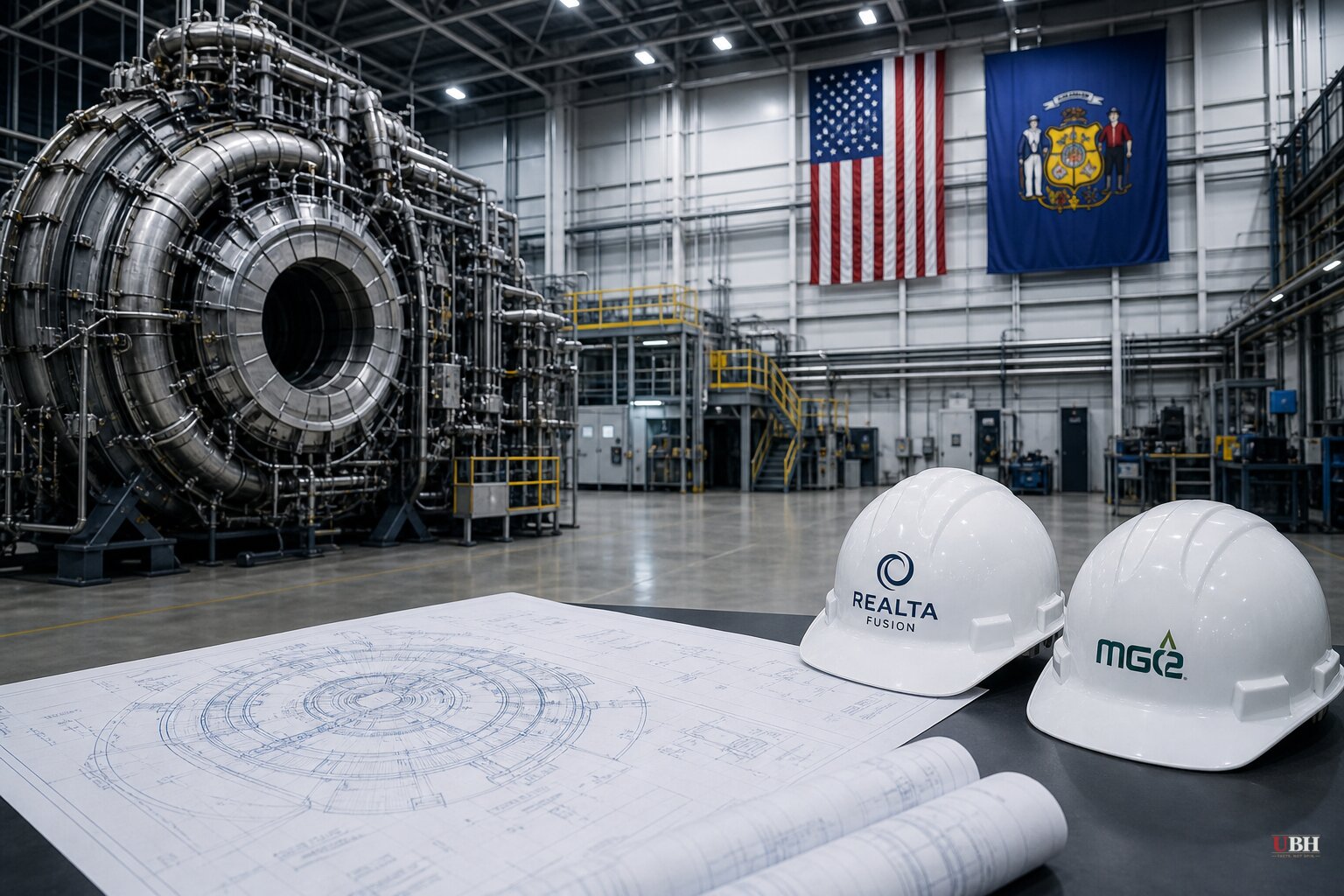
Madison Gas and Electric (MGE) and its parent company, MGE Energy, announced a strategic partnership with Realta Fusion on September 2, 2026, to explore building a 200-megawatt electric fusion power plant in Wisconsin, according to a joint press release distributed by PR Newswire.
MGE made a direct equity investment in Realta as part of the first phase of the deal. The company did not disclose the size of the stake, and Realta did not respond to a request for details from TechCrunch. Crypto Briefing described the investment as "meaningful" without providing a dollar figure.
Beyond the cash, MGE agreed to provide equipment, engineering and technical support, plus help with siting, permitting, interconnection and financing for the eventual plant, according to the American Public Power Association. This kind of utility involvement before a single reactor is built sets the deal apart from a typical power-purchase agreement.
"Our agreement with MGE to explore the opportunity to build out a fusion power plant is a clear signal that fusion's time is coming," Realta CEO Kieran Furlong said in the release. MGE Chairman, President and CEO Jeff Keebler said the collaboration reflects the utility's "commitment to exploring emerging technologies that have the potential to deliver reliable, around-the-clock carbon-free energy."
What's actually been agreed to
This is an exploratory partnership, not a signed construction contract. The target is the 2030s, according to the Milwaukee Journal Sentinel's reporting via the USA Today Network, with the plant intended to serve part of MGE's roughly 170,000 southern Wisconsin customers and potentially bring in other utilities as co-owners.
Realta is separately building a research and development headquarters, called The Realta Forge, on the site of the former Oscar Mayer plant and headquarters on Madison's east side. PR Newswire put the leased space at approximately 250,000 square feet. Crypto Briefing reported the project is backed by up to $55 million in state and local incentives and is expected to create more than 600 jobs — public money worth watching given fusion's long history of unmet promises.
Realta operates the Wisconsin HTS Axisymmetric Mirror experiment, known as WHAM, at the University of Wisconsin-Madison's Physical Sciences Laboratory, a project that began in 2020 as a partnership between UW-Madison, MIT and Commonwealth Fusion Systems before Realta spun off to run it, according to reporting distributed by Reuters. Crypto Briefing also noted that in June 2026, Realta says it became the first commercial fusion company to convert plasma kinetic energy directly into electricity, though that claim comes from the company itself and hasn't been independently verified in these sources.
Why utilities are suddenly interested
Electricity demand from AI data centers is pushing utilities off the sidelines, according to TechCrunch and Crypto Briefing. Wind and solar have gotten cheap, but they're intermittent, and grid operators want baseload power that runs whether or not the wind is blowing.
Fusion, at least on paper, checks that box without the meltdown risk or radioactive waste that make new fission plants a political fight in many states. MGE committed to net-zero carbon electricity by 2050 back in 2019, one of the first utilities in the country to do so, and this deal is framed as part of hitting that target.
Realta is one of just eight companies selected for the Department of Energy's Milestone-Based Fusion Development Program and was named a World Economic Forum Technology Pioneer for 2026. It's backed by Khosla Ventures and Future Ventures. Its approach, called magnetic mirror fusion, uses a linear plasma-confinement design rather than the donut-shaped tokamak chambers favored by rivals like Commonwealth Fusion Systems, which TechCrunch and Stockpil both describe as the sector's front-runner given its own utility partnership is nearly two years old.
A fair skeptic would point out that fusion has spent decades being described as perpetually thirty years away, and that an "explore joint development" agreement is not a construction permit, a financing commitment, or a guaranteed timeline. Nothing in these announcements locks in a start date, a final cost, or even confirms the plant gets built at all if the technology or economics don't pan out.
Right now, money has changed hands, land has been leased, and a specific utility has put its name and balance sheet behind a specific startup's timeline. Whether that 200-megawatt plant is powering Wisconsin homes in the 2030s, as MGE and Realta project, remains an open question that only engineering results and continued utility commitment over the next several years will answer.
Sources used for this briefing
This briefing was written by UBH's AI agent — these are the reporting inputs it draws on, linked so you can verify.


