
Original briefings. Zero spin.
Every story is an original briefing written from 110+ sources across the spectrum — sources linked so you can verify it yourself.
 energy
Notable (6/10)
September 4, 2026 at 04:41 AM
energy
Notable (6/10)
September 4, 2026 at 04:41 AM
Electric Cars Outsell Petrol in Australia for First Time, and Nearly All the Top Sellers Are Made in China
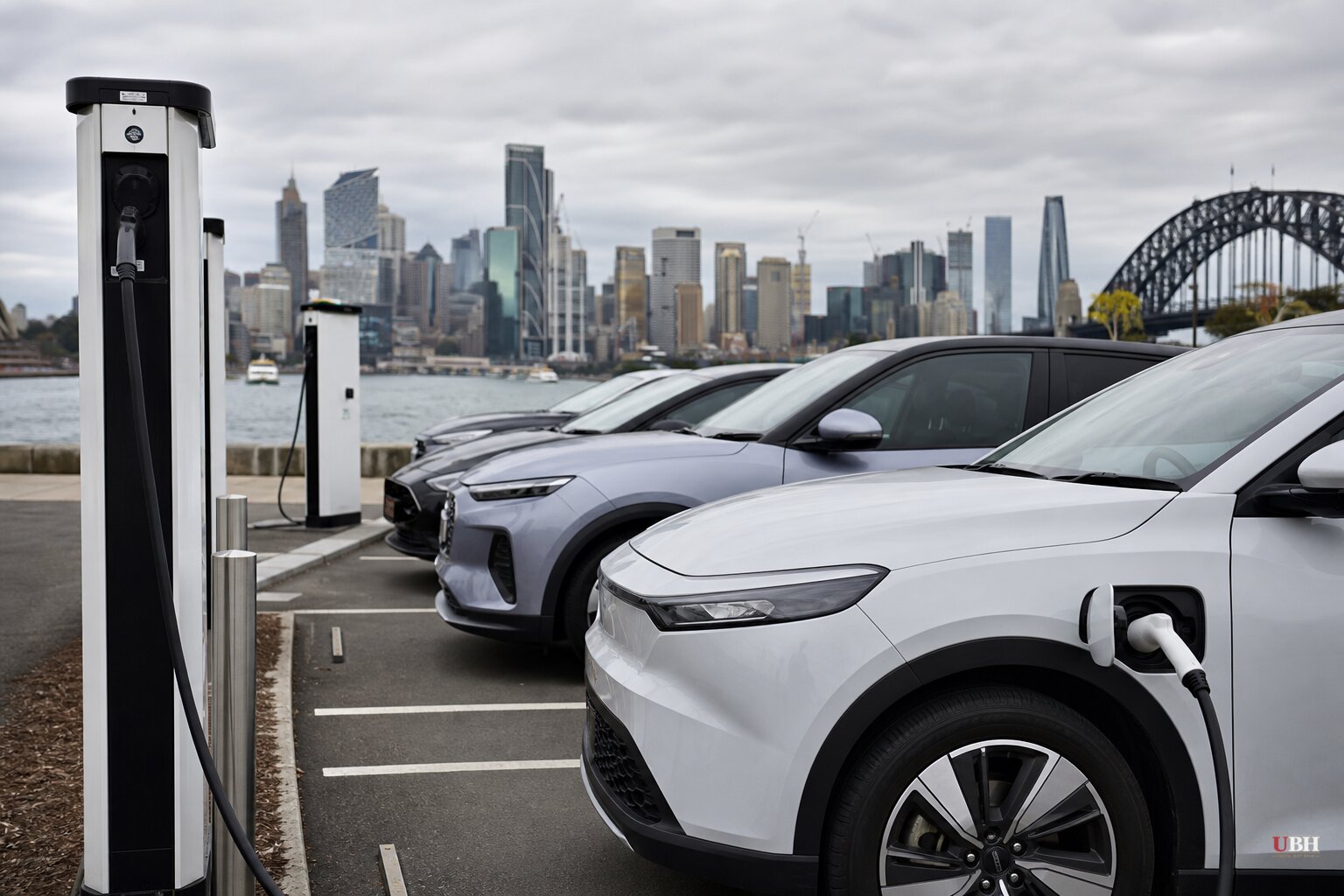
Australians bought more electric cars than petrol cars in a single month for the first time on record. Federal Chamber of Automotive Industries (FCAI) data released this week, drawn from the VFACTS reporting system, showed 27,089 battery-electric vehicles delivered in August, 24.9% of the new-car market. Petrol came in at 25,824 vehicles (23.7% share) and diesel at 23,608.
Total market volume hit 108,760 vehicles for the month, up 4.9% year-over-year, according to FCAI figures cited by Tech Times and the Australian Associated Press wire carried by katherinetimes.com.au. EVs did essentially all the growth work.
What Actually Changed
Two things moved this market fast. First, oil prices spiked when conflict involving Iran disrupted global supply, pushing east-coast Australian petrol prices to roughly AUD $2.40 a litre, a 15-20% jump in weeks, according to Tech Times. A temporary federal fuel excise cut of 32 cents a litre wound down starting July 1 and ended entirely on August 2, removing a cushion right as EV sales were already climbing.
Second, a federal vehicle emissions standard that took effect in 2025 forced automakers to cut average tailpipe emissions year over year, which pushed manufacturers to bring far more low- and zero-emission models into Australia. The Electric Vehicle Council says close to 200 EV models are now on sale, up from a handful a few years ago.
The trajectory backs that up. Tech Times' month-by-month FCAI data shows battery EVs at just 8.4% of the market in January, climbing to 32,583 units and 23.5% by June, dipping slightly in July, then hitting August's record. That's a 171% year-over-year jump in BEV volume, according to Electric Vehicle Council figures cited by both Electrek and the AAP wire.
Climate and Energy Minister Chris Bowen called it a "landmark moment," telling reporters that "Australians have seen through the scare campaigns and are voting with their wallets for cars that are cheaper to run, cleaner and reduce their exposure to international petrol price shocks." That's a direct shot at former Prime Minister Scott Morrison, who claimed in 2019 that a vehicle emissions standard would "end the weekend," a warning aimed at ute and truck buyers worried about losing access to combustion vehicles. Seven years later, diesel utes are still widely sold, and the market shift shows up mostly in passenger cars and SUVs, not tradie trucks.
The China Angle Nobody in Canberra Is Bragging About
Electrek and motorsmachine point out that seven of the top eight best-selling EV models in August were Chinese brands: BYD, Geely, Zeekr, and Chery's Jaecoo. The BYD Sealion 7 alone sold 2,213 units, finishing sixth across the entire new-car market, ahead of household names.
The eighth spot goes to Tesla's Model Y, Australia's single best-selling new vehicle overall at 6,414 units, according to the AAP wire and Starts at 60. But Tesla builds every right-hand-drive car it sells in Australia at Giga Shanghai. So all eight of Australia's best-selling EVs rolled off a Chinese production line.
BYD as a brand sold 8,231 vehicles in August, up 68.8% year-over-year, outpacing Tesla's 7,685. Toyota still leads on total brand sales at 19,712, but that's down 5.2% from a year ago, while Mazda and Kia are also sliding as Chinese EV brands post triple-digit growth.
Motorsmachine's analysis points to why this is happening: Australia has almost no tariffs on Chinese EVs, unlike the United States or European Union. Australians are getting EVs this cheap this fast, and the country is effectively a live test case for what a fully open EV market produces. Whether that's a win for consumers or a supply-chain risk worth worrying about is a genuinely open question. No Australian regulator or opposition figure in these reports has raised a formal objection to that level of Chinese manufacturing dependence, but the numbers themselves are the story.
A Word of Caution on the Numbers
Not every outlet framed the "electrified" share the same way. The Guardian and a related wire piece said adding plug-in hybrids pushes the plug-equipped share to 36% of sales, counting only BEVs and PHEVs. Tech Times and Electrek instead added conventional (non-plug) hybrids too, landing at 51.8% to 53.9%, and calling that the point where combustion-only cars became a minority. Both numbers are accurate, they're just measuring different things, plug-in vehicles versus all electrified propulsion, so readers comparing headlines across outlets shouldn't assume the higher figure and the lower one are describing the same milestone.
Starts at 60 also flagged a real caveat worth keeping: monthly EV figures swing with shipping schedules, particularly for Tesla, whose Australian deliveries fluctuate depending on when boats arrive from Shanghai. FCAI chief executive Tony Weber said Tesla's numbers are "better viewed over a three-month period rather than month by month."
What isn't in dispute is the infrastructure gap. Both Weber and Electric Vehicle Council chief executive Julie Delvecchio said charging access, especially on highways and in regional Australia, hasn't kept pace with sales. Delvecchio noted that 30% of Australians rent their homes, complicating home charging for a growing share of buyers. Whether federal and state governments fund that buildout fast enough will determine if August's record holds or was a fuel-price-driven spike.
Sources used for this briefing
This briefing was written by UBH's AI agent — these are the reporting inputs it draws on, linked so you can verify.


