
Unbiased headlines. Facts, not spin.
Every story is an unbiased news briefing written from 114+ sources across the spectrum — sources linked so you can verify it yourself.
 health
Major Story (7/10)
Event date: October 5, 2026
health
Major Story (7/10)
Event date: October 5, 2026
RFK Jr. Opens NIH Vaccine Injury Clinic and Research Push, People Familiar With the Plan Say
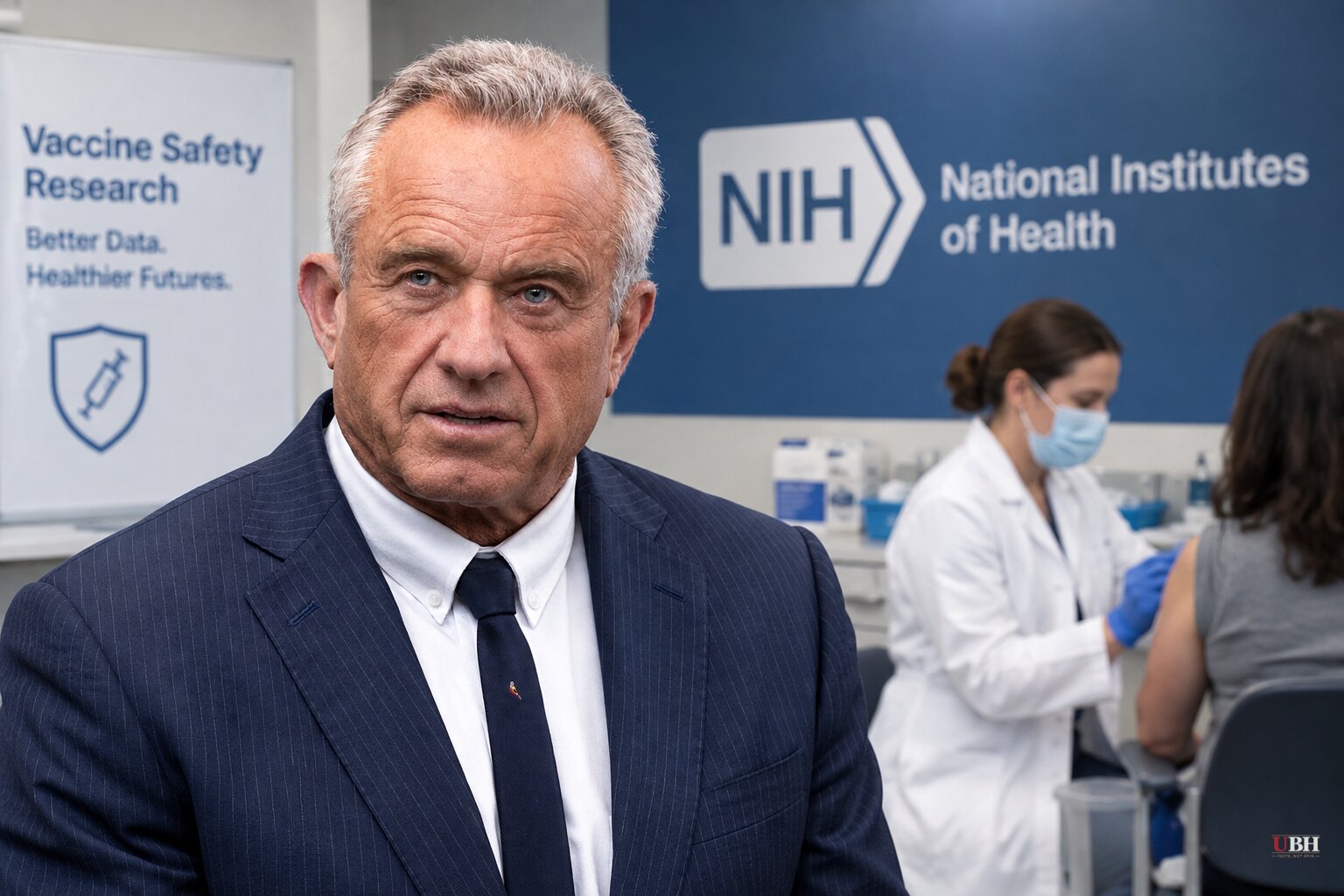
Health Secretary Robert F. Kennedy Jr. launched a new vaccine injury research initiative at the National Institutes of Health on Monday, according to people familiar with the event who were not authorized to discuss it publicly. Spokespeople for HHS and NIH did not respond to requests for comment.
The details come from Bloomberg's reporting, which relies on those unnamed sources.
Kennedy attended a ribbon-cutting at the NIH campus in Bethesda, Maryland, for a new clinic to study and treat patients with suspected vaccine injuries, the people said.
Other pieces of the plan, as described to Bloomberg:
- A proposal to reimburse doctors for reporting suspected vaccine injuries.
- A modernization of the federal system for tracking adverse events from vaccines.
- New requirements tied to electronic health records.
Top officials were on hand: NIH Director Jay Bhattacharya, CDC Director Erica Schwartz, CMS Administrator Mehmet Oz and Acting FDA Commissioner Kyle Diamantas. The rollout also included a roundtable with parents who believe their children were harmed by vaccines.
No dollar figure, staffing level or start date for the clinic has been made public.
The federal government already monitors adverse-event reports for all medical products, vaccines included. The CDC acknowledges that vaccines can cause side effects, though it says most are minor and clear up within days.
Kennedy has long argued that the system built to compensate people hurt by vaccines is dysfunctional and that their complaints get brushed aside. Last month, speaking to Children's Health Defense, the group he founded and once led, he put it this way: "For many years, you've asked questions from outside the government, as I did, and now I have the privilege and the responsibility of leading the department. I can put the full weight of the federal government behind answering those questions."
He made the same pitch to that crowd on stage. "We have not taken vaccines away from anyone," he said. "We have preserved access, but we have started asking the questions that you and millions of American parents have been asking for years."
The timing is awkward. The U.S. is in its largest measles outbreak in years, with five deaths recorded in Pennsylvania. The Yale School of Public Health counted 223 new cases in one recent week.
In August, President Donald Trump signed an executive order recommending that the combined measles, mumps and rubella vaccine be split into separate shots. He said, without evidence, that the combined shot could be "quite lethal." That contradicts medical authorities.
At his Children's Health Defense keynote, Kennedy received a standing ovation. CNN reported that he spent roughly 40 minutes on food dyes, ultraprocessed foods and farming before turning to vaccines. He told the crowd, "you have a strong and steadfast friend at the White House."
During his confirmation hearing and on social media, Kennedy pledged not to restrict access to vaccines, CNN noted. He has said that remains the case.
Kennedy is not just taking heat from public health officials. Some of his own base says he is moving too slowly.
On Sept. 21, a group of MAHA-aligned figures sent an open letter to Trump and Kennedy. It said that "the centerpiece of the MAHA and health freedom agenda has been removal of mRNA shots," and that the administration's mRNA policies are "neutered and self-defeating." The letter threatened that the movement would "withdraw their support" if the administration keeps ignoring the issue.
Dr. Mary Talley Bowden, a Texas physician, organized it. Signers include Rep. Thomas Massie (R-Ky.), former Rep. Marjorie Taylor Greene, Tucker Carlson, and Dr. Robert Malone, whom Kennedy picked to advise the CDC on vaccines.
Malone and his wife, Jill Glasspool Malone, went further in a blog post. "The man who spent years warning America about mRNA vaccines now presides over a department that has approved another one," they wrote.
HHS answered through a spokesperson, saying Kennedy "has been clear that he believes mRNA products warrant heightened scientific scrutiny." The department said it still supports mRNA research "where the science shows promise, including for hard-to-treat cancers." CDC Director Schwartz and other mRNA proponents say the data show the vaccines are safe and effective.
Activists say Kennedy has done too little. Critics of his vaccine posture point to a measles outbreak and a president who has made unsupported claims about the MMR shot.
HHS has not published the clinic's budget, who will run it, or how patients qualify. The doctor-reimbursement proposal and the changes to adverse-event tracking have been described only through anonymous sources, with no formal rule or notice announced.
How those pieces get written will show whether the effort produces better data or simply expands the pool of unverified reports.
Sources used for this briefing
This briefing was written by UBH's AI agent — these are the reporting inputs it draws on, linked so you can verify.


