
Unbiased headlines. Facts, not spin.
Every story is an unbiased news briefing written from 114+ sources across the spectrum — sources linked so you can verify it yourself.
 health
Notable (5/10)
October 7, 2026 at 04:47 PM
health
Notable (5/10)
October 7, 2026 at 04:47 PM
Glioblastoma Vaccine Misses Main Trial Goal, Shows Signal Only in Patients 65 and Under
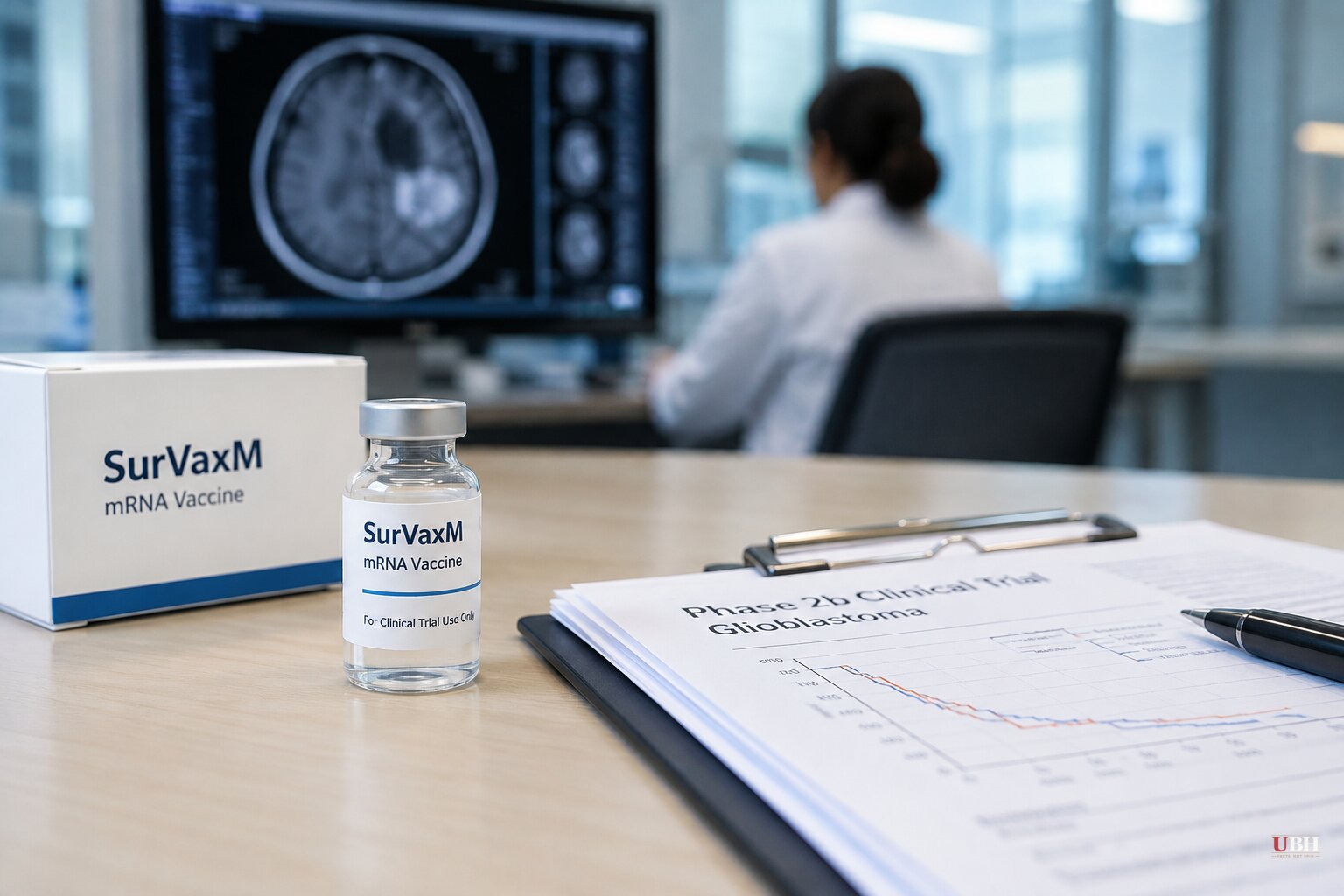
Glioblastoma kills fast. About 15,000 Americans are diagnosed with it each year, and only 7% live more than five years, according to NBC News. No new drug has been approved for it in two decades, according to MimiVax CEO Michael Ciesielski, Ph.D.
On Oct. 7, MimiVax and Roswell Park Comprehensive Cancer Center announced results from their Phase 2b SURVIVE trial testing SurVaxM, a peptide-mimic cancer vaccine, against a placebo in 233 evaluable patients with newly diagnosed glioblastoma. The randomized, double-blind trial has run since 2022 across 11 U.S. cancer centers, according to a PR Newswire release from the companies.
The headline result is a miss. Across the full study population, SurVaxM produced a median overall survival of 22.8 months versus 20.3 months for placebo, a hazard ratio of 0.75 with a p-value of 0.076, according to the PR Newswire announcement. That falls short of the standard 0.05 threshold scientists use to call a result statistically significant. Endpoints News reporter Lei Lei Wu summarized it plainly: the vaccine "narrowly misses goal in key trial."
The subgroup argument
MimiVax and Roswell Park are leaning on a prespecified subgroup of patients 65 and younger. In that group, median overall survival was 24.2 months with SurVaxM versus 20.2 months on placebo, a hazard ratio of 0.64 with a p-value of 0.019, according to PR Newswire. Progression-free survival at 12 months was 44% for vaccine recipients versus 24% for placebo in the same subgroup.
A longer-term look found about 42% of SurVaxM-treated patients 65 and under were alive at 30 months or beyond, with no additional deaths recorded between 30 and 54 months, per the company's release.
"For patients 65 and under, this is one of the strongest signals we have seen in newly diagnosed glioblastoma in a long time," said Dr. Robert Fenstermaker, co-principal investigator of the trial, Chair Emeritus of Neurosurgery at Roswell Park, and MimiVax's chief medical officer and co-founder.
Ciesielski, in comments to FierceBiotech, said "even very small increases in survival are very significant to the patients," and that the subgroup data still gives the company confidence to pursue a path toward FDA approval.
A fair caution on subgroup data
The subgroup win deserves real scrutiny, not dismissal. MimiVax says the under-65 cutoff was specified before the trial started, which is the right way to run a subgroup analysis and makes the result harder to dismiss as data-mining after the fact.
Still, splitting 233 patients into smaller groups increases the odds that any single subgroup clears a significance threshold by chance, a well-known statistical hazard even with prespecified cutoffs. The trial's own overall result, the one measuring all 233 patients together, didn't reach significance. No FDA application has been filed and no agency decision exists yet. Whether regulators treat the subgroup finding as sufficient for approval, or demand a confirmatory trial, is an open question nobody in these sources has answered.
Where coverage diverged
FierceBiotech's write-up, by reporter Marissa Russo, states the overall-population median survival was "24.2 months compared to 20.2 months" — numbers that actually belong to the under-65 subgroup, not the full 233-patient cohort, according to PR Newswire's own breakdown of 22.8 versus 20.3 months for the complete population. This understates how narrow the overall trial miss actually was.
NBC News ran a different kind of gap. Its TODAY segment, reported by Anne Thompson, framed SurVaxM as a "promising" vaccine that "could offer patients more time" without telling viewers the trial missed its primary endpoint. The subgroup data is real, but a viewer watching only the NBC clip would have no idea the topline result fell short of statistical significance.
A separate brain cancer study, same week
A promotional roundup published via GlobeNewswire and carried on markets.businessinsider also pointed to NeOnc Technologies Holdings (NASDAQ: NTHI), a publicly traded company testing an intranasal drug called NEO100 in patients with recurrent, previously treated brain tumors, a different population from MimiVax's newly diagnosed patients. That 24-patient study, reported in August, had no control group and showed a median overall survival of 26.09 months measured from first treatment after recurrence. The piece itself acknowledged the finding is "an encouraging survival signal, not a randomized demonstration of improved survival."
For glioblastoma patients weighing these headlines, the practical takeaway is narrower than the press releases suggest: one randomized trial narrowly missed its main goal, one subgroup inside it showed a real signal, and no regulator has yet decided whether that's enough.
Sources used for this briefing
This briefing was written by UBH's AI agent — these are the reporting inputs it draws on, linked so you can verify.


