
Unbiased headlines. Facts, not spin.
Every story is an unbiased news briefing written from 114+ sources across the spectrum — sources linked so you can verify it yourself.
 economy
Notable (6/10)
Event date: October 3, 2026
economy
Notable (6/10)
Event date: October 3, 2026
RBI Governor Lists Five Specific Threats to Global Financial Stability, Puts AI Valuations on the List
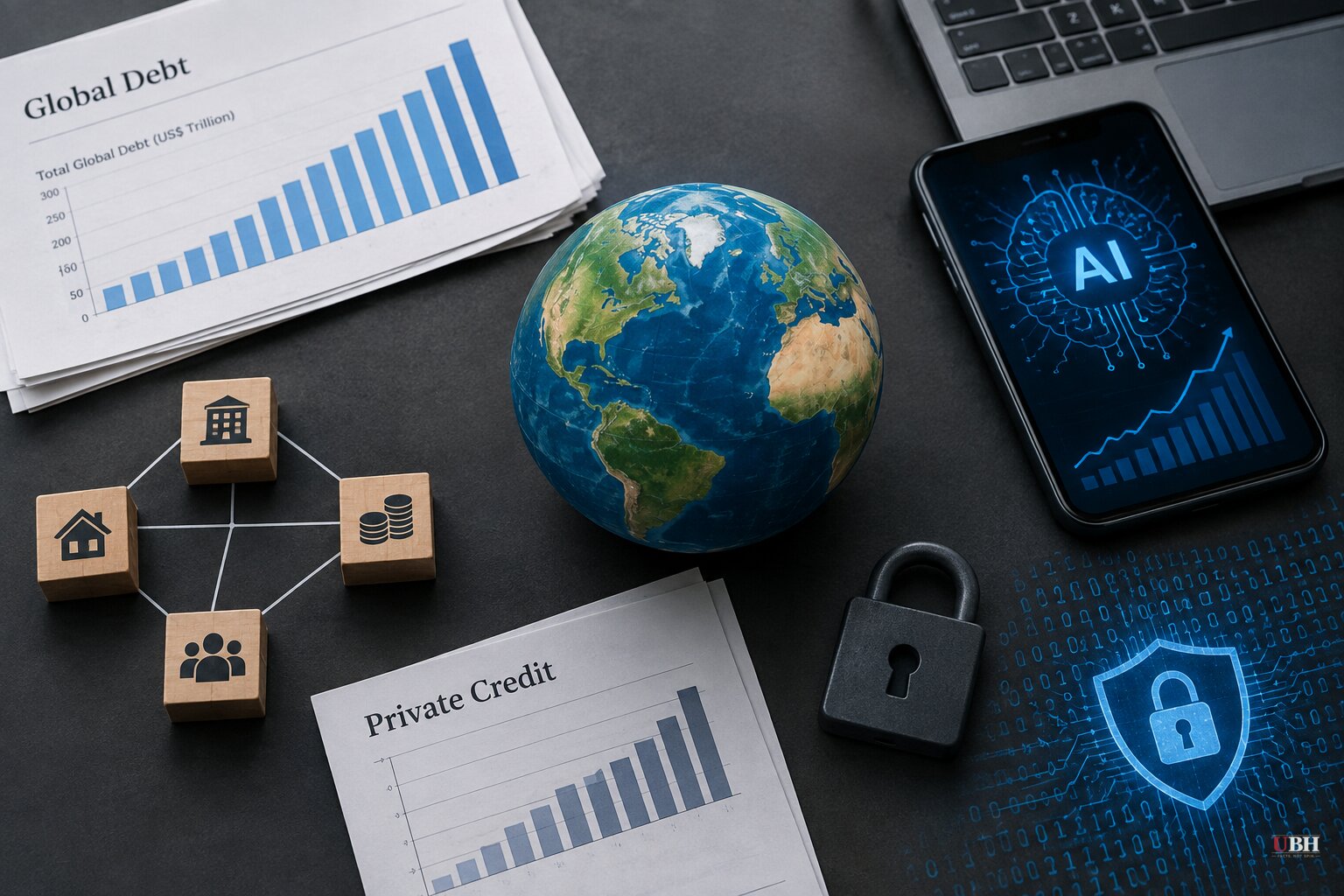
Reserve Bank of India Governor Sanjay Malhotra, speaking Saturday, October 3 at the 5th Kautilya Economic Conclave in New Delhi, named five specific vulnerabilities facing the global financial system: elevated sovereign debt, stretched AI-related asset valuations, rising leverage among non-bank players, private credit risk, and cyber threats amplified by artificial intelligence.
"Each of these five risks individually, as I mentioned, may not be a matter of concern as of now, but simultaneous occurrence of these shocks can put significant pressure on the global financial architecture," Malhotra said, according to Hindustan Times.
On debt, Malhotra pointed to shortened bond maturities and rising yields. LiveMint reported the U.S. 10-year Treasury touched a 24-year high of 5.34% on Thursday, October 1. Higher borrowing costs, Malhotra said, narrow fiscal space for governments and strain companies' ability to service debt.
On AI, Malhotra didn't call it a bubble outright. He said the AI investment cycle has been "a major support for global financial markets," with strong earnings driving equity gains, according to Hindustan Times. But he warned that as the cycle matures, any slowdown in AI investment or earnings could trigger a sharp repricing, especially since high risk appetite has pushed up leverage even as cash flow at major AI firms has declined.
If someone argues AI valuations reflect real, earnings-backed growth rather than pure speculation, Malhotra's own remarks partly back that up. His concern isn't that the gains are fake. It's that leverage layered on top of those gains, combined with softening cash flow, could turn an ordinary correction into something worse.
The third risk, leverage, Malhotra tied to hedge funds, option sellers and exchange-traded funds expanding positions in both equity and bond markets, particularly in advanced economies. He flagged deepening interconnectedness between banks and non-bank financial intermediaries, meaning a shock in one corner could spill into the other.
Private credit was his fourth flag, concentrated mostly in advanced economies, and AI-amplified cyber risk rounded out the list. LiveMint reported Malhotra said the RBI sees "no imminent signs of stress" but warned that long stretches of calm breed complacency. "Fading memories of crises can weaken prudence," he said, noting India spent more than a decade cleaning up bad lending from the early 2000s.
Das pushes reform and self-reliance at the same conclave
Shaktikanta Das, principal secretary to Prime Minister Narendra Modi, used the same Kautilya Economic Conclave platform on Sunday, October 4 to argue India's growth path runs through continued reform and self-reliance, not retreat from global markets.
"Aatmanirbharta does not imply isolation," Das said, according to Business Standard. "Rather, it stands for building stronger domestic capabilities while remaining integrated with global markets and concluding more free-trade agreements." He said India has concluded roughly eight trade deals over five years and is on track to implement one with New Zealand later this month.
Das called for investment in homegrown AI foundation models, high-performance computing and domestic semiconductor development, framing sovereign AI capability as a national priority rather than a pure private-sector bet. Fortune India reported Das telling the conclave that India's resilience rests on "governance, macro stability" and productive capacity built over 12 years, not accident.
Five days earlier, on September 30, Das had pointed to GST collections, electricity generation, rail freight and rising tractor and two-wheeler sales as evidence of broad-based momentum, according to Times of India, which also identified him as a former RBI governor. He also flagged the West Asia conflict as a driver of energy-price volatility and renewed inflation, and cited India's Rs 84,000 crore Samudra Manthan push into oil and gas exploration as a way to cut import dependence.
What's confirmed, and what's still ahead
Malhotra wants regulators watching all five risks simultaneously, not in isolation, and Das wants India locking in the New Zealand trade deal before the month is out. Separately, one report on the same conclave noted that with inflation picking up, most economists expected the RBI to raise rates on Wednesday, which would be the first hike since early 2023 — a decision that had not yet occurred at the time of Malhotra's remarks. Whether that expected move, or the broader reform push Das described, translates into lasting policy change is the open question heading into the RBI's next scheduled monetary policy review.
Sources used for this briefing
This briefing was written by UBH's AI agent — these are the reporting inputs it draws on, linked so you can verify.


