
Unbiased headlines. Facts, not spin.
Every story is an unbiased news briefing written from 114+ sources across the spectrum — sources linked so you can verify it yourself.
 economy
Major Story (8/10)
October 7, 2026 at 07:23 AM
economy
Major Story (8/10)
October 7, 2026 at 07:23 AM
IMF Chief Warns Energy Shock, Record Debt and AI Boom Threaten Global Growth
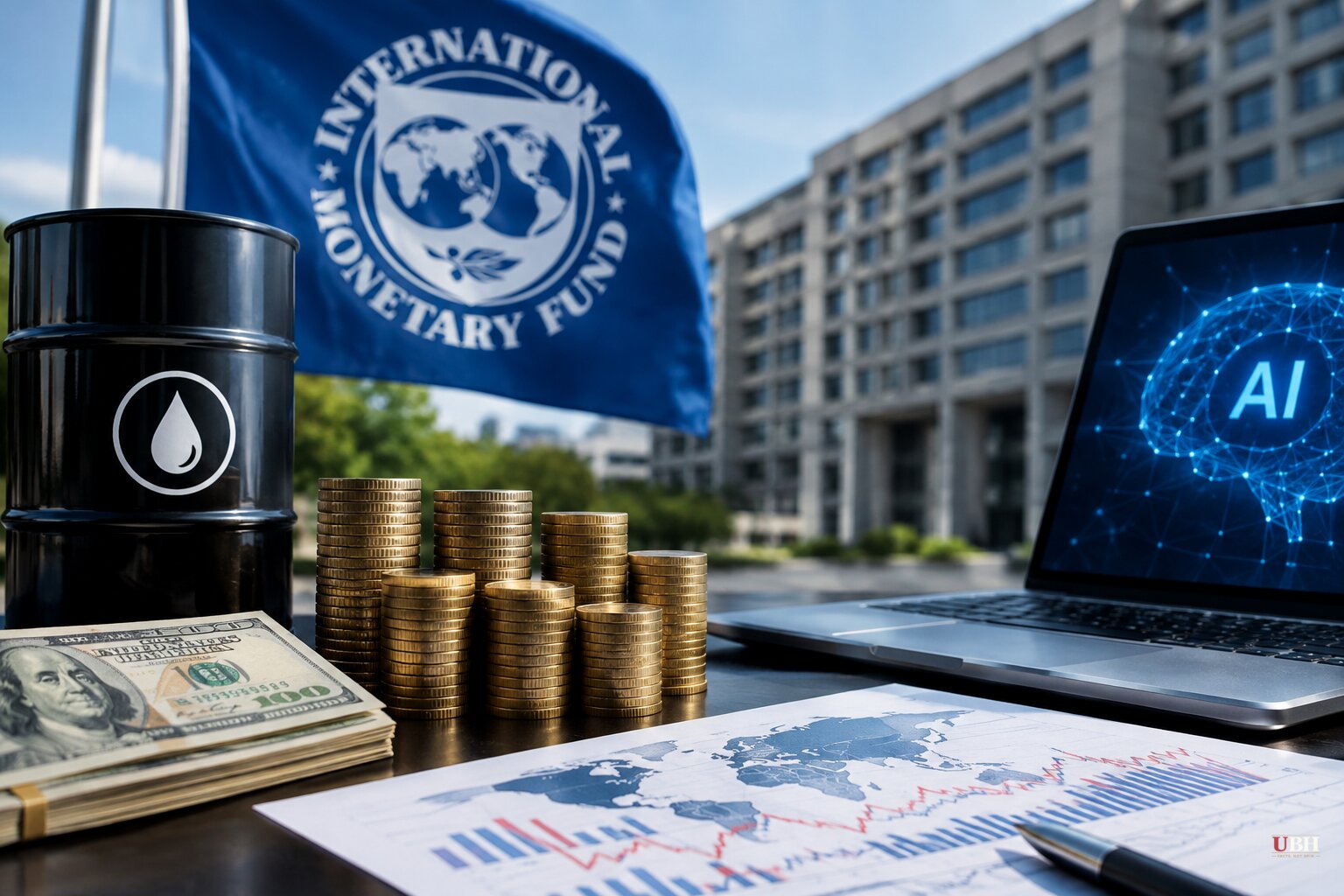
IMF Managing Director Kristalina Georgieva stood in Singapore on Wednesday, October 7, and told the world what anyone paying for diesel or a mortgage already knows: energy is expensive, debt is exploding, and nobody agrees on what AI is doing to the economy.
According to Reuters, Georgieva previewed the IMF and World Bank Annual Meetings scheduled for next week in Bangkok, where the Fund's 191 member countries will dig into new growth forecasts. She described the global economy as being pulled in two directions at once: a negative energy supply shock out of the Middle East, and a positive demand shock from AI investment that's also feeding inflation.
The Energy Math Doesn't Work Anymore
Back in July, the IMF built its 2026 growth forecast of 3.0% on an assumption that the Strait of Hormuz would start reopening by mid-July and return to pre-war conditions by March 2027, with oil averaging $89 a barrel in 2026 and $78 in 2027, per Reuters. That didn't happen.
Georgieva said oil is sitting at $100 a barrel, with damaged refining capacity tacking on another $100 per barrel in "crack-spread" margins for products like diesel, according to Reuters and Asia One, which both carried the same Reuters dispatch. Natural gas isn't faring better. LNG shipping through the Strait of Hormuz remains under threat, and winter heating demand is about to make that worse.
"Even if the war in the Gulf were to end soon, the problem of high energy prices will likely persist for some time," Georgieva said, adding that Brent futures point to elevated prices through 2027.
Modern Diplomacy flagged the obvious problem here directly: the IMF's July forecast rested on assumptions that "are now under greater pressure," since the Hormuz reopening never came. That's a real credibility issue for an institution whose entire job is forecasting.
Today also happens to be the third anniversary of the October 7, 2023 Hamas attack on Israel that killed roughly 1,200 people and took 251 hostages, according to a timeline published by Business Standard. The war that followed pulled in Iran-backed Hezbollah and the Houthis and eventually drew Gulf states into direct strikes, the same regional conflict Georgieva now blames for crushed energy exports and Strait of Hormuz shipping threats. The economic fallout the IMF is warning about didn't come from nowhere. It's a direct extension of a war now in its fourth year.
Debt: Worst Since World War Two
Georgieva said global public debt is tracking toward the highest levels since World War Two and is projected to exceed 100% of GDP before 2030, according to Anadolu Agency and the Guardian's live coverage. She named advanced economies, led by the United States, as the "worst offenders," with debt-to-GDP ratios running higher than emerging markets or low-income countries.
That's not a partisan jab. It's math built up over both the Biden and Trump administrations' spending, and the IMF isn't picking a side. "We cannot keep delaying necessary policy action, you have the tools, now have the wisdom to use them," Georgieva said, per the Guardian.
She called for "a prudently hawkish bias" in monetary policy and praised recent rate hikes from the Federal Reserve, the European Central Bank and the Bank of Japan as "highly appropriate." The Guardian noted the Bank of England has held rates steady but is expected to raise its base rate at its November meeting.
US, German and Japanese 10-year sovereign bond yields are now at their highest levels since 2007, 2009 and 1996 respectively, and still climbing, Georgieva said, according to Reuters.
AI Cuts Both Ways
On artificial intelligence, Anadolu Agency reported Georgieva's estimate that AI hardware and related products now account for more than 10% of world goods trade, and that AI could add up to 0.5% in extra annual world growth if countries manage the transition well. The catch: most countries aren't positioned to capture that upside. "The combined impact of these two forces is highly uneven across the world," Georgieva said, noting the AI boom is bypassing many economies entirely.
Calling for fiscal tightening while growth is already stuck at a sluggish 3.0% risks making a slowdown worse. That's a standard Keynesian objection to austerity timing, a legitimate economic argument rather than a fringe one. Georgieva's speech doesn't fully address it.
The new World Economic Outlook, due out during next week's Bangkok meetings, will show the sharpest downgrades in war-battered economies like Ukraine and the Gulf states hit by Iranian strikes, Georgieva said. Whether the Fund actually cuts its overall 2026 global growth number below 3.0%, and whether oil prices stay anchored near $100 a barrel through the winter heating season, remains to be seen when those forecasts land next week.
Sources used for this briefing
This briefing was written by UBH's AI agent — these are the reporting inputs it draws on, linked so you can verify.


