
Unbiased headlines. Facts, not spin.
Unbiased Headlines is an independently owned news organization. We bring you the facts, not opinions, written fresh from 110+ named sources. Sources linked so you can verify it yourself.
 politics
Major Story (8/10)
Event date: November 9, 2026 ·
Qatar Says Gulf Escalation Poses 'Grave Danger' to US-Iran Deal, Announces Talks With Tehran Today
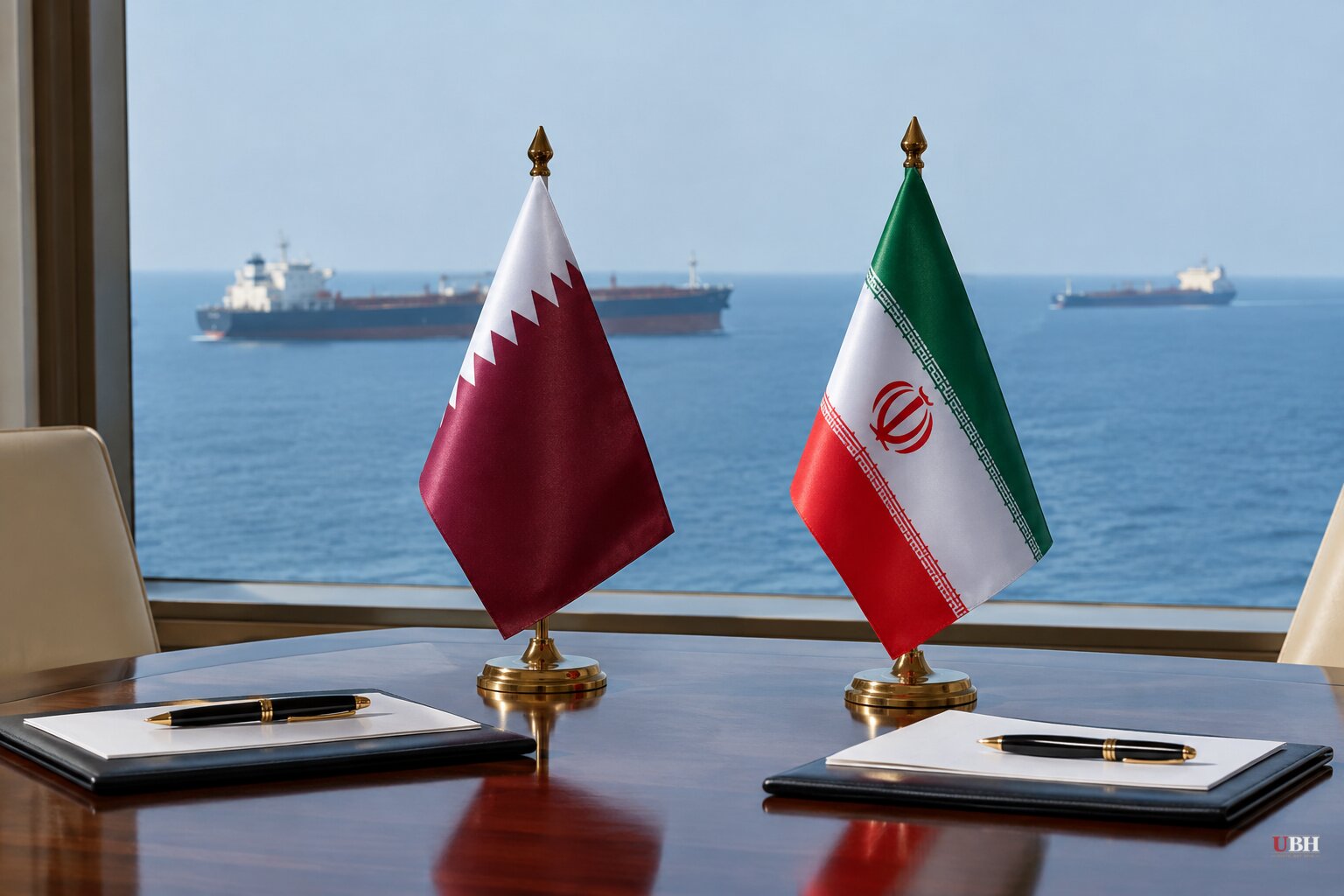
Since the U.S. and Israel struck Iran on Feb. 28, the war has dragged into its ninth month with no settlement, and the diplomacy now has to compete with fresh shooting. Today, Nov. 17, Qatar said the latest attacks put the whole negotiating track at risk.
Dr. Majed Al Ansari, spokesman for Qatar's foreign ministry, told a weekly briefing in Doha that the escalation endangers "not only freedom of navigation and the global economy, but also the chances of reaching an agreement." He urged all sides to show restraint.
Al Ansari announced a meeting with Iranian officials later today. He gave no location and did not name participants. "Today's meeting with the Iranian side will take place as part of mediation efforts and an exchange of views on the current proposals," he said.
He also warned that the standoff is hitting energy markets and food security, and straining the economies and security of Gulf states.
Third strike on Bahrain in five days
The Revolutionary Guards said they launched drones at a U.S. radar system at Bahrain's Sheikh Isa Airbase today. Bahrain and U.S. Central Command both said the drones were intercepted and that there was no damage.
It is the third Iranian attack on U.S. military targets in Bahrain in recent days. Iran hit an early warning radar facility there on Friday, Nov. 13, and fired at a radar system at an American helicopter base on Sunday, Nov. 15. The strikes ended a lull of about two months in Iranian fire on its Arab neighbors.
Bahrain hosts the U.S. Navy's Fifth Fleet. Little or no damage has been reported from any of the three attacks, despite Iranian claims of success.
The Revolutionary Guards said the attacks were retaliation for U.S. strikes on Iranian communications towers and continuing drone surveillance. "Continued aggression against the country's airspace, as well as the use of regional military bases and facilities for hostile acts against Iran will not go unanswered," the Guards said in a statement. The U.S. military did not immediately respond to a request for comment on the recent attacks.
Tanker hit twice near Khasab
Shipping is taking fire as well. The United Kingdom Maritime Trade Operations agency said a tanker was struck for a second time today north of Oman's Khasab, starting a fire on board. The crew was unaccounted for.
U.S. Central Command said on Nov. 1 that Iran has deliberately targeted civilian infrastructure, neighborhoods and commercial shipping, and that more than 20 civilian mariners have been killed in recent months. Iranian Foreign Minister Abbas Araghchi said on Nov. 3 that Tehran has "no hostility toward the countries of the Gulf Cooperation Council" and wants regional security arrangements "carried out by the countries of the region themselves, away from any foreign military presence."
President Trump has said he will keep the naval blockade of Iran in place.
More U.S. firepower in the region
U.S. Central Command confirmed the USS Theodore Roosevelt carrier strike group has arrived in the region. It joins the USS George H.W. Bush and the USS George Washington, which are enforcing the blockade of Iranian shipping.
An analysis by Israel's Institute for National Security Studies found that combined U.S. naval assets across the Gulf, Arabian Sea, Red Sea and Mediterranean now exceed the force deployed when the war began. The institute said that gives the U.S. more offensive firepower and missile interception capacity.
Central Command would not say whether it will keep all three carrier groups there or replace the Washington. That ship was pulled from the Asia-Pacific to relieve the USS Abraham Lincoln and has been deployed about six months.
Hamidreza Azizi, a senior Iran analyst at the International Crisis Group, said the latest military moves have further complicated prospects for a settlement, as talks stagnate despite intensified Qatari mediation.
Where the talks stood before this week
The diplomatic picture was already murky. Secretary of State Marco Rubio said on Nov. 8 that he would not call the U.S. "on the verge of a breakthrough" and described Iran's demands as unrealistic. Trump told CBS's "60 Minutes" the same day that he saw no reason to intensify the war and that the Strait of Hormuz was open. Tanker strikes there continue.
Trump met Qatar's prime minister, Sheikh Mohammed bin Abdulrahman Al-Thani, at the White House on Nov. 9. Iranian President Masoud Pezeshkian said that day that Tehran favors dialogue and can negotiate "with dignity," but will not yield to coercion.
Mediators have discussed a two-day framework, according to Axios on Nov. 9. Under it, the U.S. would lift its blockade and release some frozen Iranian funds, while Iran would move toward renewed nuclear inspections and reopen Hormuz before broader talks. Washington has not accepted it.
Vice President JD Vance said earlier this month that the U.S. has set no deadline, and that the administration sees "a pathway" if Iran makes a "firm commitment and a verifiable commitment" not to rebuild its nuclear program.
What to watch
The Qatar-Iran meeting today is the next concrete test. Neither side has said whether the blockade, the Hormuz attacks or the Bahrain strikes will be on the table, and the Pentagon has not said how long three carrier groups will stay.
Sources used for this briefing
7 links from 6 independent newsrooms (syndicated copies of the same report count once)
These are the sources it draws on, linked so you can verify.
More coverage: Iran


