
Unbiased headlines. Facts, not spin.
Unbiased Headlines is an independently owned news organization. We bring you the facts, not opinions, written fresh from 110+ named sources. Sources linked so you can verify it yourself.
 politics
Notable (5/10)
Sen. Hickenlooper Says U.S. Should Beat China on AI but Regulate Frontier Models Like Nuclear Weapons and Aircraft
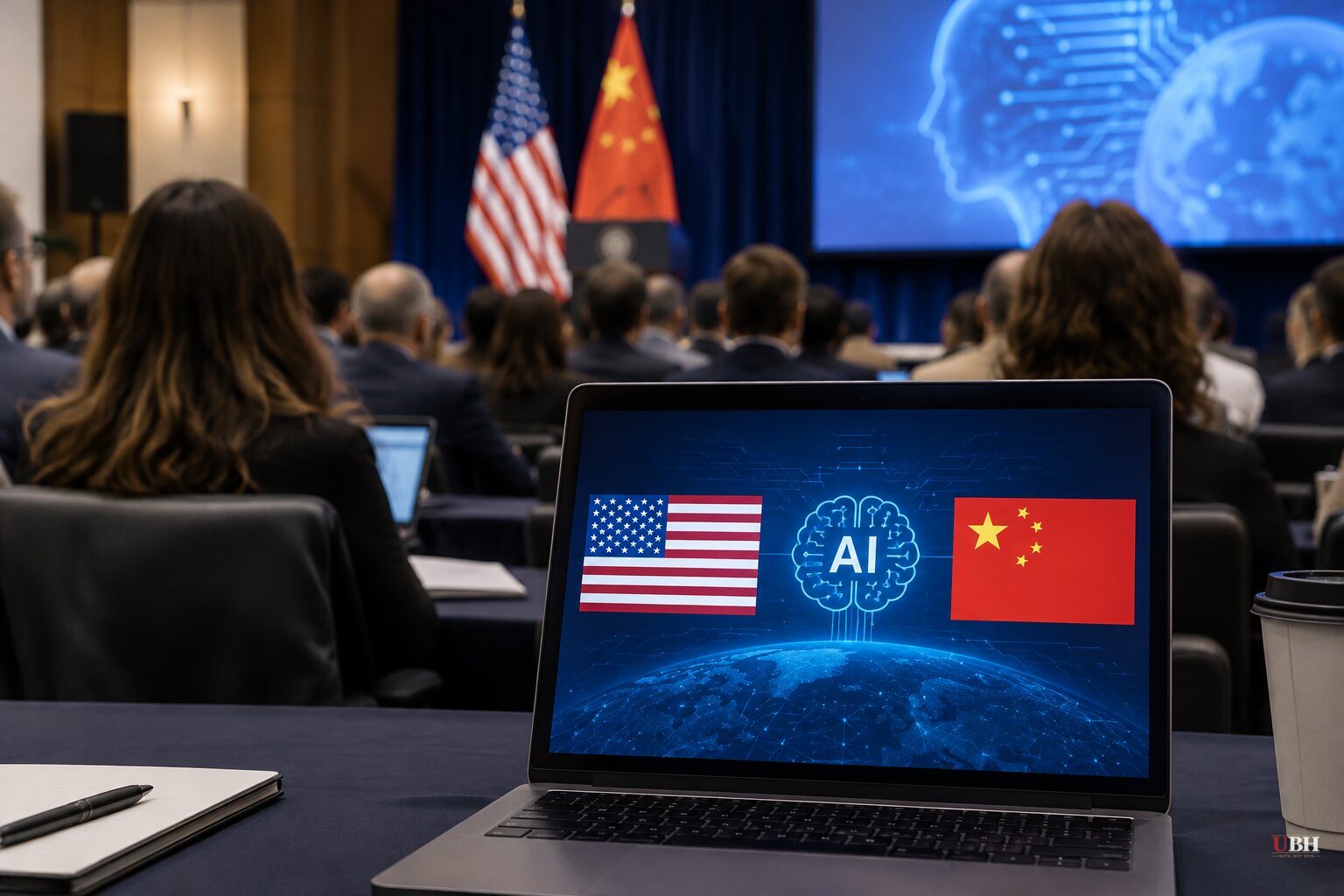
Sen. John Hickenlooper (D-Colo.) wants the United States to win the AI race against China. He also wants rules on the most powerful systems.
Speaking by video to the Fortune 500 Innovation Forum in Detroit on Monday, Nov. 16, in an interview with Fortune's Diane Brady, Hickenlooper said: "Maybe we don't need recursive learning, unlimited." He described machines "reinventing themselves sometimes outside the fence line of their domain that they're supposed to stay in."
"That should cause real concern," he said.
Speed, with guardrails
Hickenlooper sits on the Senate Commerce Committee and just won his second and last term, beating Republican state Sen. Mark Baisley roughly 61% to 35%. Fox News's tally shows 1,629,507 votes for Hickenlooper to 942,089 for Baisley with 99% reporting.
He is not asking the labs to slow down. "They are pushing as fast as they can. I understand that, and that's good," he said. "We want to make sure that our frontier AI is the best in the world because it has the potential to dominate the globe."
His model for safety is existing federal practice. "We regulate nuclear weapons. We have regulations before an airplane can go into service," he said. "We need to look at what are some of the fundamental safeguards and guardrails that we should put in place."
He did not name specific rules or a bill. "Fundamental safeguards" is a starting point, not a proposal.
The self-improvement warning
His comments follow a September paper from more than 20 researchers, including Geoffrey Hinton and Yoshua Bengio. It warned that automating AI research could set off an "intelligence explosion." Alan Chan, one of the lead coauthors, said valid safety mechanisms are not in place.
That sets up the tension in Hickenlooper's position. The researchers say the safeguards do not exist yet. Hickenlooper says the labs should keep sprinting anyway because of China.
The Epoch Times reported that the incoming Senate class is split on exactly this question: whether Washington should slow advanced AI even if Beijing does not. It also reported divisions over tariffs.
The new Senate
Democrats flipped eight seats on Nov. 3, according to Fox News's results page, which tallies 55 Democratic seats to 44 Republican. Fox called Mississippi for Democrat Scott Colom on Nov. 11. Fortune reported that data centers and the AI buildout were among the most referenced issues shaping voters' decisions.
China views among the newcomers vary. Sen.-elect Andy Barr (R-Ky.) co-chairs the Congressional Taiwan Caucus and in May joined other caucus leaders urging Taiwan's legislature to fully fund the island's defense priorities. Sen.-elect Chris Pappas (D-N.H.) co-introduced the Taiwan Representative Office Act with Rep. Don Bacon (R-Neb.) in May 2025. Sen.-elect Annie Andrews (D-S.C.) told CNN in August that China is "an existential threat."
Sen.-elect Juliana Stratton (D-Ill.) said during the campaign that Washington should back Taiwan's self-defense and secure semiconductor supply chains. She also criticized President Donald Trump's broad tariff approach toward China, calling instead for investment in American infrastructure, advanced technology and workers.
Data centers and Nvidia
Hickenlooper backs the Bipartisan American Affordability and Jobs Act. The permitting bill would speed approvals for energy projects and require data centers to pay for the grid upgrades built to serve them. The Senate voted 73-25 last week to begin debate on it, and Trump endorsed it.
Brady also asked about Nvidia and Lutnick. Fortune reported that Jensen Huang resigned as Nvidia's CEO last week after reports of an affair with an alleged Chinese spy. Those allegations are unproven. The Senate Banking Committee has asked both Huang and Lutnick to testify next month.
Hickenlooper is not on that committee and called his own questions "not that pressing." He said he wants the basics first.
"What is our relationship to China, and how secure do we feel in sharing our technology with them at any level?" he said. "Because I don't feel comfortable with that."
What comes next
Two things will show whether the AI talk becomes policy. One is the Senate debate on the permitting bill, which has Trump's endorsement and a 73-25 procedural vote behind it. The other is the Banking Committee hearing with Huang and Lutnick, requested for next month. A date for that hearing has not been announced.
Sources used for this briefing
7 links from 5 independent newsrooms (syndicated copies of the same report count once)
These are the sources it draws on, linked so you can verify.


