
Unbiased headlines. Facts, not spin.
Unbiased Headlines is an independently owned news organization. We bring you the facts, not opinions, written fresh from 110+ named sources. Sources linked so you can verify it yourself.
 politics
Major Story (7/10)
Senate Republicans Unveil $1.1 Trillion Defense Bill, Moving $69 Billion Out of Reconciliation Request
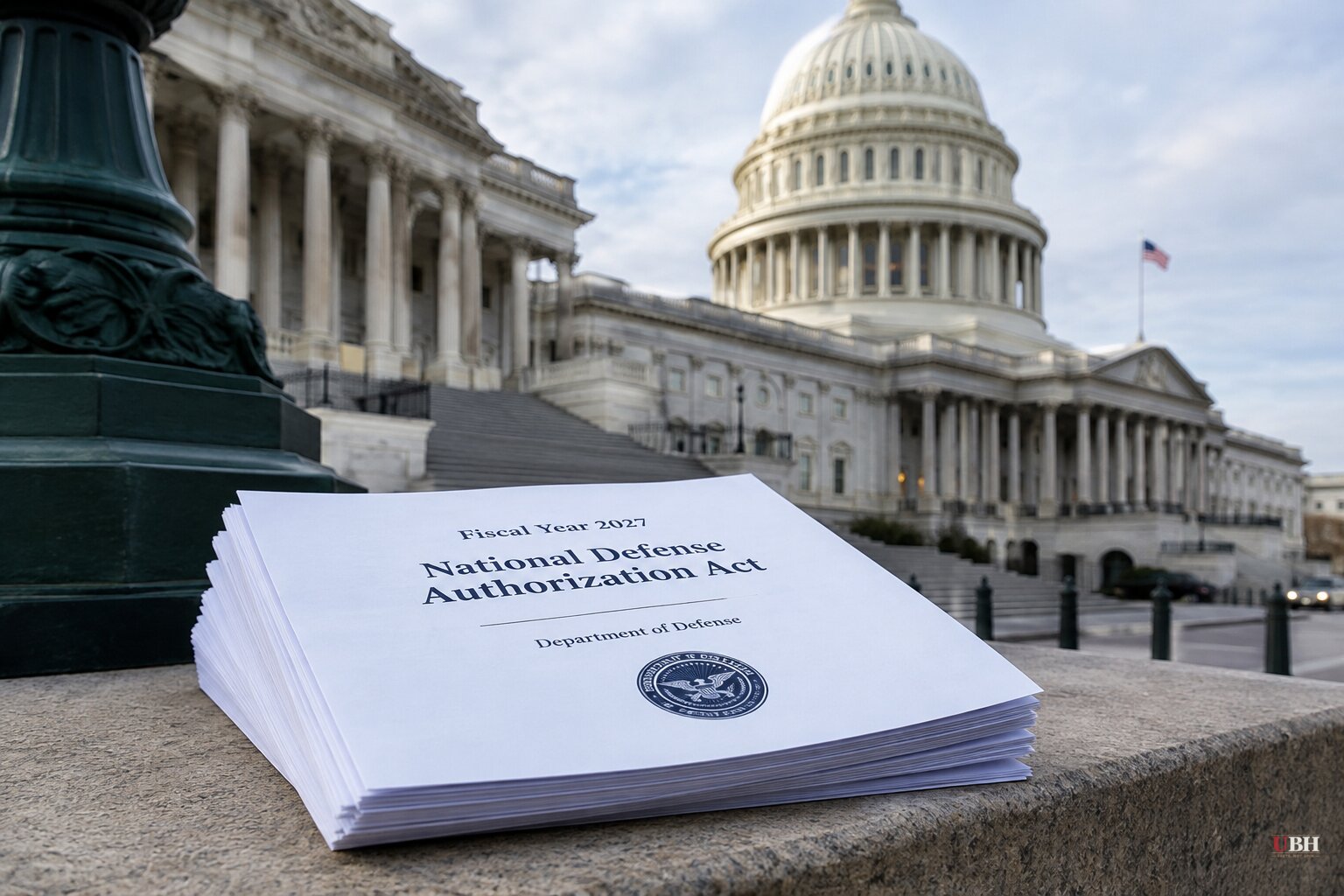
Senate Republicans on Monday, Nov. 16, unveiled a nearly $1.1 trillion defense appropriations bill for fiscal 2027. It is a historic number, and it is still well below what the White House wanted.
The Trump administration asked for $1.5 trillion: $1.15 trillion in the base budget and $350 billion through a party-line reconciliation bill. Lawmakers have not moved that reconciliation bill. The Senate appropriators' answer is to pull about $69 billion of it into the regular process.
What the bill buys
The Senate Appropriations Committee's summary says the $69 billion was "initially requested as one-time mandatory spending by the administration" and is now "provided as discretionary funds in order to provide stable, sustainable, and predictable funding for critical capabilities across the Joint Force."
The major lines:
- $202.9 billion for pay and benefits, enough for a 3.6 percent raise.
- $47.2 billion for munitions procurement and acceleration.
- $35.6 billion for air and missile defense, including Golden Dome.
- $42 billion for shipbuilding, including nearly $2 billion in additional money for an Arleigh Burke-class destroyer.
- $11.1 billion for aircraft procurement, modifications and sustainment.
- $6.2 billion for drone and counter-drone systems.
- Over $285 billion for weapons procurement and $203 billion for research, development and testing.
The bill does not include military construction.
Golden Dome gets $9.4 billion and the new Defense Autonomous Warfare Group gets $3 billion. Both are far below what the Pentagon requested, according to Breaking Defense, which reported the sums would be enough to keep both programs going. The administration had planned for reconciliation to carry the bulk of a $55 billion push for the warfare group.
Allies and security cooperation
The defense bill sets aside $5.4 billion for security cooperation. That includes about $1 billion for the First Island Chain Security Cooperation Initiative, aimed at partnerships with the Philippines and Taiwan. It also includes $750 million for the Ukraine Security Assistance Initiative and about $175 million for the Baltic Security Initiative. Funding rises for cooperation with Jordan and Bahrain.
The committee also released text for a State Department and foreign operations bill at $50.11 billion in base discretionary funding. Israel would receive $3.3 billion in Foreign Military Financing, Taiwan $300 million and the Philippines $100 million. It includes $400 million for a fund countering Chinese influence and $1.8 billion to carry out the Indo-Pacific Strategy.
Ukraine would get $129 million in security assistance. A new Countering Iran Influence Fund would receive $45 million, and another $55 million would go to promote democracy and reforms in Iran.
Why the money moved
Sen. Mitch McConnell, the Republican chairman of the defense appropriations subcommittee, who is retiring at the end of this Congress, framed the bill as a break from one-time cash infusions.
"The nature of warfare is changing, and America's adversaries are working together to threaten us. Deterring these threats is a project bigger than one-time surges of cash," McConnell said in a statement. "Tomorrow's joint force will need consistent investment, year after year."
That has a plain consequence for taxpayers. Money that would have been a one-time reconciliation item is now part of the annual baseline, and baselines tend to stay. McConnell called the bill "an historic new baseline."
The move also reflects doubt that the $350 billion can pass on a party-line vote. The White House still wants it. Senate Majority Leader John Thune declined Monday to say whether a defense-only reconciliation bill is under active consideration, according to Punchbowl News. Senate Budget Chairman Ron Johnson said last week the White House had expressed interest in another package but that lawmakers had not settled on its contents.
Reconciliation also requires both chambers to adopt a budget resolution first. Appropriators have little love for the process either, because it moves control of the money from their committee to the authorizers.
The Dec. 11 deadline and the Iran war
Current government funding expires Dec. 11. Republicans have five scheduled weeks in session before year's end, according to the Daily Wire, and negotiations have stalled for months.
Democrats are demanding domestic spending increases to match the defense increases. Sen. Patty Murray of Washington, who is expected to lead the Appropriations Committee when Democrats take control, wrote on X last week: "The power of the purse belongs to CONGRESS! It's NOT Trump's money. Taxpayer dollars belong to the American PEOPLE."
Some Democrats also see the deadline as leverage to force the administration to end the war against Iran. Senate Democrats have already blocked their chamber's version of the National Defense Authorization Act over objections to Trump's handling of that war. The House passed its version in July, authorizing more than $1 trillion.
The Pentagon says it needs additional money to replenish precision weapons and other munitions used in the fighting. The bill's $47.2 billion for munitions is the Senate GOP's first answer.
What comes next
The Senate number has to be reconciled with a slightly lower topline from House appropriators. The Armed Services Committees in both chambers landed on $1.14 trillion, a figure that is not directly comparable to the appropriators' totals.
The open question is whether Senate Democrats will supply the votes to clear the 60-vote filibuster threshold by Dec. 11 without a vote or a concession on Iran. Republicans have not said what they will offer them.
Sources used for this briefing
6 links from 6 independent newsrooms (syndicated copies of the same report count once)
These are the sources it draws on, linked so you can verify.


