
Unbiased headlines. Facts, not spin.
Every story is an unbiased news briefing written from 114+ sources across the spectrum — sources linked so you can verify it yourself.
 economy
Notable (5/10)
Event date: September 24, 2026
economy
Notable (5/10)
Event date: September 24, 2026
Peter Schweizer Says Xi Purged Six of Eight Central Military Commission Members as Analysts Flag China's Debt Drag
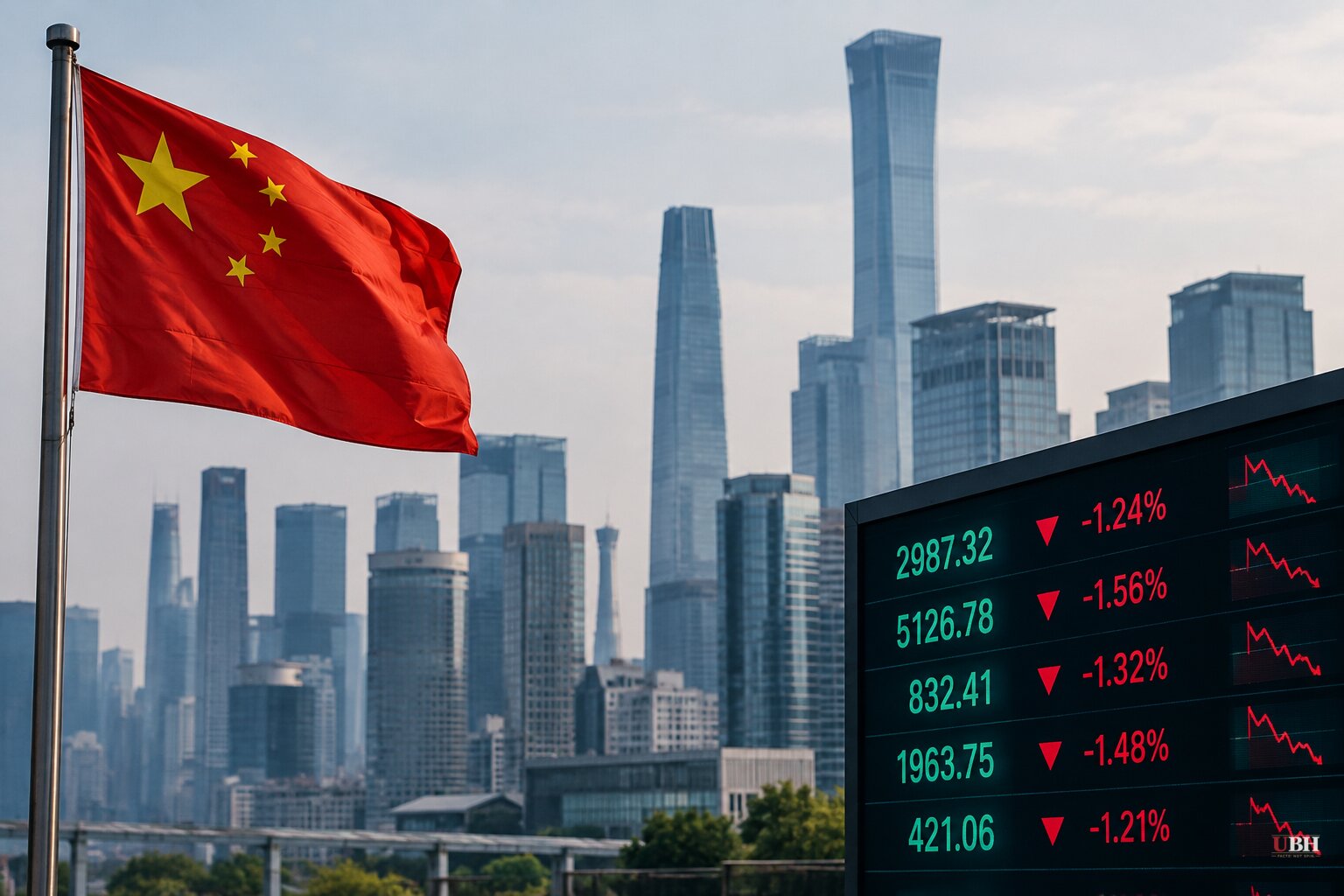
China has dominated this month's economic headlines, from record gold imports to trade talks with the EU. A different debate is now building around Xi Jinping himself: how secure is his grip, and how sound is the economy behind it?
Peter Schweizer, author of three bestselling books on China, argues Xi is weaker than Washington commentary assumes. Speaking on The Drill Down podcast with Eric Eggers of the Government Accountability Institute, Schweizer made a series of specific claims. They come from his own account and are not independently confirmed.
The military purges
Schweizer says Xi purged two top generals for "political unreliability" as he was boarding a plane to come to the United States. He says both sat on the Central Military Commission, which he calls the most important political body in China.
In the past two years, Schweizer says, Xi has purged six of the commission's eight members. "They were arrested, imprisoned, and charged with capital crimes," he said. "The only two remaining are Xi himself, and the dude that he has investigating the other guys."
He adds that more than 45 Chinese generals or admirals have gone missing over the same period. "Their families don't know where they are," Schweizer said. "This is not the sign of a guy who is stable and loved and in a strong position."
Xi has chaired the commission since 2012, alongside his roles as Communist Party general secretary and president, a post he took in 2013.
Eggers framed the purges as evidence of instability and of Xi's ability to crush dissent in a way leaders outside dictatorships cannot. Schweizer drew a comparison to Stalin's repeated purges of alleged "counterrevolutionaries."
The opposing reading is the one Schweizer says dominates domestic U.S. coverage: that Xi enjoys a smooth ride and negotiates from strength. Schweizer's answer is that Xi's apparent stability exists "only because Xi puts his dissenters in jail." That is his interpretation. Purges can also signal a leader consolidating power, and nothing in his account shows organized resistance to Xi.
The economic numbers
Schweizer says China's economy is headed for its lowest growth since 1991. He also says Beijing has stopped publishing a lot of data, naming business confidence and real estate transactions. Eggers said the reality is "largely hidden."
Eggers put total U.S. debt at about 125 percent of annual GDP, against 300 percent for China. Schweizer says all of this should frame how Trump and Xi are assessed when they meet in Washington.
A separate analysis in the Sunday Guardian Live lays out the structural problem in more detail. It says Chinese banks have added more than $30 trillion in assets since 2008. By 2024 the banking system had reached around $59 trillion, roughly three times GDP.
Much of that, the analysis says, is tied up in empty apartments, loss-making factories and loans that may never be fully repaid.
Property, prices and households
The same analysis says construction and property once made up close to 30 percent of China's economy. Their collapse has hit household wealth hard, because Chinese families put an unusually large share of their savings into housing.
Household consumption remains unusually low as a share of the economy, and disposable incomes have grown slowly. Persistent deflation encourages consumers to postpone purchases and businesses to cut prices. Weak demand then discourages investment, while the debt from the investment boom stays on the books.
In the analysis's words, the problem is "too much debt in an economy that is struggling to generate the growth needed to service it."
It adds a human-capital warning. China invested heavily in physical infrastructure but less in education. Educational attainment remains markedly weaker than in South Korea and Taiwan at comparable stages of development, the analysis says. Lending more money cannot fix that.
Weakness is not collapse
The two accounts do not fully agree. The Sunday Guardian Live analysis says China "remains a formidable country," with world-class manufacturing, a huge domestic market, large financial resources and a state able to mobilize capital at a scale democracies rarely match. The danger it describes is "not necessarily economic collapse" but "stagnation."
That is a narrower claim than Schweizer's talk of instability. Slow growth under a leader who controls the party, the army and the credit system is a different problem from a regime losing control.
What neither account establishes is how Xi plans to respond. The central economic question is whether Beijing will move away from the investment-led model that produced the debt, or keep borrowing to sustain growth. The central political one is whether the commission purges Schweizer describes are confirmed by Chinese authorities or remain a matter of outside claims.
Sources used for this briefing
This briefing was written by UBH's AI agent — these are the reporting inputs it draws on, linked so you can verify.


