
Unbiased headlines. Facts, not spin.
Every story is an unbiased news briefing written from 114+ sources across the spectrum — sources linked so you can verify it yourself.
 economy
Notable (6/10)
October 12, 2026 at 06:19 AM
economy
Notable (6/10)
October 12, 2026 at 06:19 AM
Ex-CFTC Chair Pham Says Agency Needs No New Law to Regulate Crypto. Its Staff Is Down 21%
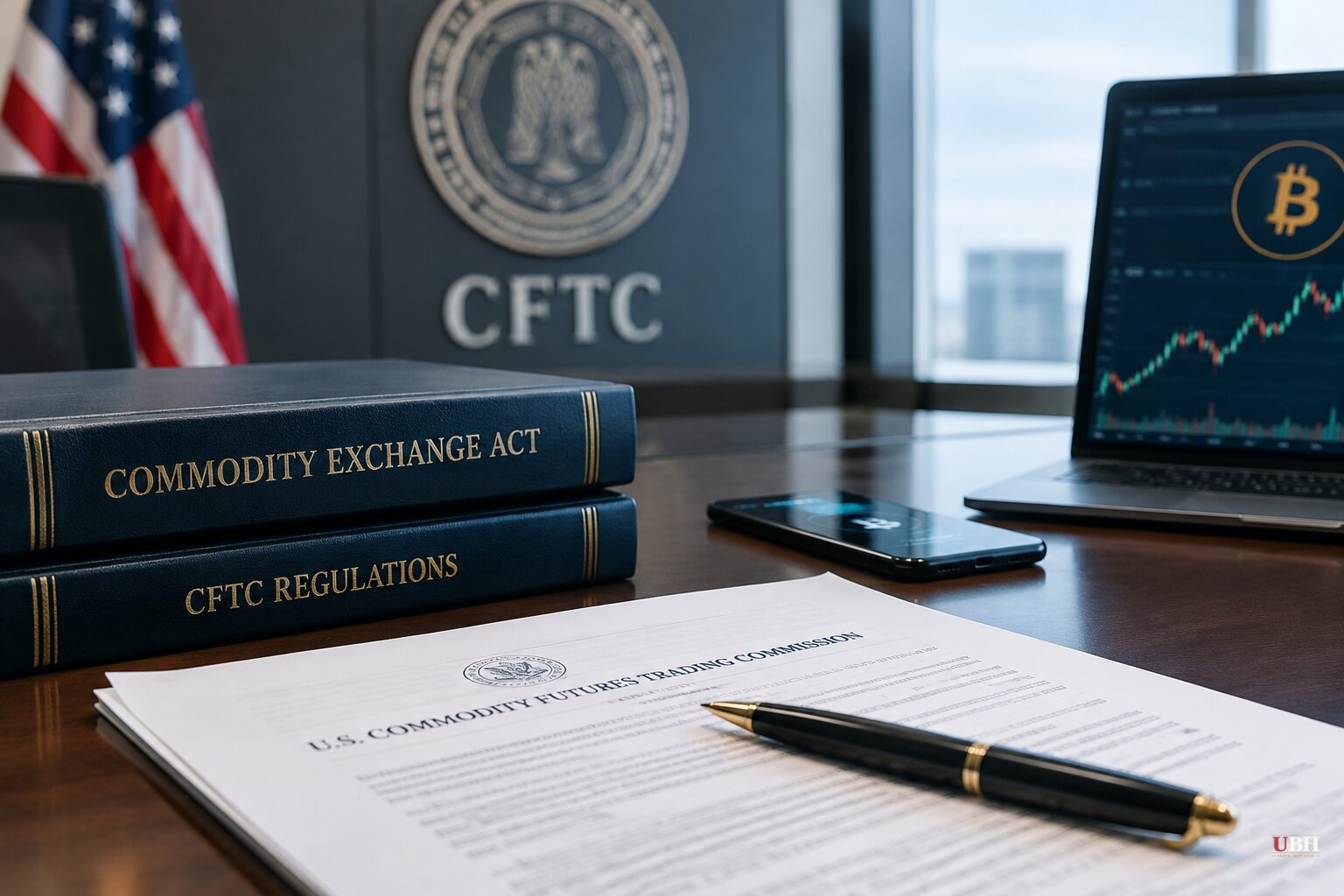
Since the CFTC floated its retail crypto proposals on Oct. 5, the argument over whether the agency can carry that load without a new law from Congress has moved to the conference circuit. On Monday, Oct. 12, Caroline Pham made the case that it can.
Pham was acting CFTC chairman from Jan. 20, 2025, until she left the agency on Dec. 22, 2025. She now serves as chief legal officer and chief administrative officer at crypto payments company MoonPay. Speaking at the Token2049 conference in Singapore, she said the Commodity Exchange Act gives the CFTC jurisdiction over virtually every commodity.
The exceptions, in her telling, are onions and movie box office receipts. Everything else is in play, digital assets included.
Pham's case: existing law is enough
Pham said crypto regulation does not require congressional legislation and can move through agency rulemaking alone. She said the industry has turned to regulators since the CLARITY Act failed to advance last month.
She called the CFTC's recent proposals on retail crypto trading, including leveraged and margined trading, "absolutely the kind of protection that US retail crypto traders need." Under Chairman Michael Selig, the agency issued an advance notice of proposed rulemaking around Oct. 5. It is an early step. The agency asks the public for input before drafting a formal rule, and nothing binding exists yet.
Pham also argued that pushing these transactions onto federally supervised trading platforms protects investors better than a patchwork of state laws. She said the CFTC's principles-based framework is flexible enough to cover new products, including derivatives tied to AI computing resources.
Her other remarks were about market plumbing. Settling a full day of financial-market trading in real time on a blockchain would require roughly $15 trillion in cash, she said. Banks net their obligations and settle only the difference, so she expects tokenized deposits to play an essential role in institutional transactions. Stablecoins, she said, fit better where counterparties don't trust each other.
She also predicted that within two years the New York Stock Exchange and Nasdaq will list real tokenized stocks with substantial volume. Those must keep shareholder rights such as voting, she said, unlike synthetic tokens issued without a company's authorization.
The agency's capacity
Pham's reading of the statute is one question. Whether the CFTC has the people to enforce it is another.
By the end of 2025, the CFTC had 21% fewer staff than its previous 10-year average, according to U.S. Office of Personnel Management data cited by NPR. Staffing fell 22% between January 2024 and January 2025 alone. The agency's own annual reports show nearly 80% fewer enforcement actions in 2025 than the annual average of the prior decade.
Those declines overlapped with Pham's time as acting chairman. The agency also moved away from certain crypto cases during that period.
Jeff Le Riche, who was a CFTC enforcement lawyer from 2005 to 2025, told NPR the cuts were not a coincidence. He said the administration ran partly on being friendlier to crypto, and that staff who had brought cases against firms including Gemini, Mirror Trading, Voyager, Celsius and FTX were pushed out. "It castrated the enforcement team," Le Riche said. Joe Konizeski, a 26-year CFTC enforcement lawyer, was among dozens forced out in 2025, NPR reported.
The CFTC did not address Le Riche's claim directly. Spokesman Zach Fulton said the agency "remains committed to promoting integrity and responsible innovation in U.S. derivatives markets" and that Selig is grateful to the staff who remain. Pham has not been quoted responding to the staffing figures.
Pham's own position carries a disclosure. She now works for a company in the industry the CFTC is writing rules for. The CFTC's December 2025 digital-assets pilot, which allowed BTC, ETH and USDC as tokenized collateral in derivatives markets, launched during her final weeks in office.
Prediction markets add to the load
The same shrunken agency also supervises prediction markets. Polymarket has rolled out deposit limits that can't be instantly undone, a self-exclusion list, and a partnership with gambling-addiction therapy provider Birches Health. Malea Otranto, Polymarket's head of global safety, told CNN the priority is getting the tools to users.
Sports and sports parlays made up more than 98% of trading volume this month on Polymarket's U.S. site, according to data firm TickerTracker.
Jonathan Cohen, who leads gambling policy at the American Institute for Boys and Men, praised the changes but doubted their reach. State regulator data show few gamblers use similar tools on sportsbooks, he said, and the restrictions are "standard fare for online sports-betting platforms."
Because prediction sites are classified as federally regulated financial markets, they are not bound by state casino and sportsbook consumer-protection rules. Their safeguards are voluntary.
What comes next
The retail crypto rulemaking is still at the advance-notice stage. The open question is whether an agency with roughly a fifth fewer staff than its decade average can supervise leveraged crypto trading and a sports-dominated prediction market at the same time. Pham says the legal authority is already there. The agency has yet to say how it will staff the job.
Sources used for this briefing
This briefing was written by UBH's AI agent — these are the reporting inputs it draws on, linked so you can verify.


