
Unbiased headlines. Facts, not spin.
Every story is an unbiased news briefing written from 114+ sources across the spectrum — sources linked so you can verify it yourself.
 economy
Notable (6/10)
Event date: September 29, 2026
economy
Notable (6/10)
Event date: September 29, 2026
Trump Heads to Nebraska Monday as Ranchers Fume Over Beef Import Order
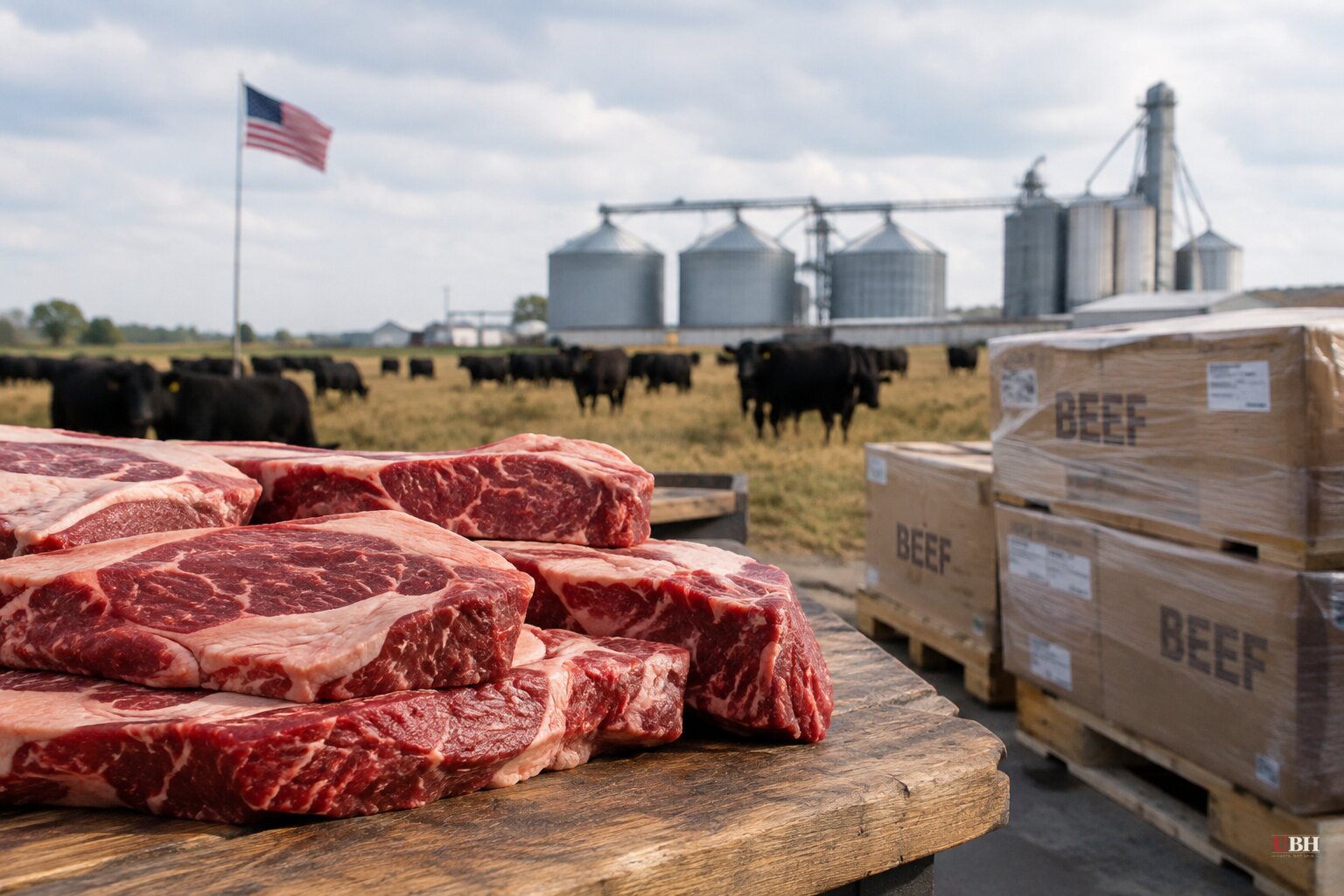
President Donald Trump is scheduled to rally in Grand Island, Nebraska, on Monday, Oct. 12, alongside Republican Sen. Pete Ricketts. He arrives in a state where the ranchers who helped deliver it for him are angry about his beef policy.
The flashpoint is a temporary order that took effect Sept. 1. It expands lower-tariff access for 300,000 metric tons of imported lean beef trimmings. The goal is to cut consumer prices. Ground beef hit a record $6.92 a pound, according to a Fox News opinion column, nearly 60% above what Americans paid five years ago.
Ranchers say the timing could not be worse. The announcement landed just before the September-November window when most U.S. calves are weaned and sold. Nebraska rancher Yvette Mannon, 63, a Trump voter, said the cattle market "tanked immediately."
"So we're 'Buy American,' 'Let's Make America Great,'" she said. "But for you guys over here, sorry. It just felt like a betrayal."
A rancher's year, itemized
Mannon's year illustrates the squeeze. A wildfire in April destroyed 1,600 grazing acres and 13 miles of fence on the ranch she bought in 2002. Her 300 cattle survived.
Replacing the fence at $4.89 a foot cost more than $300,000. She blames steel prices, which she says are heavily affected by Trump's tariffs. She also had to haul hay to her herd daily with diesel, which she says was up more than 40% from a year earlier.
James Mitchell, an agricultural economist at the University of Arkansas, said imported beef, the opening of the southern border to Mexican cattle and other administration decisions have hit cattle markets "negatively, as a whole." He noted that cattle markets run in 10-12 year cycles, and many producers are now losing hundreds of dollars per head.
Costs hitting from every direction
The pressure is not limited to cattle. The war with Iran has driven up diesel and fertilizer costs. Fertilizer is up 15% this year, and diesel is up 80%, according to NPR's reporting. Retail diesel averages about $6.50 a gallon, per AAA.
Rick Telesz, who farms 700 acres in western Pennsylvania, pays about $6 a gallon. His combine alone burns 150 gallons a day. "It's a cost that a farmer can't pass on," he said.
China's retaliation for Trump's tariffs is also still biting. Economist Chad Bown told the Peterson Institute for International Economics that soybean purchases are returning only slowly. He said exports of cotton, wheat, pork and beef "were devastated in 2025, and there's no evidence of them coming back."
The USDA projects farm revenue will rise this year as crop prices rebound. But it also projects producers of all major row crops will lose money in 2026 for the fourth straight year. "They're paying way more to grow a crop and they're not making near enough for it," said Faith Parum, an economist at the American Farm Bureau Federation. The Farm Bureau's data shows Chapter 12 farm bankruptcies rose 46% in 2025, to 315 filings.
The administration's case
The White House says the goal is cheaper food for families. Agriculture Secretary Brooke Rollins has expressed sympathy for ranchers. She has acknowledged the imports will cause market volatility while the administration works on high grocery prices.
Producers argue that cheaper foreign beef pushes cattle prices down just when ranchers need stronger prices to justify rebuilding a herd already at historic lows.
The Fox column argues the underlying problem is domestic. It says four companies, two of them Brazilian-owned, control roughly 85% of U.S. beef processing capacity, up from 36% in 1980. It also says a rancher whose beef is processed under a USDA-certified state inspection program still cannot sell it across a state line. In that account, imports are easier than selling to a neighbor.
The administration has also targeted wolves. Trump ordered the Interior secretary to begin removing gray and Mexican wolves from the endangered species list, and the Agriculture secretary to encourage states to make it easier to shoot them.
An Inside Climate News review of state data found confirmed wolf kills in 2025 ranged from nine cattle in Washington to 155 in California, or 197 counting probable attacks. Arthur Middleton, a wildlife management professor at UC Berkeley, said the focus on legal status is "a big missed opportunity." He said USDA and Interior could expand technical and financial help for ranchers "almost overnight."
The Senate race
The discontent has made a race that was not expected to be competitive into one the national parties are watching. Ricketts, a former governor appointed to the seat Ben Sasse vacated in 2023, is seeking his first full six-year term. His opponent is independent Dan Osborn, a former labor union chief who lost to Sen. Deb Fischer by 7 points in 2024.
National Democrats back Osborn. He has refused to say which party he would caucus with if elected.
Ricketts has broken with the White House on beef. "The plan to import low-quality foreign beef is not helping Nebraska ranchers," he told the Associated Press. "I would advise the White House to change that policy and look for longer-term things that will help us build the size of the herd and ultimately bring the price of beef down for consumers."
Both Trump and Gov. Jim Pillen have announced fuel-cost relief for farmers and ranchers in recent weeks. The White House has not said whether it will revise the import order. Trump follows Grand Island with a San Antonio rally on Wednesday, Oct. 14, and Election Day is Nov. 3.
Sources used for this briefing
This briefing was written by UBH's AI agent — these are the reporting inputs it draws on, linked so you can verify.


