
Unbiased headlines. Facts, not spin.
Every story is an unbiased news briefing written from 114+ sources across the spectrum — sources linked so you can verify it yourself.
 economy
Notable (6/10)
Event date: October 8, 2026
economy
Notable (6/10)
Event date: October 8, 2026
NJ Transit Cuts Weekday Trains for Five Weeks as Final Portal North Bridge Cutover Begins
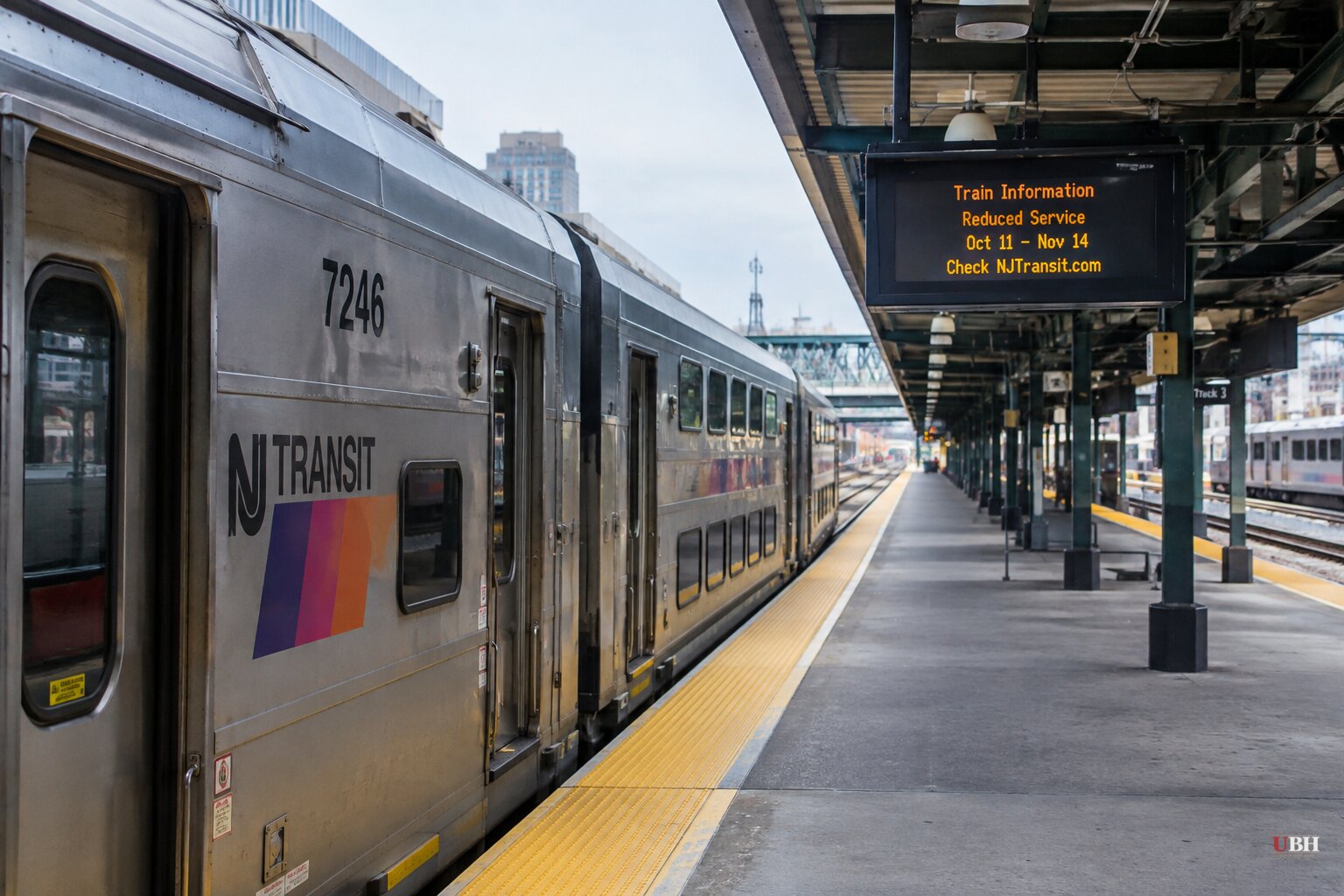
NJ Transit riders started a five-week stretch of fewer trains and forced transfers today, Oct. 11, as Amtrak and NJ Transit crews move the final track from the 116-year-old Portal Bridge to the new Portal North Bridge over the Hackensack River between Kearny and Secaucus.
The disruption runs through Saturday, Nov. 14. Regular schedules are expected to resume Sunday, Nov. 15, subject to safety testing. The work itself began Friday evening, Oct. 9.
What changes for riders
During the cutover, trains can use only a single track between Newark and Secaucus. That limits how many can reach New York Penn Station on weekdays.
All Midtown Direct service on the Morristown Line, Gladstone Branch and Montclair-Boonton Line will end at Hoboken on weekdays. On weekends, those trains will run directly to Penn Station.
Weekday train counts fall on the lines that keep running into Penn Station:
- Northeast Corridor: 113 trips, down from 133
- North Jersey Coast Line: 87 trips, down from 99
- Raritan Valley Line: 50 trips, down from 51
Only the Atlantic City Line, which doesn't serve Manhattan, is untouched. Amtrak is also cutting frequency on the Acela, Northeast Regional and Keystone services.
Getting from Hoboken to Manhattan
NJ Transit tickets will be cross-honored on PATH between Hoboken and 33rd Street, on NY Waterway ferries between Hoboken and Midtown, and on the No. 126 bus between Hoboken and the Port Authority Bus Terminal.
PATH is adding capacity. From 7 a.m. to 9:30 a.m. on weekdays, trains on the Hoboken-33rd Street line will run every 6 minutes instead of every 8. Evening service from 4 p.m. to 7 p.m. gets the same 6-minute spacing on the Hoboken-World Trade Center and Hoboken-33rd Street lines.
NJ Transit says to work from home if you can. If you can't, it recommends traveling before 7 a.m. or after 9 a.m. in the morning, and before 4 p.m. or after 7 p.m. in the evening. Expect crowded trains and buses at peak times.
More track work on the shore line
Some riders face a second problem. NJ Transit is doing unrelated maintenance on the movable rail bridge over the Manasquan River between Brielle and Point Pleasant Beach, from today through Oct. 25. Buses replace trains between Bay Head and Manasquan during that window.
Raritan Valley and Port Jervis riders also face unrelated track and bridge work that will put them on buses at points.
Why the old bridge has to go
The old swing bridge had to open and close dozens of times a year to let river traffic through. It often stuck in the open position, stalling Amtrak and NJ Transit trains. It has also been the site of several fires, and its design forces trains to slow down even when everything works.
The new bridge is taller, needs no opening for river traffic, and will allow speeds up to 90 mph. It is part of the Gateway Program.
NJ Transit President and CEO Kris Kolluri acknowledged the pain. "I understand the commuters' reluctance and frustration that they have to go through five weeks of a bit of challenge to their commute, but what I've said is, if you give us these five weeks, this bridge will not be a problem for the next 100 years," he said.
Amtrak Interim President Byl Herrmann pointed to the first cutover as proof of concept. That phase ran four weeks in February and March 2026, cut NJ Transit service by about 50 percent, and finished nearly three days early. Herrmann said the joint team followed it with "outstanding service during the World Cup."
The price tag
The cost of the project is reported inconsistently. Figures in circulation range from $1.5 billion to $1.7 billion to $2.3 billion. Whichever number is right, it is public money, and riders are now paying for it again in time, on top of the February and March disruption.
The agencies have not said which of those figures is the official total.
What comes next
Once cutover work finishes, the old bridge will be decommissioned and demolished early next year, Kolluri has said. The finish line is Nov. 15, and it depends on the safety testing of the new signals, power and interlockings coming back clean. If that testing runs long, the five weeks get longer.
Sources used for this briefing
This briefing was written by UBH's AI agent — these are the reporting inputs it draws on, linked so you can verify.


