
Unbiased headlines. Facts, not spin.
Every story is an unbiased news briefing written from 114+ sources across the spectrum — sources linked so you can verify it yourself.
 economy
Major Story (7/10)
October 12, 2026 at 01:30 AM
economy
Major Story (7/10)
October 12, 2026 at 01:30 AM
China Imported a Record $158.8 Billion of Gold in the First Eight Months of 2026
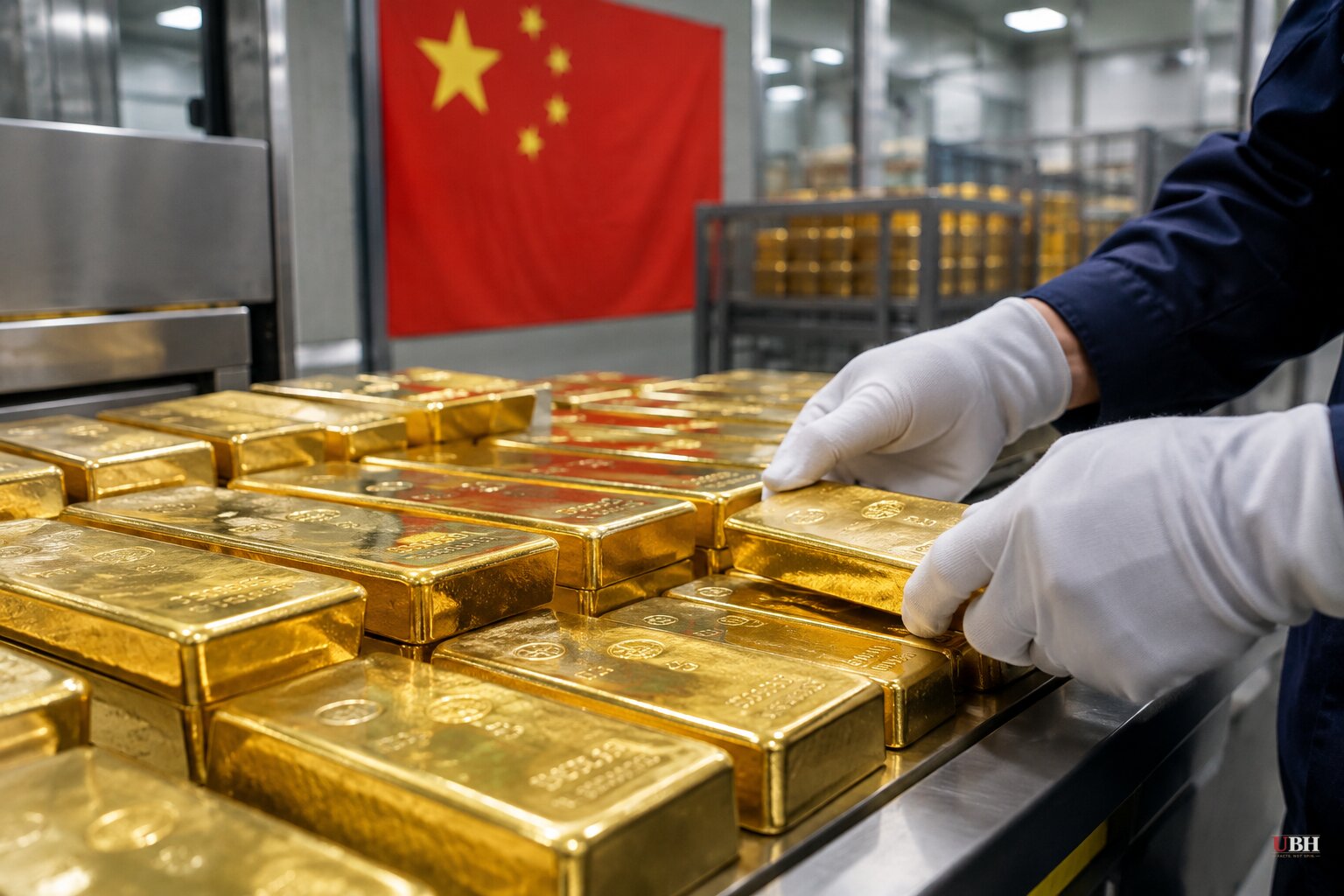
China's central bank has now bought gold for 23 straight months, the longest streak since at least 2015.
The People's Bank of China added about 23 tonnes in September, its biggest monthly purchase in almost three years, according to State Administration of Foreign Exchange data.
The import numbers
Customs data show China spent a record $158.8 billion importing more than 1,000 tonnes of gold in the first eight months of 2026. For all of 2025, the country imported 886 tonnes at a cost of $96.5 billion.
The eight-month dollar figure already exceeds last year's full-year total, and so does the tonnage. The dollar total rose by far more than the tonnage did, which means most of the gap is price, not volume.
It isn't only the central bank. Aakash Doshi, head of gold strategy at State Street Investment Management, said consumer gold imports hit a record over the same eight months. He said surging premiums on China's onshore prices point to "stronger winter seasonal demand."
Lisa Liu, managing director at Gold Mountains Asset Management, part of Zijin Mining Group, China's largest gold miner, said both the central bank and private investors are diversifying toward "an asset with no counterparty risk, as part of a broader long-term wealth preservation strategy." Zijin has an obvious commercial interest in strong gold demand.
Why Beijing wants metal instead of paper
Carsten Menke, an analyst at Julius Baer Group, says the PBOC's main motive is political. He points to "the weaponization of the U.S. dollar and the related desire to be less dependent on U.S. Treasuries as a reserve asset."
The precedent is real. Western governments froze Russia's central bank assets after the 2022 invasion of Ukraine. Gold sitting in a country's own vaults can't be frozen the same way.
China's Treasury holdings fell to $618 billion in July, an 18-year low, according to U.S. Treasury data. Beijing has been steadily diversifying its foreign-exchange reserves away from U.S. debt.
Menke's reading is that moving reserves out of reach of American financial pressure is the point. He also said Beijing's plan to build a deeper domestic gold market is prompting it to replenish inventories. He estimated the central bank bought around 190 tonnes this year by end-August, including 110 tonnes that were unreported.
Chinese households have few places to park savings
Households are buying too. Ordinary Chinese savers are buying gold jewelry, bars and coins, and the alternatives are poor.
Real estate, once the main store of household wealth, is in a multiyear slump. The CSI 300 index is down about 8% this year, while the S&P 500 is up 13%.
Returns from bank deposits and bonds have declined. China's one-year government bond yield has fallen to around 1.2%, against about 4.46% in the U.S.
Ole Hansen, head of commodity strategy at Saxo Bank, said "the opportunity cost of holding gold is also much lower in China than in many Western markets."
The price hasn't followed
Gold fell more than 8% in September to about $4,176 an ounce. In January it hit a record above $5,500.
Still, analysts say Chinese buying has kept the drop from being deeper. Ewa Manthey, commodities strategist at ING Bank, said Chinese buying has become an important source of structural support for gold prices, and that central banks buy for the long term and are far less sensitive to price than retail investors.
Doshi is betting on a rebound. He forecasts gold at $4,750 to $5,500 per troy ounce by the end of the first quarter of 2027, "buoyed by robust demand." It is a forecast, and the price today is well below the bottom of that range.
India moves the other way
Not every large buyer is welcoming more gold. ZeroHedge reported that India scrapped a key tax relief on precious metals imports as part of 2026 efforts to curb non-essential gold imports, ease pressure on foreign exchange reserves and support the rupee amid high fuel costs and currency weakness.
The stated reason for the change is tax parity. The aim is to stop the tax treatment from making imports through banks and nominated agencies more favorable than other channels, including the India International Bullion Exchange.
The same report notes that known holdings of gold in bullion ETFs are up this week, set to match a 12-week streak of gains posted through April 18, 2025. ETF buying, central bank buying and household buying are all running at once while the spot price sits well below January's high.
What the risks look like
Hansen said any renewed confidence in China's property and equities could blunt demand for gold, as could a weaker yuan that makes gold pricier at home or higher interest rates that make deposits more attractive. The larger shift would come if central banks lost interest in diversifying reserves and geopolitical tensions eased, he said, adding that "neither appears particularly imminent."
The world's fifth-largest gold holder owned 2,387 tonnes as of August, according to the World Gold Council, less than a third of what the U.S. holds.
Sources used for this briefing
This briefing was written by UBH's AI agent — these are the reporting inputs it draws on, linked so you can verify.


