
Unbiased headlines. Facts, not spin.
Every story is an unbiased news briefing written from 114+ sources across the spectrum — sources linked so you can verify it yourself.
 economy
Notable (6/10)
October 11, 2026 at 09:54 PM
economy
Notable (6/10)
October 11, 2026 at 09:54 PM
China's Debt Interest Hits 19.2% of Central Spending, Up From 12% in 2014, Conference Board Estimates
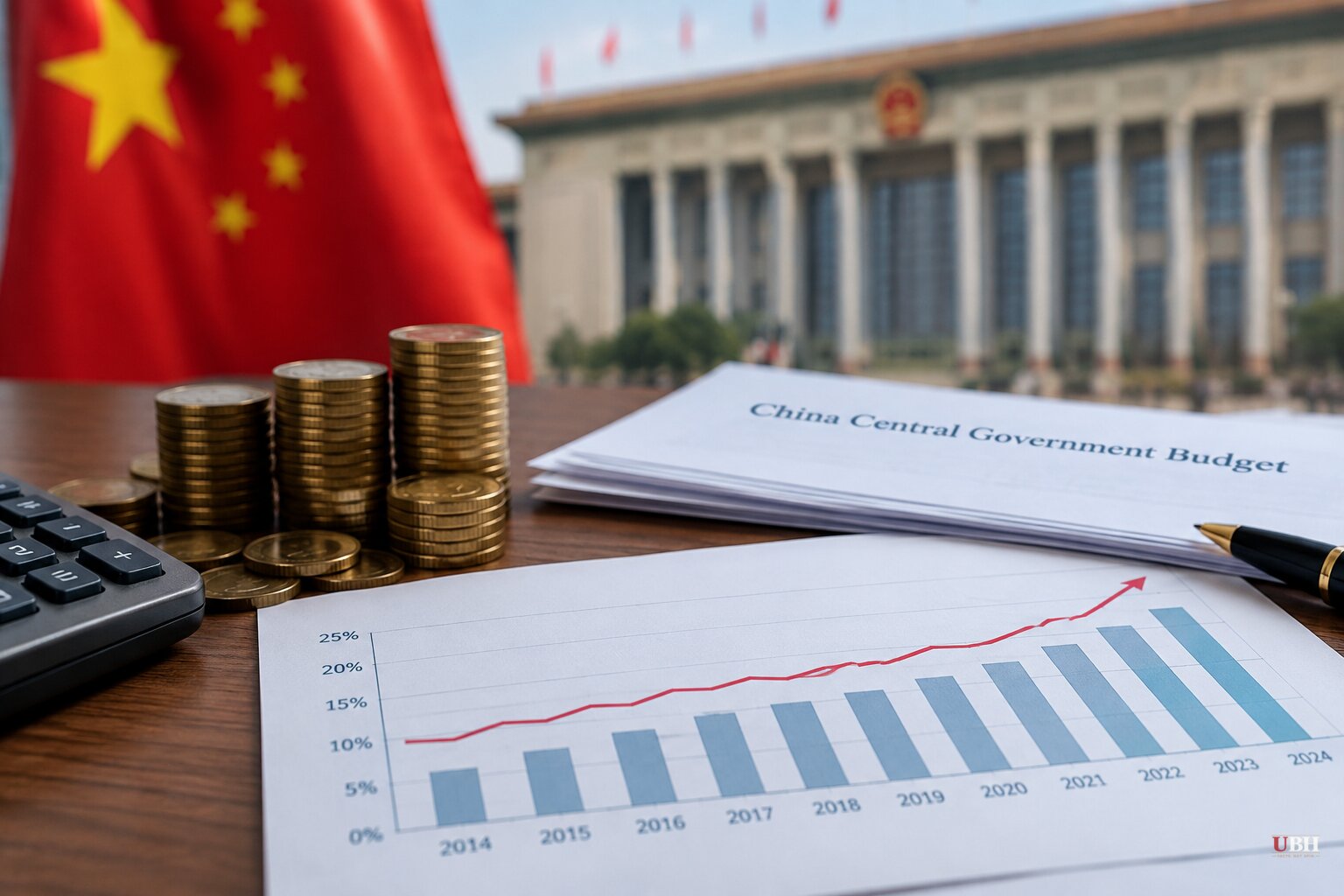
China's interest bill is growing faster than anything else Beijing pays for.
Debt-servicing payments will account for 19.2% of the central government's general public budget this year, up from 12% in 2014, according to new Conference Board estimates. The Center for Strategic and International Studies (CSIS) reached nearly the same number earlier this year: 19%.
Interest outruns everything else
CSIS found that China's interest spending jumped 341% between 2013 and 2025. Total spending rose 102% over the same stretch.
The other categories CSIS tracked:
- Social security and employment: up 207%
- Science and technology: up 137%
- Defense: up 141%
Interest more than doubled the growth rate of defense spending. For a government that says it wants a world-class military and a tech lead over the West, that is a lot of money going to lenders instead.
The 2026 budget plan puts the interest line up 6.7% from 2025, according to budget figures. Interest was about 19.0% of central direct spending last year. The share has moved up again.
How it compares with the U.S. and Japan
CSIS put the U.S. figure at 14% of the federal budget and Japan's at 25.6%. China sits between them.
The comparison has limits. China's figure covers budgeted central debt-interest spending. The U.S. figure uses net interest costs after interest income is deducted. The 19.2% also applies only to central government direct spending, not total national government spending. The definitions are not identical.
Washington has no room to gloat. U.S. interest costs have surged about 390% since 2013 to roughly $1 trillion, which tops the Pentagon's budget. Net interest was projected at $970 billion in fiscal 2025 and more than $1 trillion in fiscal 2026, about 14% of federal outlays.
The two economies are not on the same trajectory, though. The U.S. economy is accelerating on the AI boom, unemployment is low and stocks are near records. China's GDP growth is slowing and is on pace to undercut its 4.5% to 5% target, which Premier Li Qiang set with a pledge to strive "for better in practice." Consumers are holding back, investment is weak, the property sector is still digging out of its crash and Chinese stocks have been anemic.
The debt numbers depend on who counts
The International Monetary Fund says China's general government gross debt hit 107% of GDP this year, up from 41% in 2015, and is on a path to 124% in 2030.
Beijing's own budget framing is far lower. The official general-government figure is projected at 75.1% of GDP in 2026. A broader measure that includes local-government financing vehicles and other liabilities left out of the official figure is projected at 135.3%.
The 2026 plan sets a national fiscal deficit of about 4% of GDP, with national general public budget expenditure up 4.4% from last year.
Capital Economics estimates combined public and private debt, excluding the financial sector, at more than 300% of GDP. The firm says corporate debt has doubled since 2019 while revenues are only 30% higher. Creditors keep rolling over loans to firms even though nearly a third of them are losing money.
Mark Williams, Capital Economics' chief Asia economist, says efforts to support growth and avoid job losses fed both government borrowing and looser lending standards at state-owned banks. Beijing has steered those banks toward priority sectors including electric vehicles, robotics, artificial intelligence and renewable energy.
Beijing's case
The Chinese government says its approach is working. In its first-half fiscal report released Oct. 9, the Ministry of Finance said national general public budget revenue reached 12.1 trillion yuan, up 4.7% from a year earlier, while spending came to 14.33 trillion yuan, up 1.5%.
The ministry said a 100 billion yuan interest-subsidy package to boost domestic demand was followed by new loans in related sectors of more than 17 trillion yuan in the first half, reaching roughly 99 million person-times. It said the consumer trade-in program drove sales above 1.1 trillion yuan.
On local debt, the ministry said local governments had issued 1.73 trillion yuan in replacement bonds by the end of July, 86.7% of the full-year quota.
Finance Minister Lan Foan struck a similar note in the Communist Party journal Qiushi on Oct. 1. He pledged incremental, targeted fiscal policy, broader coverage of the interest-subsidy program and moderately higher funding limits. He also promised to speed spending "in a reasonable manner" and to press regions where spending has lagged.
That followed a package announced two days earlier that included a rate cut for policy banks and the country's first interest subsidy for first-time homebuyers. Analysts quoted by the South China Morning Post expect Beijing to stop short of major stimulus and provide only "just enough" support to hit the growth target.
What comes next
The ministry's second-half plan leans on more borrowing. It says it will issue special treasury bonds to inject capital into eight central financial enterprises and speed up the issuance and use of special-purpose bonds.
Each of those adds to the principal that the interest line is calculated on. Whether the stronger growth Beijing is aiming for arrives fast enough to outpace that bill is the open question, and the 4.5% to 5% target is the first test.
Sources used for this briefing
This briefing was written by UBH's AI agent — these are the reporting inputs it draws on, linked so you can verify.


