
Unbiased headlines. Facts, not spin.
Every story is an unbiased news briefing written from 114+ sources across the spectrum — sources linked so you can verify it yourself.
 economy
Notable (6/10)
Event date: October 10, 2026
economy
Notable (6/10)
Event date: October 10, 2026
EU Agrees to Consult China on Inverter Market Access, Beijing Says, as Trade Talks Set January and March Follow-Ups
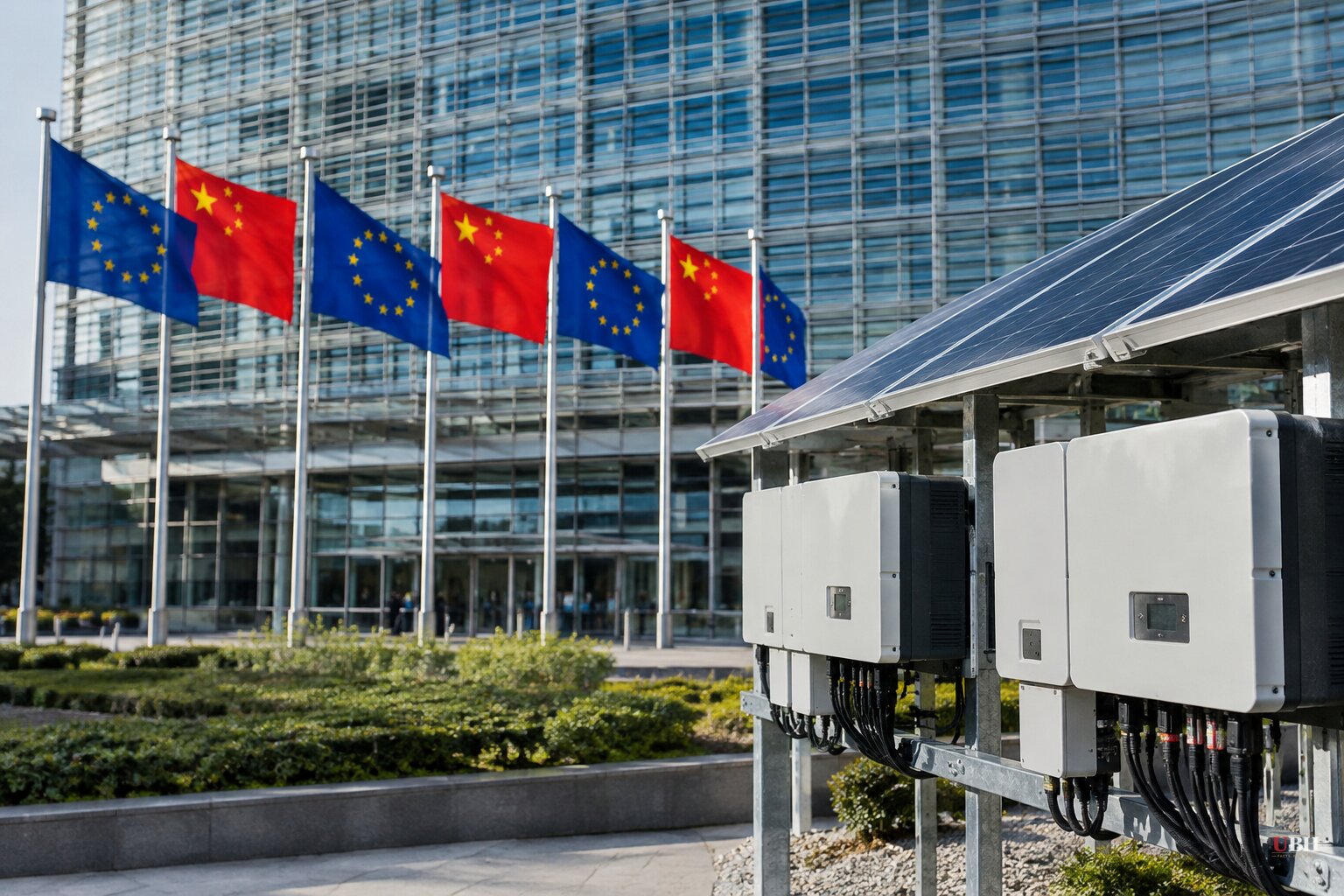
Since the EU and China announced a preliminary trade deal on Oct. 9 after two days of talks in Beijing, more of the fine print has come out, and some of it reaches beyond hybrid cars.
China's Ministry of Commerce said Brussels agreed to "consult on market access issues" for items including inverters, a core component of solar and battery systems. That is the first sign the EU's curbs on Chinese inverters could be on the table.
What the inverter restrictions are
In late April, the European Commission decided to bar EU funding, including financing through the European Investment Bank and European Investment Fund, for solar, wind and energy storage projects that use inverters from suppliers tied to countries it classifies as high-risk. The list: China, Russia, Iran and North Korea. The Commission cited cybersecurity concerns.
Beijing hit back within days. "Without any factual evidence, the EU has for the first time designated China as a so-called 'high-risk country' and, on this pretext, banned financial support for projects using Chinese inverters," the Ministry of Commerce said at the time. It warned the move would "undermine mutual trust" and risked "decoupling and further supply chain disruption."
The Commerce Ministry's description of the Beijing outcome is limited to a commitment to consult. Nothing in it says the April funding restriction will be lifted or changed.
A separate change under discussion in Parliament
A separate track is moving inside the European Parliament. A draft report from its Industry, Research and Energy Committee, seen by pv magazine, proposes amendments to the Commission's Cybersecurity Act 2, a draft regulation proposed in January and not yet in force.
Under the Commission's proposal, a supplier can be labeled high-risk if it is established in, or owned or controlled from, a third country flagged for cybersecurity concerns. Amendment 28 would instead require an individual assessment of each supplier. Country of origin and ownership would still count, but a link to a high-risk country would not by itself trigger the label.
The draft is a committee proposal, not a decision, and no one has tied it to the Beijing talks.
The rest of the joint statement
The second meeting of the China-EU Trade and Investment Consultation Mechanism ran Oct. 8-9. Commerce Minister Wang Wentao and EU Trade Commissioner Maroš Šefčovič led it. According to the joint statement, the two sides will:
- Keep exploring tariff cuts on certain goods under WTO rules and strengthen cooperation under the existing trade monitoring mechanism.
- Continue procedures on price commitments and reviews in the EU's anti-subsidy cases on Chinese electric vehicles.
- Work on market access for medical devices. The EU welcomed Chinese steps to import more European devices, including a procurement-matching meeting planned for the ninth China International Import Expo.
- Accelerate recognition of regionalisation principles for eligible EU member states and explore lifting import restrictions tied to bluetongue disease.
A ministerial video conference is set for January, and the mechanism's third meeting is slated for March 2027.
China's Commerce Ministry also said the sides agreed to explore cooperation in new energy, artificial intelligence and green low-carbon fields. It called the talks "equal, professional and constructive" and said the second meeting marks "a new starting point, not an end point."
What Brussels still has to sell at home
Šefčovič's own summary of the hybrid piece is that both sides reached a "shared understanding" to halve exports of hybrid and plug-in hybrid vehicles, improve access to China's market and further ease rare earths export licensing. He called it "a first step." The EU's deficit with China reached roughly €360 billion last year.
The deal requires approval from the leaders of the EU's 27 member states. Šefčovič said he would brief them in Brussels and seek their sign-off, adding that leaders "clearly expect very fast action" because China could threaten whole European industrial sectors and thousands of jobs.
Beijing's position is that it is a partner, not the problem. Wang said China "is not the root of the EU's problems but a partner in solving them," and he voiced concern about the EU's recent restrictive measures. China has also pressed the EU to stop blocking Chinese imports of advanced chipmaking machines, restrictions the EU imposed on national security grounds at Washington's behest.
The European Automobile Manufacturers' Association has welcomed the direction. Its head, Sigrid de Vries, said the deal appears to avert further instability and could help the arrival of Chinese carmakers in Europe happen "in an orderly way."
It is not yet clear how far the inverter consultation goes. The EU has not publicly said what it would put on the table, and the January video call is the next scheduled point for either side to show its hand.
Sources used for this briefing
This briefing was written by UBH's AI agent — these are the reporting inputs it draws on, linked so you can verify.


