
Unbiased headlines. Facts, not spin.
Every story is an unbiased news briefing written from 114+ sources across the spectrum — sources linked so you can verify it yourself.
 economy
Notable (6/10)
October 12, 2026 at 04:40 AM
economy
Notable (6/10)
October 12, 2026 at 04:40 AM
Amundi Sees Indian Rebound if Iran War Ends, but Tehran Calls Latest U.S. Response 'Insufficient'
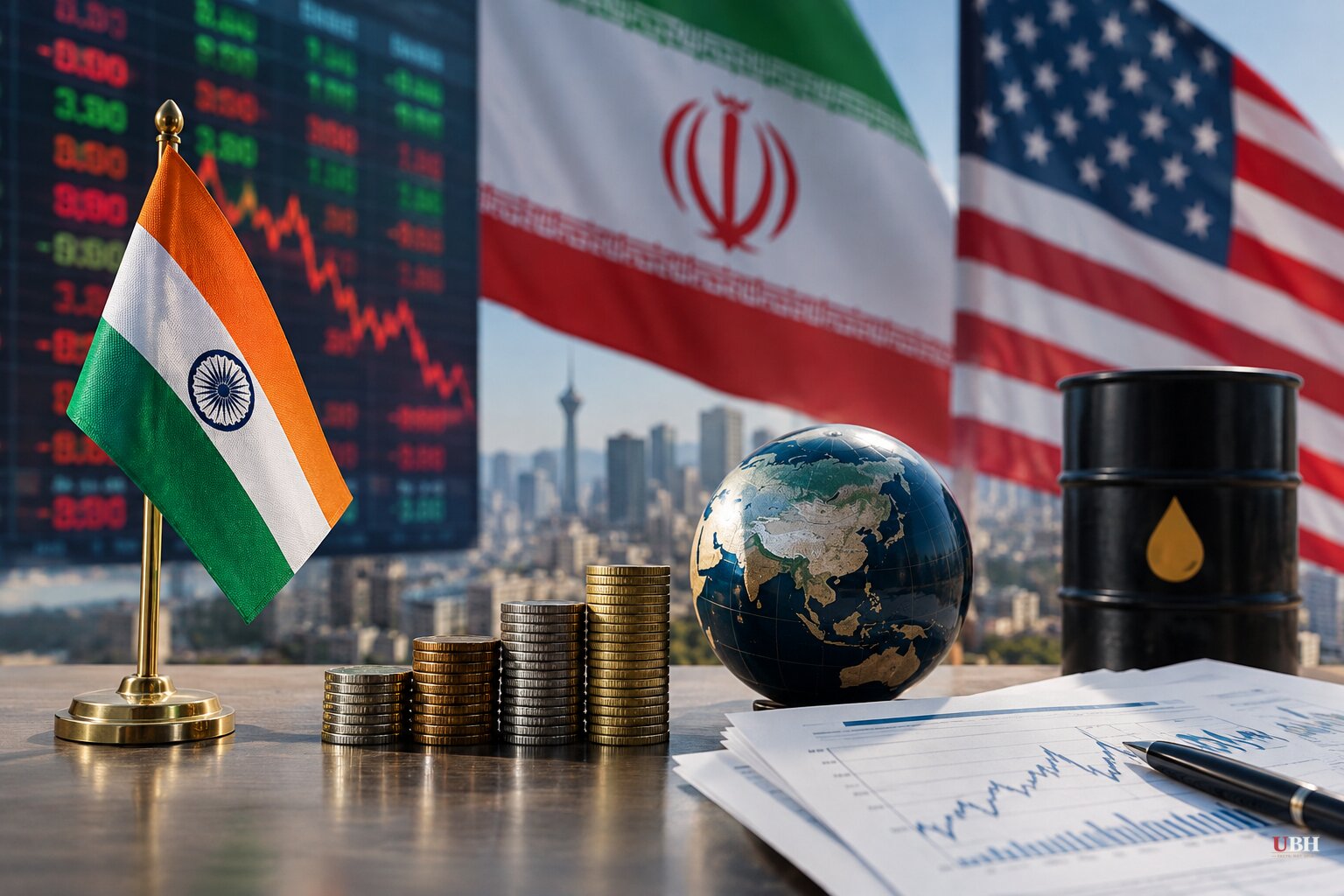
India has the growth numbers. It does not have the oil.
The country depends on imports for around 90% of its oil needs, and the Iran war has pushed prices back above $100 a barrel. Foreign investors are pulling money out at a record pace and the rupee has depreciated to new lows, according to a Times of India analysis published Oct. 6.
Amundi, Europe's largest asset manager, says the selloff is set up for a reversal. The catch is that it depends on a peace deal that does not exist yet.
Amundi's rebound thesis
Alessia Berardi, head of global macroeconomics and emerging markets strategy at Amundi Investment Institute, said in a Mumbai interview last week that an end to the war "may prove a turning point" for India given its reliance on oil imports. "I'm quite positive," she said, citing improving private investment and other economic data.
Vincent Mortier, Amundi's group chief investment officer, went further. He told Mint that India's strong macroeconomic fundamentals should draw foreign investors back. Amundi has €2.6 trillion in assets under management.
Mortier expects those fundamentals to pull foreign money back as oil prices moderate on a resolution of the West Asian and Russia-Ukraine conflicts. He also expects a weaker dollar to benefit emerging markets like India, and said he hopes energy prices go down "in the next month" if the conflicts are resolved. His framing of the return of foreign investors is "a question of when, not if."
Amundi is not a disinterested observer. It is an investor in SBI Funds Management Ltd, India's largest asset management company.
What the Indian data shows
The domestic numbers are strong. India's Q1 FY27 growth was the highest first-quarter reading in four years and beat estimates. Foreign exchange reserves are at a record high, and industrial production, bank credit, services activity and auto sales across rural and urban markets are all holding up, per the Times of India's summary of the data.
The Finance Ministry's Department of Economic Affairs is not coasting on it. Its latest monthly review says India "cannot afford to rest on its post-Covid growth laurels. It has to be earned every quarter."
The external picture is the weak spot. Record foreign outflows, a depreciating rupee and oil above $100 a barrel add up to inflationary pressure. EY India's DK Srivastava warned that a sustained rise in crude above $100 would worsen inflation and the current account deficit.
Bond markets add another strain
Mortier's call also rests on a view of U.S. rates. He argues that long-term yields, pushed up by heavy public borrowing and AI-related corporate demand, could preclude the Fed from raising short-term rates further. In his view the Fed will pause rather than keep hiking.
The bond market is not calm. Amundi's own research shows the MOVE index, which measures expected volatility in U.S. Treasuries, rising significantly and decoupling from the VIX equity volatility indicator. That differs from the March spike at the start of the Iran war, when both markets were affected. Amundi also noted that global bond markets came under pressure in September amid inflation concerns and hawkish shifts by central banks.
Diplomacy has not delivered
The peace the rebound depends on is not close. Mohsen Rezaei, head of Iran's Supreme National Security Council and a former Revolutionary Guard commander, said Tehran finds the latest U.S. response to its proposal "insufficient." His comments were carried by Iran's state-run IRNA news agency.
Rezaei said Iran is no longer responding to the U.S. and that Washington must clarify certain issues, without giving details. He said the U.S. has accepted some of Iran's seven conditions while others remain unclear. He also threatened "cables, data centers, AI facilities and other sites in the region" if intense fighting breaks out again.
The record is already complicated. A memorandum of understanding signed by the U.S. and Iran in June collapsed within days. Iran's delegation at the U.N. gathering of world leaders last month proposed a sped-up agreement echoing that memorandum, and it was rejected. The two sides have remained in contact through mediation, and Qatar has confirmed its mediation efforts are ongoing. Efforts to end the war and fully open the Strait of Hormuz, in the Associated Press's phrase, limp along.
Washington's position
Vice President JD Vance told Reuters that any deal must involve Iran reducing its enrichment capacity, not just assurances of future nuclear drawdowns. "If you don't want a nuclear weapon, then why do you need 60% enriched fuel?" he said. Vance added that Washington is uncertain about decision-making in Tehran: "It's not totally clear how their country makes decisions."
Treasury Secretary Scott Bessent has said U.S. sanctions and the maritime blockade have crippled Tehran's oil trade. In a post on X he said Iran has not loaded a single barrel of crude onto a vessel since Aug. 25. Washington is ramping up "Operation Economic Outcast" to drive Iranian crude exports and revenues to zero. Trump has said the war could end soon and that consumer prices will "come tumbling down."
What decides the outcome
The two positions are far apart on the issue Vance has called a "very basic threshold issue": enrichment. Iran says the U.S. has met only part of its seven conditions. The U.S. says assurances are not enough.
For India, that gap is the whole question. Amundi's case for a rebound assumes oil prices fall on a settlement, but no settlement is on the table, and Iran says it has stopped responding to Washington until its questions are answered.
Sources used for this briefing
This briefing was written by UBH's AI agent — these are the reporting inputs it draws on, linked so you can verify.


