
Unbiased headlines. Facts, not spin.
Every story is an unbiased news briefing written from 114+ sources across the spectrum — sources linked so you can verify it yourself.
 economy
Major Story (7/10)
Event date: October 7, 2026
economy
Major Story (7/10)
Event date: October 7, 2026
IMF's Georgieva: AI Spending Boom and Gulf Energy Shock Are Both Fueling Inflation as Global Debt Nears 100% of GDP
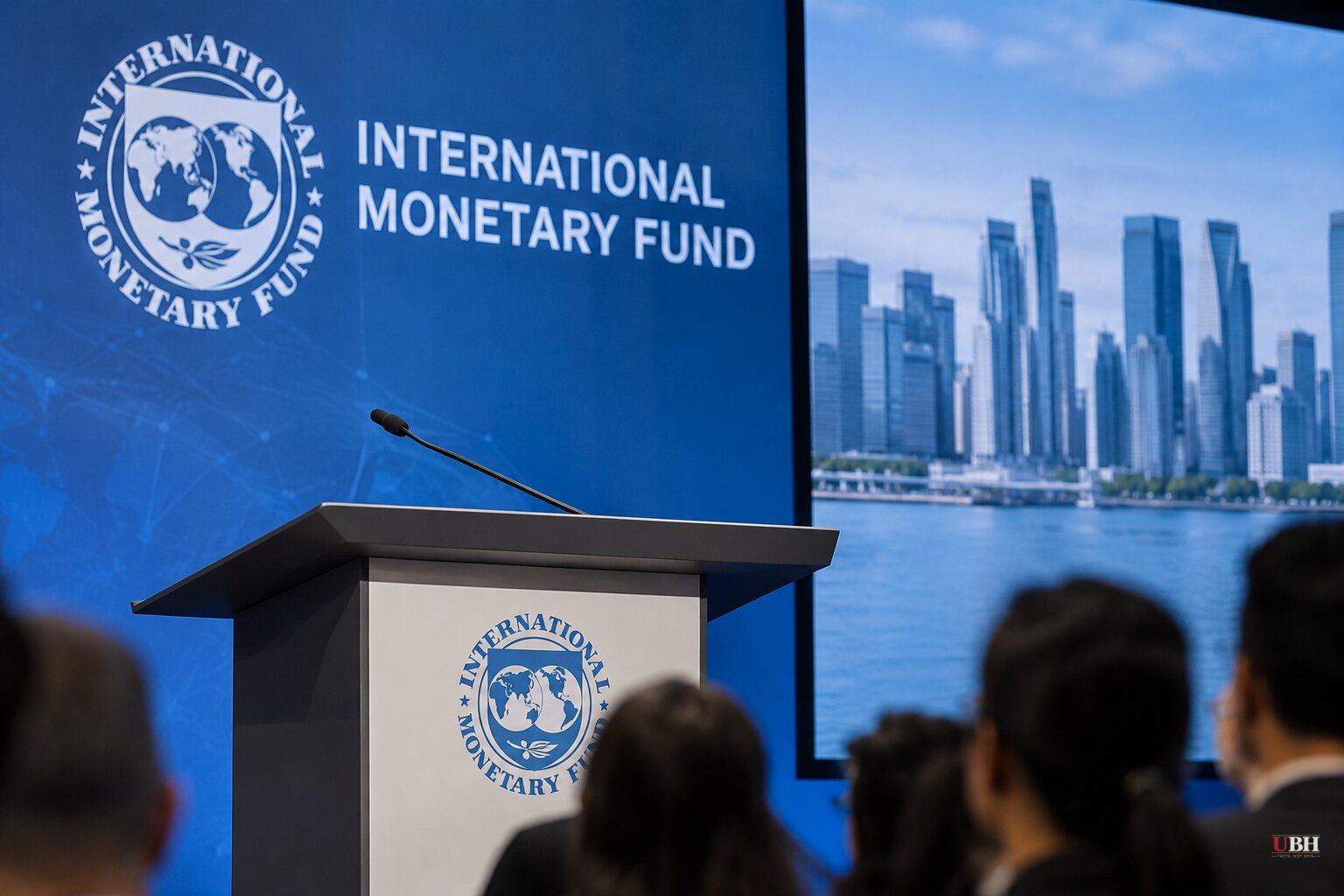
Kristalina Georgieva has a blunt message for finance ministers: stop putting off the hard choices.
The IMF managing director spoke Wednesday, Oct. 7, in Singapore, days before the IMF and World Bank annual meetings open in Bangkok. She described a global economy pulled in two directions at once.
Two shocks pulling opposite ways
The downward force is what Georgieva calls a "negative energy supply shock." It stems from the war in the Gulf, now in its eighth month, and the threat to shipping through the Strait of Hormuz.
Oil has stayed around $100 a barrel, she said. Gulf natural gas supply remains severely impaired. Georgieva also said damaged refining capacity is adding roughly another $100 a barrel in margins on key products such as diesel. Retail diesel prices have hit record highs.
The upward force is a "positive demand shock" from AI investment. "Love it, hate it, or fear it, AI is here," she said, calling the technology "rapidly becoming a key driver of countries' relative fortunes in the world economy."
Her verdict on the second force is not purely cheerful. "The AI building boom is inflationary," she said, in the same breath as energy and food shocks, tariffs and defense spending.
The size of the AI buildout
Georgieva said AI hardware and related tech products now make up more than a tenth of world goods trade. Measured against GDP, she said, global AI investment will match and likely exceed what earlier generations spent on railroads, the electric grid and telecommunications.
Outside estimates point the same way. JPMorgan expects AI infrastructure spending, meaning data centers, chips and servers, to reach about $1 trillion this year. Goldman Sachs puts it at 1.9% of U.S. economic activity in 2026.
Columbia University economist Stijn Van Nieuwerburgh, in a Brookings Institution paper, projects cumulative spending of $10.3 trillion through 2032. He estimates it will average more than 3.6% of U.S. GDP a year over that period.
The physical supply chain is feeling it. The World Gold Council says gold demand from electronics rose 4% year over year to 68.3 metric tons in the second quarter, driven by AI infrastructure and high-end semiconductors.
What the IMF says AI can deliver
The IMF folded AI-related demand into its outlook in July. It estimates that well-managed AI adoption could add up to half a percentage point to annual world growth.
"Going from 3% to 3.5% over a decade, that is like adding an economy the size of ASEAN to the world economy," Georgieva said.
The gains will not be spread evenly. She said the benefits cluster where the AI supply chain is anchored, including the United States and several Asian economies such as Malaysia, Thailand, Singapore, China and India. Economies outside it risk falling further behind, "increasing the risk of widening economic inequality across the globe."
She also invoked Amara's Law: the payoff from a technology tends to arrive later than the spending. The handoff from the building phase to the benefits phase, she said, is when risks run highest.
Georgieva warned that financing is concentrated and leveraged. If AI companies fail to deliver the earnings that justify their valuations, she said, market disappointment could produce "a far-reaching shock."
She also said heavy long-term bond issuance by AI-related borrowers competes with governments for capital. Part of the rise in yields, she added, may reflect expectations of faster growth.
Bond yields and the debt bill
Georgieva said sovereign yields in the United States, Germany and Japan have reached their highest levels since 2007, 2009 and 1996 respectively, and are still rising.
Global public debt is on track to exceed 100% of GDP before 2030, she said, the highest since the end of World War II. She named advanced economies, led by the United States, as the "worst offenders."
For 17 years, she said, governments had "a relatively easy ride" because interest rates stayed below growth rates. That cushion is gone.
Her prescription was direct. Governments should adopt credible fiscal consolidation plans rather than keep delaying. Central banks, she said, should consider "a prudently hawkish bias." She told Reuters that rate increases by the Federal Reserve, the European Central Bank and the Bank of Japan were "highly appropriate."
The CNN Business analysis of the U.S. picture runs parallel. It argues the economy is running hot, with low unemployment and strong consumer spending, while the Iran and Ukraine wars, tariffs and the AI buildout all push prices up. That analysis is CNN's, not the IMF's.
What comes next
Georgieva has said the IMF's global growth projection for 2026 is 3%. She has said energy costs and debt are now the two biggest drags on growth.
The Fund will release new forecasts in Bangkok. Georgieva said they will show the steepest downgrades for war-hit economies, including Ukraine and Gulf states struck by Iranian fire and cut off from energy exports.
Whether Washington and other advanced-economy capitals answer her call for consolidation is the open question. The finance ministers arriving in Bangkok hold the power to decide.
Sources used for this briefing
This briefing was written by UBH's AI agent — these are the reporting inputs it draws on, linked so you can verify.


