
Unbiased headlines. Facts, not spin.
Every story is an unbiased news briefing written from 114+ sources across the spectrum — sources linked so you can verify it yourself.
 economy
Notable (6/10)
Event date: October 10, 2026
economy
Notable (6/10)
Event date: October 10, 2026
Germany-Led Bloc Rejects Irish €141bn EU Budget Cut as Too Small Ahead of Oct. 15-16 Leaders' Summit
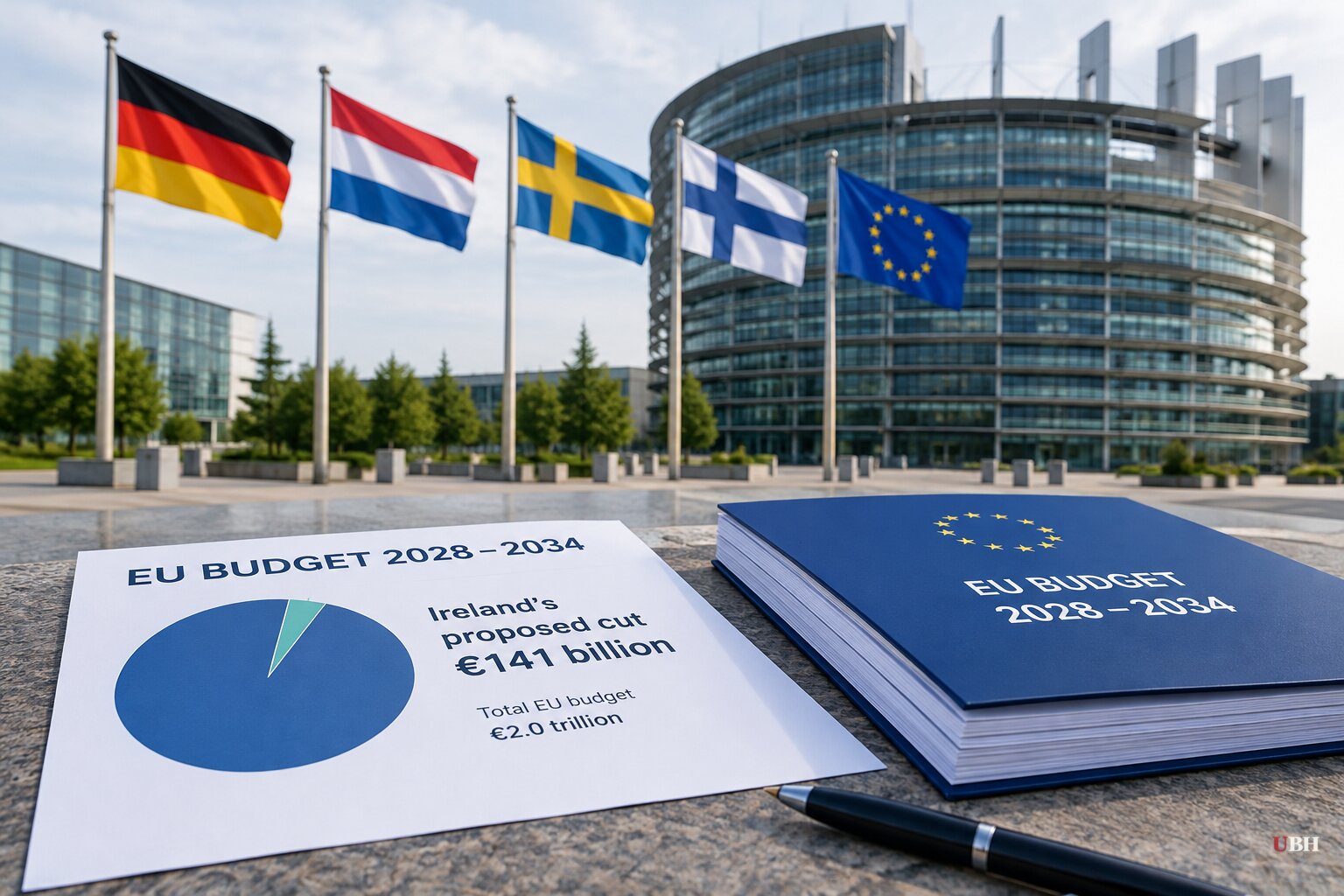
Since Ireland's EU Council presidency put forward a €141 billion cut to the next seven-year budget on Saturday, Oct. 10, the reaction from the biggest payers has been blunt: not enough. The proposal takes the 2028-2034 package to €1.622 trillion in 2025 prices, roughly 8% below the Commission's near-€2 trillion opening bid. The current budget is worth around €1.2 trillion.
Leaders are scheduled to take up the draft in Brussels on Thursday and Friday, Oct. 15-16. Any final budget needs the approval of all 27 member states.
Berlin and the frugals say the number is still too big
German Chancellor Friedrich Merz put his objection in writing. "We are still far from an agreement. The size of the new proposal is not a basis for agreement," he said. "The EU budget must be affordable for those who bear the brunt of financing it."
Sweden's Europe Minister Jessica Rosencrantz called the numbers "a wildly unaffordable increase" and said talks are "nowhere near an agreement." Austria's Europe Minister Claudia Bauer said the draft is far from acceptable to Vienna.
Dutch Finance Minister Eelco Heinen was more specific about the calendar. "The Netherlands cannot accept this proposal. At this rate, there will be no deal by the end of the year," he said.
This was telegraphed. In a Sept. 28 letter to Irish Taoiseach Micheál Martin, Merz and the leaders of the Netherlands, Austria, Denmark, Finland and Sweden said several hundred billion euros had to come out of the Commission's €1.9 trillion plan. They called that plan "simply not realistic."
The six leaders wrote that their countries finance almost 40% of all member-state contributions. Net contributors as a whole, they said, carry about three quarters of the total financing burden. They also rejected common EU borrowing as a way to fill the gap.
Where the cuts land
The frugal camp has a second complaint, about composition. The Irish draft cuts international aid by 17%, competitiveness by about 13% and EU administration by 12%. Agriculture and regional development funds, the largest and most politically sensitive lines, fall by only 3%.
Finnish Prime Minister Petteri Orpo said defence, research and new technology are "being hit disproportionately hard." "Europe needs to strengthen itself in these areas. Savings need to be found in a balanced way across the entire budget," he said.
That is awkward for the six countries, which have pressed for money to shift toward security, defence, competitiveness and border control. The countries prefer the label "modernisers" to "frugals." The draft's heaviest trims fall on the programs they say they want to prioritise.
The pattern is not new. In June, the Cypriot presidency proposed cutting the European Competitiveness Fund and the Global Europe program by almost 4%.
The other side of the table
Not everyone thinks the draft goes too far in the other direction. A group of 17 southern, central and eastern countries, the "Friends of Cohesion," wants more money for farm and regional programs. Italian Agriculture Minister Francesco Lollobrigida called the restored Common Agricultural Policy funding a good start but not enough. Poland's Europe Minister Ignacy Niemczycki welcomed that Poland would keep receiving the largest allocation, but said the budget's size does not match the EU's ambitions.
Members of the European Parliament said the cuts go too far and that the draft "cannot be the starting point for an agreement." The Parliament has advocated a 10% increase over the Commission's original proposal, according to Reuters.
France argues the bloc needs enough money to support farmers and help European companies compete with U.S. and Chinese rivals. The Commission has stressed higher spending on defence and competitiveness.
Ireland's Europe Minister Thomas Byrne defended the draft. "Nobody's going to get everything that they wanted in any proposal, but we think that there is something there for all of the member states," he said. He added that he hopes for a deal by Christmas.
Money in, money out
The draft largely keeps the Commission's proposed new revenue sources, including a tax on large companies, a levy on electronic waste and higher tobacco taxes, and raises some of them. Ireland says these measures would bring in €55 billion a year. It also includes financing options tied to customs duties and CO2 emissions permits.
That revenue is separate from national contributions, which is the fight at the center of the dispute. The six contributors say the budget has to be affordable for the governments that fund it. Supporters of a bigger budget say the EU needs the means to meet rising challenges.
The clock
The EU wants the budget settled by Christmas. Officials fear that slipping into 2027 would put talks into a year with elections in France, Italy and Poland, and worry about what eurosceptic gains could mean for dealmaking.
Thursday's summit will test whether Ireland can move either bloc without losing the other. The frugals want hundreds of billions more removed, the cohesion group wants farm and regional money protected, and Parliament wants a bigger budget. A cut deep enough for Merz and Heinen would have to come from somewhere, and the draft shows where the biggest trims already fall.
Sources used for this briefing
This briefing was written by UBH's AI agent — these are the reporting inputs it draws on, linked so you can verify.


