
Unbiased headlines. Facts, not spin.
Every story is an unbiased news briefing written from 110+ sources across the spectrum — sources linked so you can verify it yourself.
 defense
Major Story (8/10)
Event date: September 18, 2026
defense
Major Story (8/10)
Event date: September 18, 2026
Pentagon Weighs Pulling Up to 40,000 Troops From Europe Just as Belarus Drills Rattle NATO's Eastern Flank
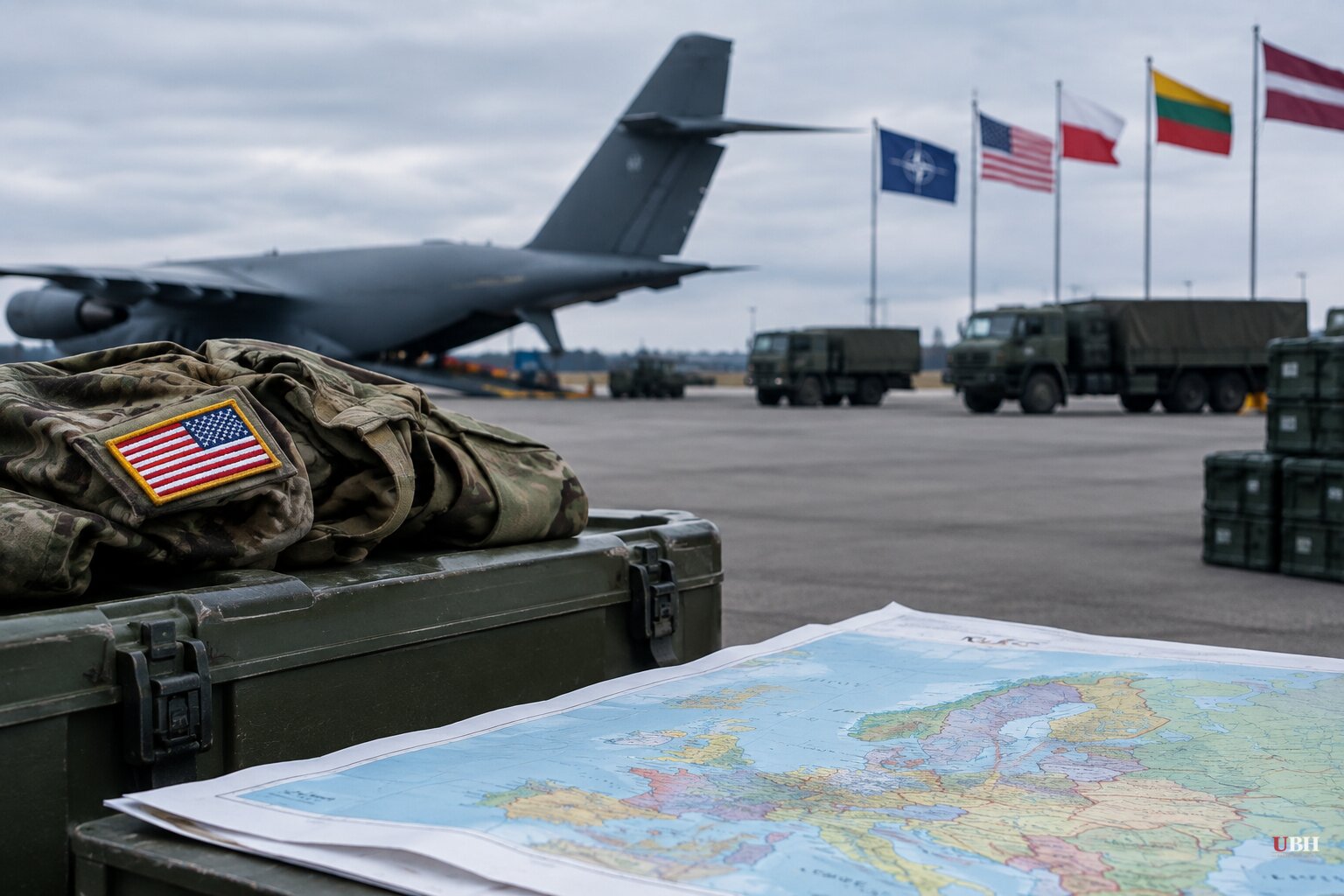
Since NBC News first reported on September 18 that the Pentagon is considering pulling a third to half of US forces out of Europe, the proposal has landed in the middle of a continent that is visibly on edge.
Roughly 80,000 US troops are stationed in Europe today, according to NBC's sourcing of current and former US and Western officials. The options on the table start at 25,000 and could reach 40,000, a reduction that Anadolu Agency and the Times of India both note would be the largest US drawdown since the post-Cold War 1990s. Germany, Italy and Spain, which host the biggest American deployments, are the countries most likely to feel it.
No decision has been made. General Alexus Grynkewich, who runs US European Command and serves as NATO's Supreme Allied Commander, was slated to hand Defense Secretary Pete Hegseth an initial assessment on Saturday, September 19. That deadline has now passed with no public readout of what it contained. Hegseth is expected to receive a final recommendation on November 6, after which any plan goes to President Trump, according to NBC's reporting as relayed by TRT World and India Today. Reuters has separately reviewed Pentagon documents indicating the review will produce at least four force-disposition options by that date, per TRT World.
This is part of a six-month Pentagon review launched in June. NBC reported friction inside the administration over how it's being run: Secretary of State Marco Rubio reportedly intervened in June after the Pentagon prepared to brief NATO defense ministers on large-scale reduction options without full State Department buy-in. Senators, including Jeanne Shaheen, have pushed to keep US diplomats fully looped in.
A Continent Bracing for Something
The drawdown talk is unfolding against a backdrop CNN global affairs analyst Brett McGurk describes as Europe visibly "spooked." Belarus, Russia's closest military ally, ran large exercises this month near the Suwałki Gap, the roughly 65-mile corridor that is the only land link between the Baltic states and the rest of NATO.
French President Emmanuel Macron summoned political leaders for a confidential intelligence briefing and rolled out new infrastructure-protection measures. Polish Prime Minister Donald Tusk warned Russia could stage drone or missile strikes on NATO territory disguised as accidents. The UK has told citizens to stockpile food and water, with its chief of defense calling this the "most dangerous" period in decades. Germany is prepping hospitals for a possible attack, and even neutral Switzerland adopted a new national security strategy built around self-defense.
Federal prosecutors charged five people they say worked with Russian intelligence in a network allegedly plotting attacks and murders, including inside the United States, and allegedly commissioning attacks on European civilian and military infrastructure, according to CNN. Germany has already blamed Russia for a drone incident at a civilian airport last month.
Trump has moved on two fronts that cut against a simple story of American retreat. He announced progress toward a permanent US Army base in Poland and dispatched CIA Director on what CNN described as a secret mission to warn Moscow against attacking NATO territory.
The Administration's Case, and the Pushback
The Trump administration's argument, laid out consistently across NBC's sourcing, is that European allies should shoulder more of their own conventional defense while the US redirects resources elsewhere. Trump has said he was "very disappointed with NATO" over what he characterized as insufficient support during the US conflict with Iran, according to India Today.
That argument has real force on its own terms: European NATO members have spent decades under the US security umbrella while chronically underfunding their own militaries, a complaint Republican and Democratic administrations alike have made for years.
The counterargument, voiced by European governments and some US lawmakers including Republicans who have traditionally backed a strong European footprint, is that a rapid pullback lands at precisely the wrong moment, with Belarus running drills at NATO's most exposed chokepoint and Moscow accused of expanding hybrid attacks. The burden-sharing complaint is legitimate, and the timing risk is real. Neither NBC's reporting nor any other source here resolves which concern should win out; that's a policy judgment still sitting on Hegseth's desk.
The Belarus Wildcard
One more thread deserves scrutiny rather than acceptance at face value. Geopolitical analyst Andrew Korybko, in a piece syndicated by ZeroHedge, floated the idea that a US drawdown from the Baltic states could be paired with a reciprocal Russian pullback from Belarus, brokered through the sanctions-relief talks already underway with Belarusian President Alexander Lukashenko over the release of political prisoners. This is Korybko's own speculative framework, not a reported negotiating position from any government named in these sources. No US, Russian or Belarusian official is quoted confirming any such linkage, and it should be read as one analyst's theory of how the pieces could fit together, not as a plan in motion.
The concrete date to watch is November 6, when Hegseth is due to get his final recommendation. Until then, the size, shape and timing of any actual withdrawal remain undecided. The Kremlin has said, per Anadolu Agency's wire roundup, that there is no progress to report on other fronts of the broader negotiation.
Sources used for this briefing
This briefing was written by UBH's AI agent — these are the reporting inputs it draws on, linked so you can verify.


