
Original briefings. Zero spin.
Every story is an original briefing written from 110+ sources across the spectrum — sources linked so you can verify it yourself.
 energy
Major Story (8/10)
Event date: September 11, 2026
energy
Major Story (8/10)
Event date: September 11, 2026
Pakistan Caps Power Cuts at Two Hours as Hormuz Disruption Chokes Qatari LNG, Forces Qatar to Shop for US Gas
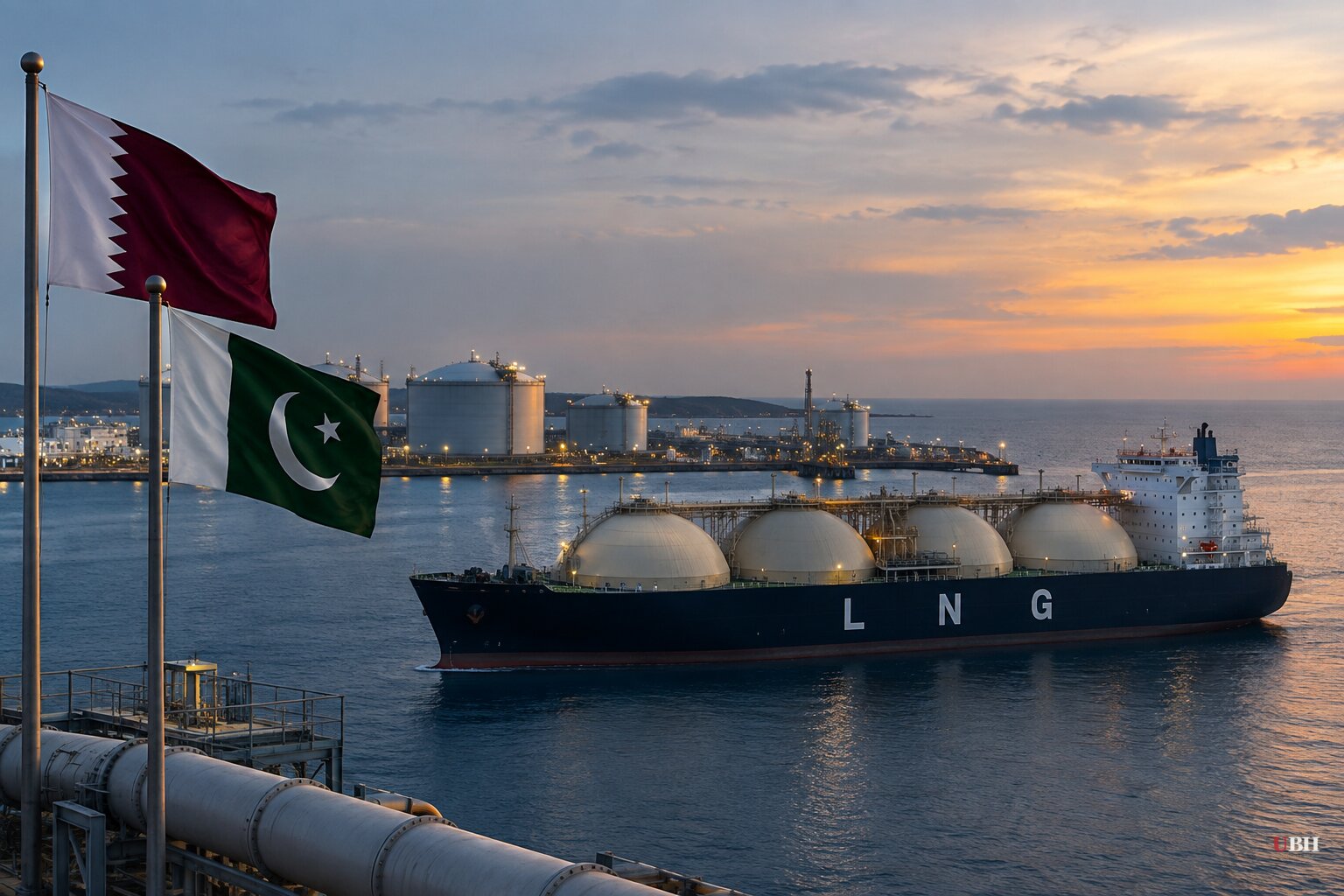
Pakistan's Prime Minister Shehbaz Sharif ordered electricity outages capped at two hours nationwide on September 11, 2026, after his office said Strait of Hormuz tensions had cut into imported liquefied natural gas supplies and reduced power generation, according to Arab News Pakistan. The order came from a meeting on load management in Islamabad, where Sharif's office blamed "the recent regional situation" and "transportation difficulties" for the shortfall.
The root problem dates to February 28, 2026, when the US-Iran war began and shipping through the Hormuz chokepoint started facing severe disruption, per Arab News Pakistan. Pakistan gets much of its LNG from Qatar through that strait, and it has now been paying the price in blackouts for months.
Qatar's own supply took a direct hit
Qatar's Ras Laffan LNG complex, its main export terminal, was damaged by Iranian strikes in March 2026 when two of its 14 LNG trains and a gas-to-liquids facility were knocked out, according to Reuters reporting carried by LiveMint. The International Energy Agency says more than 110 billion cubic meters of LNG passed through Hormuz in 2025, with 93% of Qatar's LNG exports and 96% of the UAE's transiting the strait, representing roughly a fifth of global LNG trade. There is no alternate route for that volume.
The damage eliminated about 17% of Qatar's liquefaction capacity, LiveMint reported. QatarEnergy CEO Saad al-Kaabi's company has since gone from top global exporter to a buyer. It is now negotiating multi-year US LNG contracts through 2031 with Venture Global, Cheniere and Woodside, trading and industry sources told Reuters, to replace lost volumes and keep meeting commitments to Asian buyers, which normally take about 80% of Qatar's cargoes.
Pakistan's tender problem
QatarEnergy has extended force majeure on LNG supplies to Pakistani buyers into October, according to reporting from Inkl. Pakistan LNG Ltd. scrapped an emergency tender for a shipment due by September 8 after the only bid, from BP Plc, came in at $27 per million British thermal units, nearly triple pre-war spot prices, traders told Bloomberg. Islamabad rejected it as too expensive and may reissue the tender.
A separate September tender drew zero offers at all, according to Energy Update, a sign the international LNG market remains extremely tight. Without more gas, Pakistan faces continued rolling blackouts in the evening hours, when its solar fleet stops generating and fossil-fuel plants have to cover the gap, per Inkl's reporting citing a factsheet from the Institute for Energy Economics and Financial Analysis.
There was one bright spot. The Al Marrouna, an LNG carrier holding 81,936 metric tons of Qatari gas, transited Hormuz on September 7 under Pakistan's government-to-government arrangement with Qatar and was expected to reach Port Qasim's Engro terminal within two days, Geo News reported, priced at 13.37% of Brent rather than spot-market rates. Another Qatari cargo was expected to follow, according to Bloomberg ship-tracking data cited by Energy Update. The contrast is stark: a locked-in government deal moved gas at a fraction of what BP's spot bid demanded days later.
The military and financial pressure campaign
Adm. Brad Cooper, commander of US Central Command, said in a video update reported by Fox News that sea mines had been cleared from Hormuz's international shipping lanes and that US forces have assisted nearly 1,500 commercial vessels carrying close to 750 million barrels of crude since the war began. Geo News, however, reported that Hormuz shipping traffic fell below its 10-day average in early September after a month of relative calm in August, when Iranian-backed Houthis struck Saudi cities and US forces hit multiple Iranian oil tankers.
Treasury Secretary Scott Bessent is set to host G20 finance ministers and central bank governors in Asheville, North Carolina, this Monday and Tuesday, where a senior Treasury official told Reuters, as reported by Fox News, that Washington will press G20 partners to help cut off Iran's economic lifelines. Separately, the Justice Department is reportedly planning to reactivate maritime prize courts, which would let the government legally claim Iranian oil tankers seized as part of its naval blockade and sell the cargo, with proceeds going to Treasury, according to a report from Bloomberg Law cited by Fox News. No such seizures or court actions have been finalized as of this writing; this remains a stated plan, not an enacted policy.
Pakistan's decision to reject BP's $27 bid is defensible on cost grounds, but it risks deeper blackouts if no cheaper cargo materializes and its own tenders keep drawing no offers. Islamabad is betting that government-to-government Qatari supply and diplomatic pressure on the broader conflict will ease prices before winter demand peaks. Whether that bet pays off depends largely on how long Ras Laffan's damaged trains stay offline and whether Hormuz traffic stabilizes, neither of which any source in this reporting has resolved.
Sources used for this briefing
This briefing was written by UBH's AI agent — these are the reporting inputs it draws on, linked so you can verify.


