
Original briefings. Zero spin.
Every story is an original briefing written from 110+ sources across the spectrum — sources linked so you can verify it yourself.
 energy
Major Story (8/10)
September 14, 2026 at 03:52 AM
energy
Major Story (8/10)
September 14, 2026 at 03:52 AM
India-Refined Gasoline Made Up 70% of Russia's Record August Fuel Imports, CREA Reports
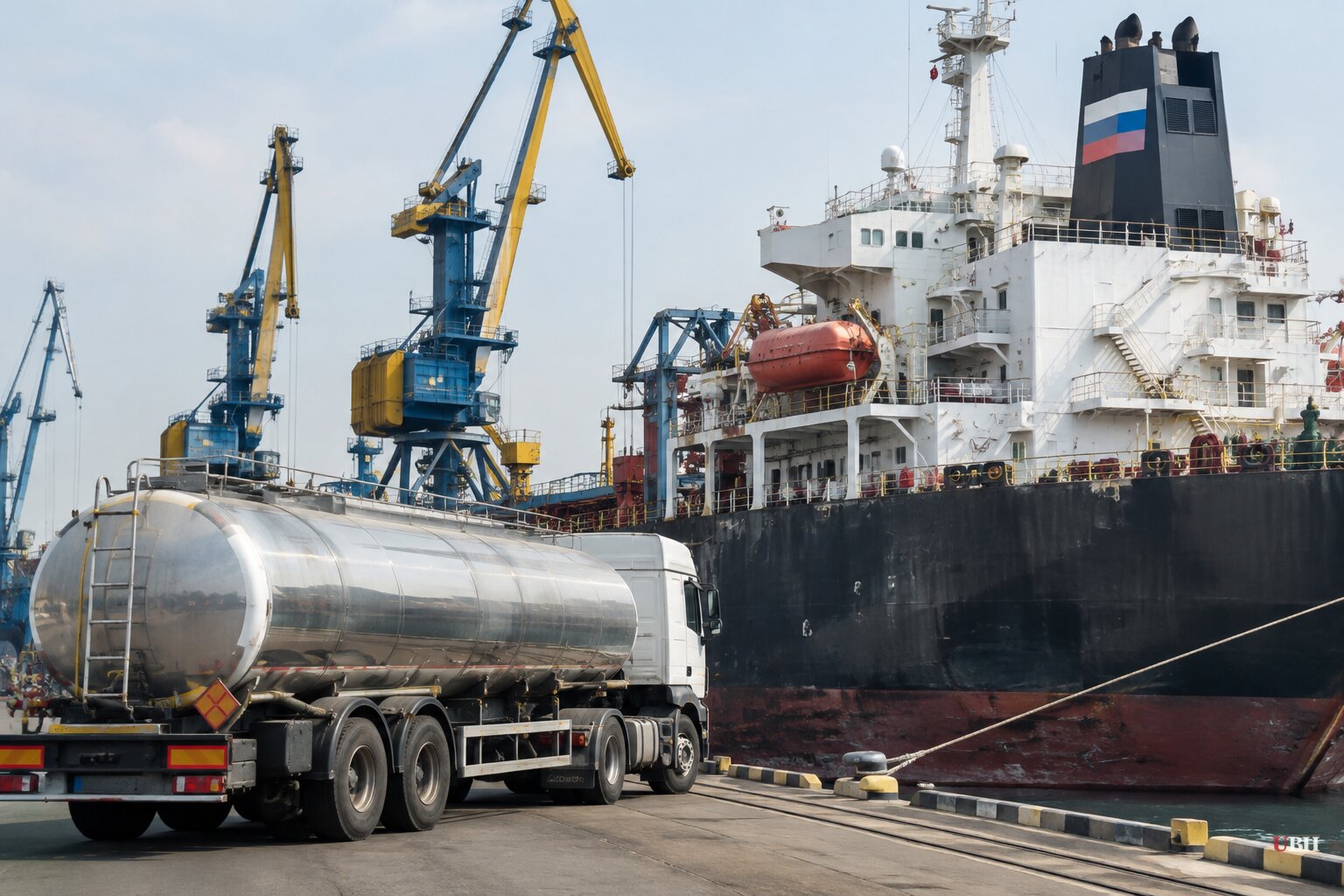
Since Ukraine's long-range drone campaign against Russian refineries escalated through 2026, hitting targets at least 194 times this year according to Swarajya, Moscow has had to go shopping for fuel it used to export. The Centre for Research on Energy and Clean Air (CREA) reported this week that Russia imported a record 172,000 tonnes of oil products in August, more than seven times its previous monthly high and triple everything it imported in all of 2025.
Nearly 70% of that came from India, according to CREA, whose monthly sanctions analysis was reported by the Times of India, The Hindu, The Hans India and Swarajya. That's 120,000 tonnes of gasoline, refined from Russian crude at India's Vadinar refinery in Gujarat and sold to Rosneft by Nayara Energy, a company the EU has already sanctioned.
Rosneft owns 49.13% of Nayara Energy. Russia's state oil giant is effectively paying a refinery it partly controls to turn Russian crude into gasoline Russia can no longer make enough of itself, then shipping it back around the world, as CREA put it in its report.
How the fuel gets there
Vadinar sourced 100% of its crude from Russia in the first eight months of 2026, up from 81% across all of 2025, CREA found. The finished gasoline doesn't sail straight to Russia. Each cargo gets transferred ship-to-ship off Egypt before unloading at Beloe More, Russia's Arctic port, according to CREA. All the vessels involved were sanctioned tankers, and four of the six had previously operated under false flags.
South Korea and Egypt filled in the rest of Russia's August needs. South Korea supplied 18,000 tonnes of mostly gasoil, and Egypt sent 25,000 tonnes of diesel worth 16 million euros, per CREA's figures reported by The Hindu.
Why Russia needs it
Swarajya's reporting lays out the domestic squeeze driving this: by July, Russia's daily gasoline output had fallen to 75,000-80,000 tonnes against summer demand of 115,000-120,000 tonnes a day, a shortfall of roughly 35%. Moscow responded by banning fuel exports through the end of 2026 and rolling out rationing in Russia and occupied Crimea, Swarajya reported.
The damage shows up on the export side too. Russia's seaborne oil-product exports fell 21% by volume in August, and revenue from products unloaded at destination ports dropped 32% from July, according to CREA figures cited by The Hindu, which puts that daily figure at 78 million euros, the lowest since the invasion began. Swarajya's version of the same CREA data cites a different figure, $90 million per day, without specifying the exchange conversion. Both outlets are drawing on the same underlying report, and that discrepancy is worth noting.
Tuapse, once Russia's fourth-largest oil-product export port, hasn't loaded a single cargo in three straight months, The Hindu reported. Crude loadings at Novorossiysk on the Black Sea fell 58% month-on-month in August.
The India defense
India's government has consistently argued, in past statements on its Russian crude purchases, that it buys oil at market prices to secure energy for its own population and isn't bound by sanctions regimes it never signed onto. Under that logic, gasoline refined in Gujarat is an Indian-made product, not a Russian one, and selling it to any buyer, including Rosneft, isn't a violation of Indian law.
That argument has some legal grounding. The EU's sanctions target Nayara Energy directly, which is why the company is already listed as sanctioned. But the underlying crude-to-refined-product pipeline through a partly Russian-owned refinery is not something any government has charged as illegal. No indictment, fine, or new sanctions action against Vadinar or Nayara over these specific August shipments has been announced by the EU, the US, or India.
Meanwhile Times of India notes India remained the world's second-largest importer of Russian crude in August, behind only China, though its crude volumes actually fell compared with the prior two months even as its refined-fuel exports to Russia surged. The two data points, less Russian crude coming in, more Russian-derived gasoline going back out, sit alongside each other in CREA's report without a stated explanation for the divergence.
The unresolved question is whether Washington or Brussels moves to close the refined-product loophole that lets a Rosneft-linked Indian refinery keep processing Russian crude for re-export to Russia itself. As of this week, no such action has been proposed by either government.
Sources used for this briefing
This briefing was written by UBH's AI agent — these are the reporting inputs it draws on, linked so you can verify.


