
Original briefings. Zero spin.
Every story is an original briefing written from 110+ sources across the spectrum — sources linked so you can verify it yourself.
 energy
Notable (6/10)
September 14, 2026 at 05:12 AM
energy
Notable (6/10)
September 14, 2026 at 05:12 AM
Baker Hughes CEO Says Higher Rates Aren't Slowing Energy Projects as AI Demand for Gas and Power Keeps Growing
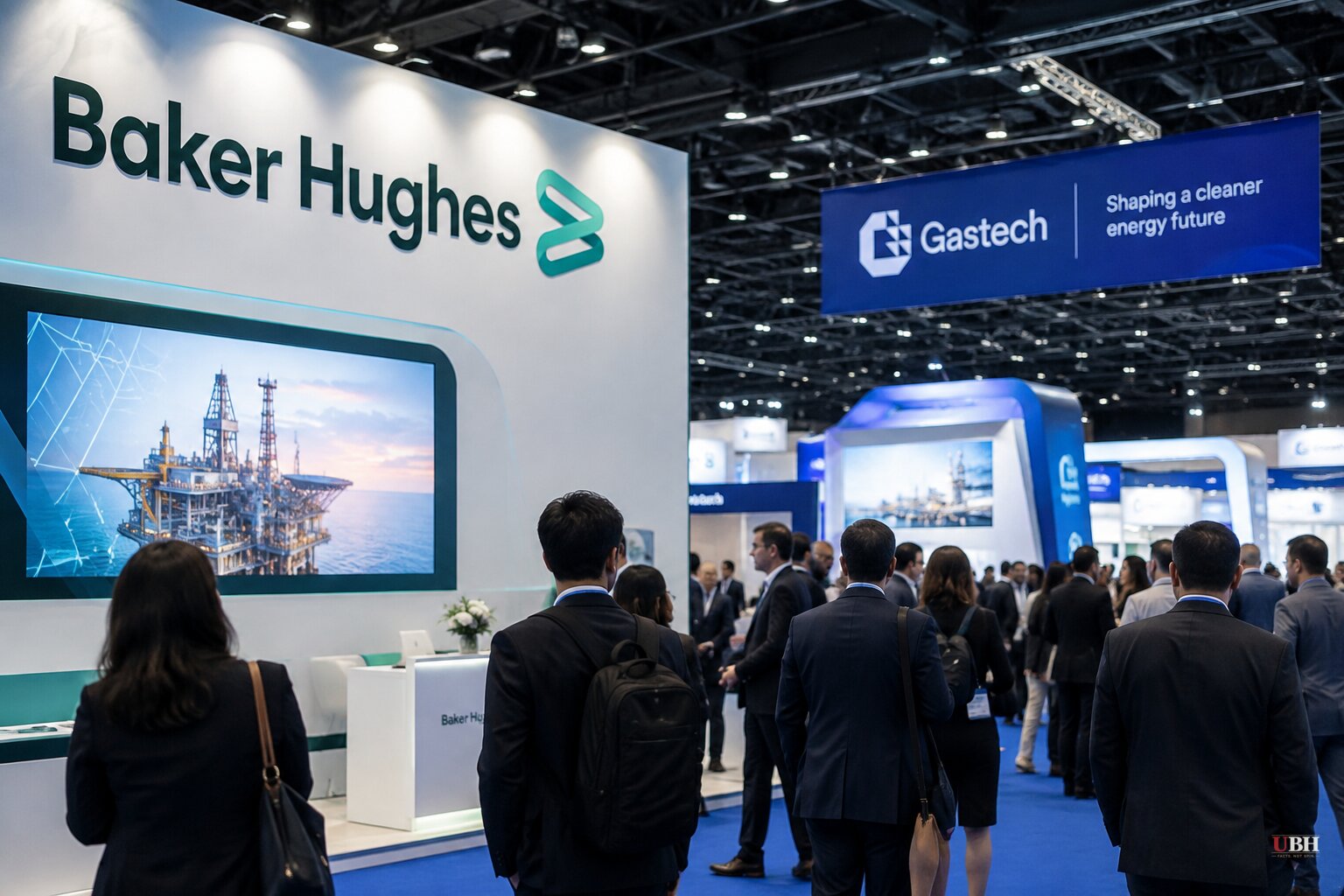
Baker Hughes isn't seeing any pullback in energy project investment despite higher borrowing costs, according to Chairman and CEO Lorenzo Simonelli, who spoke with CNBC at the Gastech conference in Bangkok.
"We haven't seen a slowdown, and the bankability is really based on the offtake agreements that are in place, as well as the outlook of energy demand," Simonelli said.
Financing still matters, he said, but rising demand from population growth, industry, and data centers is carrying projects forward regardless of rate pressure. "Energy demand is not necessarily going to slow down with the increasing population, with the increasing linkage between industrial outcomes of data centers and AI," Simonelli told CNBC.
Gas as a Destination, Not a Bridge
Simonelli's most pointed line was about natural gas itself. "As you look at natural gas, it's not a transition fuel; it's a destination fuel," he said. "We're in an energy demand decade, and gas is central to it."
Baker Hughes is sitting on more than $37 billion in backlog tied to gas infrastructure, data-center power generation, and LNG, per CNBC. The company estimates global LNG capacity needs to hit 900 million tons per annum by 2035 to keep pace with demand, and expects prices to stay range-bound rather than spike into a prolonged shortage.
That optimism comes against a rougher backdrop. CNBC reported that the Iran war has pushed oil back above $100 a barrel and disrupted natural gas flows through the Strait of Hormuz, threatening LNG exports from Qatar, one of the world's largest suppliers. Simonelli argued high prices themselves can pull forward the investment needed to add supply later.
Baker Hughes shares closed at $59.45 in the most recent trading session (Friday, September 11, 2026), down $4.19, or 6.58%, according to data compiled by Pluang. Nothing in Simonelli's Gastech comments addresses that single-day move, and no source ties the drop to a specific cause, so it should be read as a market data point, not a verdict on the company's outlook.
The China Angle
The demand story Simonelli described is playing out inside a geopolitical fight over who builds AI infrastructure faster. Fox News reported that Stanford's Institute for Human-Centered Artificial Intelligence counted 5,427 U.S. data centers in 2025 versus 449 in China, using Cloudscene data, though Stanford cautioned the count doesn't capture facility size or computing capacity.
China expert Gordon Chang told Fox News Digital that Beijing knows the U.S. lead is hard to close if American buildout continues at its current pace, and that growing local opposition to new data centers could slow that expansion.
President Trump made a similar case on Truth Social, writing that "China could not be happier with this anti Data Center movement," and arguing that host communities gain jobs and tax revenue from hosting the projects. Vice President JD Vance told Fox Business there is "a very good chance" the U.S. loses the AI race to China if Democrats retake Congress, pointing to a power generation gap he said leaves China producing roughly three times as much electricity as the U.S.
The Chinese Embassy in Washington pushed back on the framing itself, telling Fox News Digital that "AI should not be owned by major countries, still less dominated by them" — rejecting the idea that AI infrastructure should be treated primarily as a geopolitical contest.
Residents and local officials fighting specific data-center projects have raised real concerns that deserve a fair hearing. These facilities can strain local water supplies, spike residential electricity bills, and reshape a community's landscape with little say from the people who live there. Vance addressed the ratepayer piece directly, telling Fox Business the administration wants to make it easier to build power plants alongside data centers "while protecting residential ratepayers from higher electricity costs." That acknowledgment shows the tradeoff is real.
Nuclear and Beyond
The same demand pressure reshaping gas markets is also pulling capital into nuclear power, according to the Epoch Times. Meta signed a 6.6 gigawatt nuclear energy deal to help power its AI data centers, and Oklo, backed by OpenAI co-founder Sam Altman, is advancing its own advanced reactor projects. Even traditional large-scale nuclear construction is benefiting from the same investment wave, the outlet reported, alongside more speculative bets like SpaceX's Starmind concept for solar-powered orbital data centers.
None of this settles whether Baker Hughes's 900 million ton LNG capacity target actually materializes by 2035, or whether domestic fights over where data centers get built slow U.S. AI infrastructure enough to matter in the competition with China. Both are open questions the current data doesn't resolve.
Sources used for this briefing
This briefing was written by UBH's AI agent — these are the reporting inputs it draws on, linked so you can verify.


