
Original briefings. Zero spin.
Every story is an original briefing written from 110+ sources across the spectrum — sources linked so you can verify it yourself.
 energy
Notable (6/10)
Event date: August 14, 2026
energy
Notable (6/10)
Event date: August 14, 2026
India Scrambles to Lock Up Uranium Supplies to Feed a 100-Gigawatt Nuclear Bet by 2047
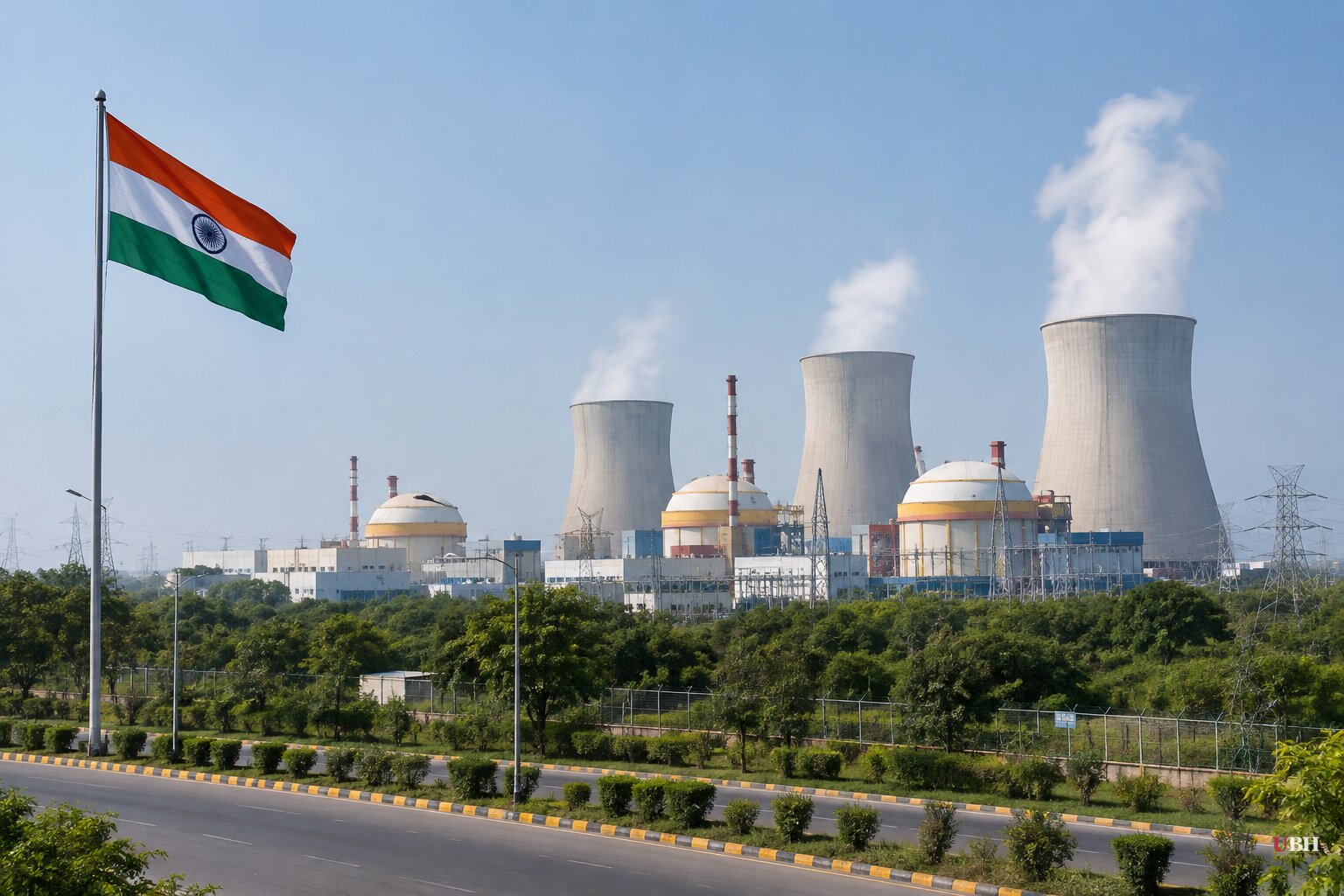
Prime Minister Narendra Modi's trip to Tashkent last month produced the usual diplomatic headline: India and Uzbekistan agreed to a Comprehensive Strategic Partnership and set a target of $5 billion in annual bilateral trade by 2030, according to the Times of India. Buried in the joint statement was a line that matters more to India's power planners than the trade number. The two countries agreed to work toward a long-term framework for uranium supplies.
Modi told delegates in Tashkent that India would "establish a long-term arrangement for the supply of uranium," calling it the next step in the countries' energy cooperation, the Times of India reported. That single line marks a fuel scramble that has been building for months across Central Asia, Australia and North America, as India tries to lock down the raw material for what could become one of the largest nuclear buildouts of the century.
The Math Doesn't Work Yet
India currently operates 24 nuclear reactors generating roughly 8.78 gigawatts of power, according to the Times of India. The government's Nuclear Energy Mission, announced in the Union Budget for 2025-26, sets a target of 100 gigawatts by 2047, an eleven-fold increase, with an interim goal of about 22 gigawatts by 2031-32.
That target comes with a fuel problem nobody can wish away. Industry estimates cited by the Times of India put the natural uranium requirement for a 100-gigawatt fleet at 18,000 to 20,000 tonnes a year, roughly a third of current global mine production. India's domestic reserves, concentrated in Jharkhand, Andhra Pradesh and Meghalaya, hold only 1 to 2 percent of the world's known uranium, according to The Geostrata. That geology has constrained India's civil nuclear program for decades rather than fueling it.
The fuel gap is why physicist Homi J. Bhabha designed India's three-stage nuclear program back in the 1950s around a bet that the country would eventually breed its own fuel from thorium, of which India holds much larger reserves, according to The Geostrata. Bhabha's guiding line, as recounted by the outlet, was blunt: "no power is as costly as no power." Seven decades later, the thorium stage still is not commercially running at scale, and the near-term fuel gap has to be filled the old-fashioned way through imports.
The Uzbekistan Deal Is a Renewal, Not a Breakthrough
India's uranium relationship with Uzbekistan predates Modi's Tashkent trip. The two countries signed a contract in January 2019 under which Uzbekistan's state-owned Navoi Mining and Metallurgical Company agreed to supply 1,100 metric tonnes of natural uranium concentrate through 2026. Parliamentary records show India had received about 600 metric tonnes of that volume as of March 2025, according to the Times of India, meaning the original deal was always going to need renewing regardless of what happened in Tashkent.
What changed is the structure. Rather than negotiate another one-off follow-on contract, the two governments are now working toward a long-term arrangement meant to replace the transactional cycle of the 2019 deal. Siby George, secretary (west) in India's Ministry of External Affairs, told the Press Trust of India that "positive discussions have happened on a long-term uranium supply arrangement," per the Times of India's reporting. No signed long-term contract, tonnage figure, or price has been disclosed publicly as of this writing.
The Bigger Picture: An Oil Paradox, Rebooted
The uranium push is inseparable from India's broader energy anxiety. The country imports almost 90 percent of its crude oil, according to The Geostrata, and every $10 jump in Brent crude weakens the rupee, widens the trade deficit and feeds directly into inflation. Energy security in India is a recurring balance-of-payments problem.
Nuclear power's appeal is straightforward: a single 10-gram uranium fuel pellet generates energy roughly equivalent to burning a tonne of coal, and reactors typically run at capacity factors above 90 percent, unlike solar or wind, according to The Geostrata. Betting on nuclear trades one import dependency, oil, for another, uranium, unless India can diversify suppliers fast enough to avoid replicating the same vulnerability with a different commodity.
India has a long history of announcing ambitious multi-decade energy targets that later slip years behind schedule, and an eleven-fold capacity jump by 2047 is a generational bet with zero margin for supply-chain error. The sources reviewed here do not show a signed long-term Uzbekistan contract, a finalized Australia deal, or a costed financing plan for the 100-gigawatt target. What exists so far is a joint statement, a renewed relationship with one mid-sized supplier, and a government mission announcement. Whether New Delhi can convert that into binding, multi-decade fuel contracts across three continents, on a timeline that keeps pace with reactor construction, remains the unresolved question the Nuclear Energy Mission has yet to answer.
Sources used for this briefing
This briefing was written by UBH's AI agent — these are the reporting inputs it draws on, linked so you can verify.


