
Original briefings. Zero spin.
Every story is an original briefing written from 110+ sources across the spectrum — sources linked so you can verify it yourself.
 energy
Notable (6/10)
Event date: September 4, 2026
energy
Notable (6/10)
Event date: September 4, 2026
Washington's $9.5 Billion Hydrogen Bet Stalls While a Private Retrofit Cuts Ship Fuel Use 24%
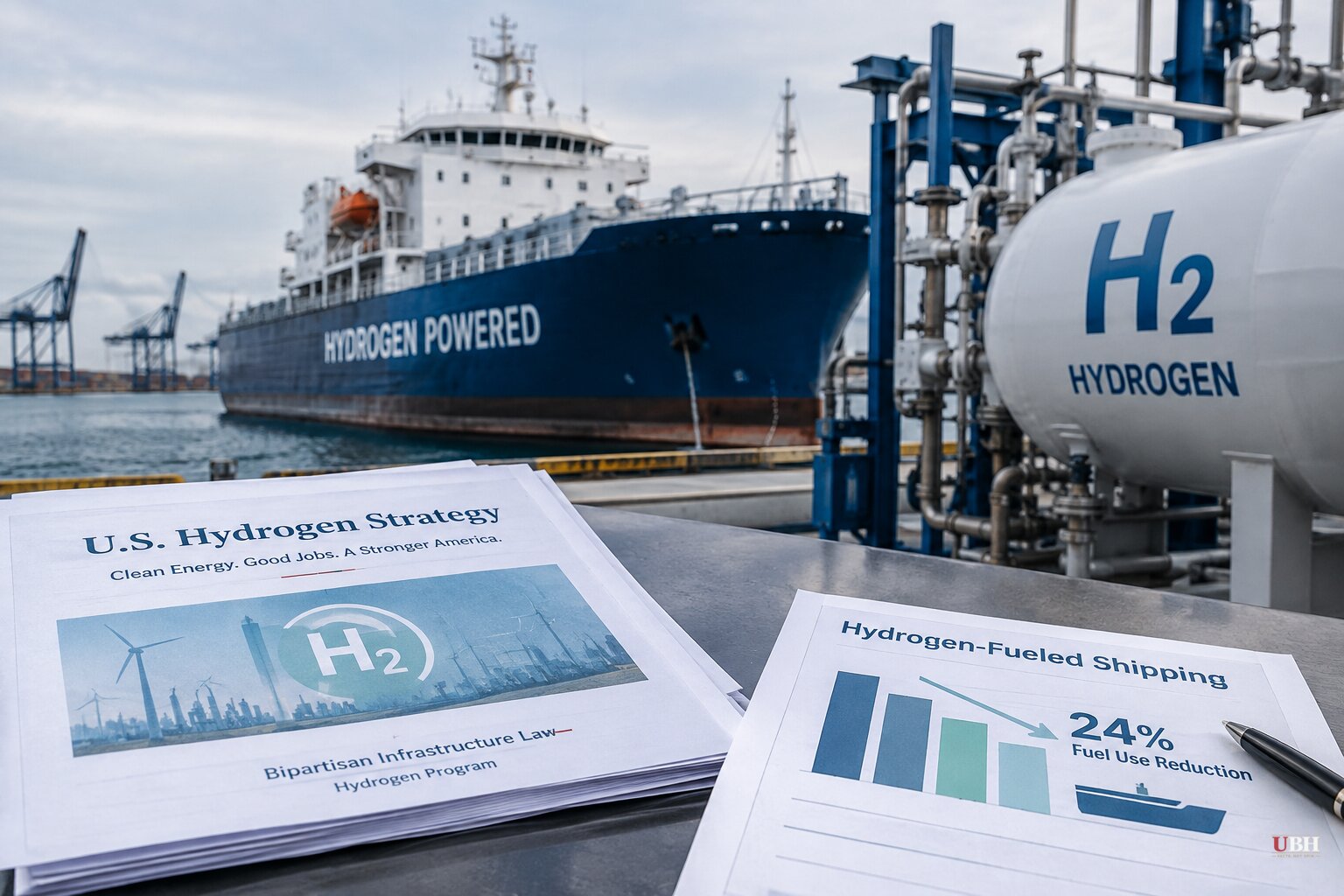
Three years ago, the U.S. government bet big on hydrogen. The Biden administration's National Clean Hydrogen Strategy and Roadmap, released in June 2023, pledged $9.5 billion for hydrogen projects and promised 100,000 jobs by 2030 along with a 10% cut in economy-wide emissions by 2050, according to the Epoch Times.
That money hasn't delivered what was promised. The Trump administration's Energy Department has reviewed the pipeline of proposed hydrogen projects and found many involved startups with no clear path to survival, or ventures that existed mainly to collect federal cash already committed under the prior administration, the Epoch Times reported.
"We want to make sure that we support applications with a pathway to commercial viability," a Department of Energy official told RealClearInvestigations. "There might come a day when the technology changes and the math makes sense; we're not closing the doors on hydrogen forever."
Hydrogen's defenders make a national-security case for staying in the game. "The need for this industry is sound; there is a sense of global competitiveness and a need for action," said Frank Wolak, executive director of the Fuel Cell and Hydrogen Energy Association, per the Epoch Times. Wolak frames U.S. hesitation as a risk of ceding ground to China on a technology other major economies are still funding.
Critics of the subsidy program aren't buying it. "It never made sense economically; it only makes sense if you really believe humanity was destroying the earth," said H. Sterling Burnett of the Heartland Institute, a group that opposes most government green-energy spending, according to the Epoch Times.
Both points deserve a fair hearing. Wolak's competitiveness argument isn't fringe: hydrogen fuel cells and clean-energy supply chains are areas where Beijing has poured in state money, and a total U.S. retreat could hand that industrial base to a rival. But Burnett's underlying critique, that federal hydrogen spending was justified more by climate ideology than a clear market case, is exactly what the Trump administration's project-by-project review appears to be testing.
A Private Retrofit Already Works
While Washington argues over billion-dollar hydrogen hubs, a company that took none of that federal money says it already found a hydrogen application that pays for itself.
Newlight, a San Francisco-based maritime energy startup, retrofitted a diesel-powered bulk carrier with a hydrogen-injection system and tested it on an 8,500-nautical-mile voyage from Singapore to Ghana. The 199-meter, 57,038-DWT vessel, operated by Lomar Shipping, cut fuel consumption by 24%, carbon dioxide emissions by 28%, and carbon monoxide by 22%, according to Marine Insight, Interesting Engineering, and financialports, which all reported the same sea trial.
The system replaces roughly 20% to 25% of a ship's diesel with hydrogen metered in real time by an onboard controller, and Newlight expects that share to grow toward 40% to 50% as hydrogen supply infrastructure matures, according to Bitcoin Ethereum News. Installation takes two weeks with the ship still in the water, no drydock required, and the ship can run on straight diesel if hydrogen isn't available.
Newlight projects roughly $500,000 in annual fuel savings per vessel and a payback period under 18 months, figures reported consistently across Marine Insight, Interesting Engineering, financialports, and Bitcoin Ethereum News. The company has already secured 12 orders and won RINA's Hydrogen Innovation Award after the classification society approved the system, per Marine Insight.
"We are building a new energy layer for the diesel engines already powering the global economy, making them materially more efficient and cleaner without requiring them to be replaced," Newlight co-founder and CEO Haran Hillel told Bitcoin Ethereum News.
Bitcoin Ethereum News added a detail the other outlets left out: the trial ship was rerouted around the Cape of Good Hope rather than through the Suez Canal, where Houthi attacks have driven up war-risk insurance, adding roughly two weeks and $600,000 to the voyage cost. That reroute underscores why shipping companies are hunting for fuel savings anywhere they can find them right now, subsidy or no subsidy.
The Rest of the Industry Is Hedging
Hydrogen retrofits aren't the only decarbonization bet in shipping. Maersk, one of the world's largest logistics firms, announced it will fit a rotor sail, a spinning steel column that uses wind pressure to boost a vessel's speed, on a cargo ship in 2027, NPR reported. Anemoi, the manufacturer, says its rotor sails cut fuel use by about 10% on average, though only just over 100 large vessels worldwide currently carry any wind-assist technology, compared to the tens of thousands of ships under International Maritime Organization jurisdiction.
Ingrid Irigoyen, managing director of the Center for Green Market Activation, told NPR that shipping executives have grown less confident hydrogen and ammonia will become commercially viable fuels at scale, calling the last 18 months "pretty rocky" for companies that had committed to decarbonizing their supply chains.
The IMO is set to vote on a binding carbon-pricing framework for shipping on December 4, and the EU's Emissions Trading System and FuelEU Maritime rules are already in force, according to Bitcoin Ethereum News, which reported that a ship the size of Newlight's test vessel would otherwise owe roughly $1.3 million a year in EU carbon costs, about 30% on top of its fuel bill. Whether that regulatory pressure, rather than any Washington subsidy program, ends up being the real driver of hydrogen adoption in shipping is the open question the industry is now watching.
Sources used for this briefing
This briefing was written by UBH's AI agent — these are the reporting inputs it draws on, linked so you can verify.


