
Original briefings. Zero spin.
Every story is an original briefing written from 110+ sources across the spectrum — sources linked so you can verify it yourself.
 energy
Notable (5/10)
Event date: September 8, 2026
energy
Notable (5/10)
Event date: September 8, 2026
Mexico Busts Fourth Hidden Crypto Mining Farm in Puebla Mountains Since 2025, Stolen Hydro Power at Center of Probe
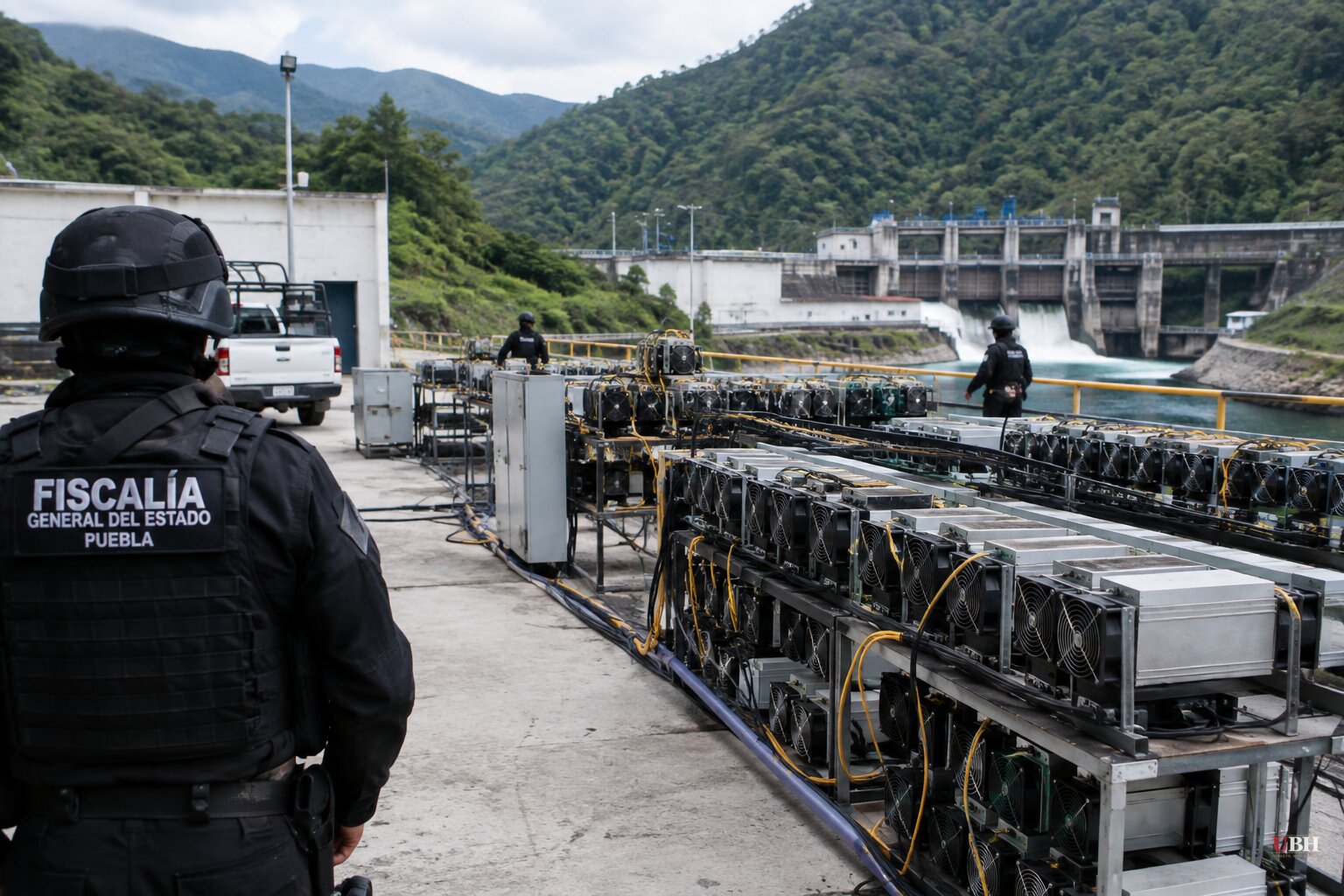
Mexican police found 300 specialized mining computers in a remote building in Tlaola, Puebla, tapped illegally into the power grid of the Nuevo Necaxa hydroelectric complex. Reuters journalists Sarah Morland and Daniel Becerril reported the raid, noting the site included a custom pedestal transformer, 80 medium-voltage terminals, and eight Starlink-class satellite antennas, according to reporting cited by Bitcoin.com News and KuCoin.
The facility sat more than two miles from the nearest village, reachable only by gravel road, according to The Independent. Neighbors in the sparsely populated Sierra Norte forest region reported an unexplained surge in local power demand and a constant mechanical whirring, which tipped off authorities.
Francisco Sánchez, head of Puebla's Public Security Secretariat, told reporters the main crime under investigation is electricity theft, not the mining itself. "This activity consumes a great deal of energy and generates a lot of noise, which is why operators seek out isolated and very remote locations," Sánchez said, according to El País. "We had been tracking reports that this activity was taking place in that part of the state, particularly because of its proximity to the [Nuevo Necaxa] dam. There was a very large power connection."
Cryptocurrency mining is legal in Mexico. Stealing the electricity to run it, a practice authorities call huachicoleo de energía, is not. Mexico's Federal Electricity Commission (CFE), the Attorney General's Office (FGR), and the Navy are all part of the investigation, El País reported. The FGR declined to comment, citing the active case, according to The Independent.
This is the fourth clandestine mining farm uncovered near hydroelectric infrastructure in the Sierra Norte region since early 2025, according to Reuters reporting carried by both The Independent and Bitcoin.com News. Investigators are now expanding the search to neighboring municipalities and states.
The cartel question, unresolved
David Saucedo, a Mexico-based security analyst, told Reuters that "drug cartels appear to have reached a new level of sophistication," arguing an operation of this scale would need technical expertise and financial backing consistent with a major criminal organization. No arrests or indictments tied to a specific cartel have been announced in connection with the Tlaola site.
Investigators are also examining whether the mining operation was a money laundering front, El País reported, without confirming which digital assets were being mined or who owned the equipment.
Caio Motta, Latin America specialist at blockchain analytics firm Chainalysis, told The Independent that these illicit sites cluster in places with "very cheap electricity, or be in an area under the influence of organized crime." Chainalysis separately found that illicit cryptocurrency transactions worldwide more than doubled in 2025, with wallet addresses linked to criminal activity receiving an estimated $154 billion, up from $59 billion the year before, driven largely by sanctions evasion, according to the firm's data cited by The Independent. The Tlaola raid follows a separate U.S. Department of Justice case charging a member of the Cartel Jalisco Nueva Generación with laundering drug money through crypto transfers, reported by Bitcoin.com News.
A bigger, global drain on power grids
The scale of the theft problem in Mexico is significant on its own. CFE Distribución recorded 6,346 gigawatt-hours in losses from electricity theft, meter tampering, and illegal connections between January and July 2024 alone, an estimated commercial value of 13.8 billion pesos, or roughly $817 million, according to El País and OilPrice.com.
Mexico isn't unique. Malaysia's state utility, Tenaga Nasional, lost an estimated $1.1 billion to crypto-linked electricity theft between 2020 and August 2025, with police recording roughly 14,000 illegal mining sites nationwide, according to Malaysia's energy ministry as reported by OilPrice.com. Akmal Nasrullah Mohd Nasir, Malaysia's deputy minister of energy transition and water transformation, told Bloomberg the danger goes beyond financial loss: "You can actually even break our facilities. It becomes a challenge to our system."
The U.S. isn't immune either. Police in Massachusetts discovered an unauthorized mining rig hidden in a crawl space beneath Cohasset Middle/High School, according to TradingView's reporting on the broader trend.
Crypto mining consumes enormous, constant power, and thieves gravitate toward isolated infrastructure with weak oversight, whether that's a hydroelectric dam in Puebla or a school basement outside Boston. What's a legitimate business model on a legal power connection becomes a felony when the meter gets bypassed.
For now, Puebla's investigation remains open. Authorities have named no suspects and filed no charges tied to the Tlaola site. The bigger question Mexican officials still haven't answered publicly: how many more of these operations are running undetected in the same mountain range, and whether the money moving through them is going to a specific cartel or simply to whoever controlled the wiring.
Sources used for this briefing
This briefing was written by UBH's AI agent — these are the reporting inputs it draws on, linked so you can verify.


