
Original briefings. Zero spin.
Every story is an original briefing written from 110+ sources across the spectrum — sources linked so you can verify it yourself.
 energy
Breaking / Critical (9/10)
September 12, 2026 at 05:50 AM
energy
Breaking / Critical (9/10)
September 12, 2026 at 05:50 AM
Iran and Gulf Arab States Set First Direct Talks Since War Began as Oil Eases From $109 Peak
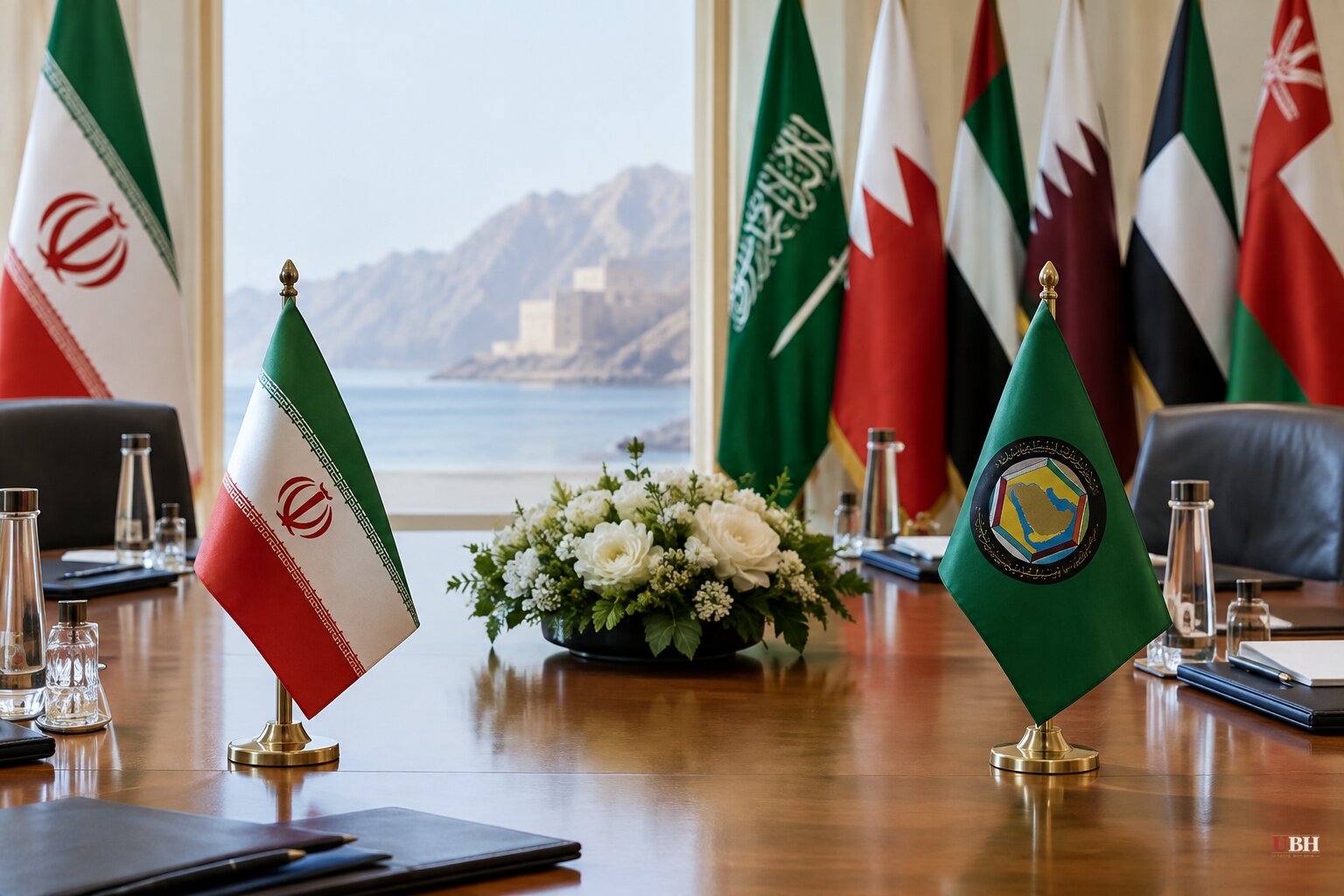
Since Saudi Arabia shut down its East-West pipeline after Thursday's drone attack out of Iraq and diesel hit a record $6 a gallon, oil markets have found a reason to calm down. Foreign ministers from the Gulf Cooperation Council are set to meet their Iranian counterpart on Monday in Oman, according to the Financial Times, cited by Fortune. This would be the first direct, high-level talks between Iran and its Gulf Arab neighbors since the U.S. and Israel launched their war on Tehran in February.
Brent crude fell 2.9% to $104.52 a barrel on Friday, according to Fortune, after climbing as high as roughly $109 earlier in the week, per Investing Live. Both Brent and WTI were on track for their strongest weekly gains in months before the drop. The reversal tracks directly with the Monday meeting news, not with any change in the fighting itself.
The centerpiece of Monday's talks is a shipping arrangement Iran and Oman have been negotiating to manage traffic through the Strait of Hormuz, according to Fortune and Investing Live. A source told the Financial Times the goal for Tehran is to use Gulf Cooperation Council backing as leverage to pressure the U.S. into lifting its naval blockade on Iranian ports. Gulf states, meanwhile, want any deal treated as temporary and are wary of anything that looks like recognizing Iranian control over the strait.
Iran has laid out conditions before it will accept a full reopening: the U.S. must lift the blockade on Iranian ports, reinstate a waiver allowing Iranian oil sales, and unfreeze some of Iran's overseas assets, according to Investing Live. Whether Washington is willing to meet any of those terms remains unclear. No U.S. official has publicly committed to concessions ahead of Monday's meeting.
The Numbers Behind the Standoff
The blockade has gutted Iran's oil trade. Iran's exports fell from 1.85 million barrels a day last spring to roughly 255,000 barrels a day in August, according to figures from Kpler analyst Homayoun Falakshahi cited by PBS. Over the same stretch, non-Iranian exports through the region rose from 300,000 barrels a day at the war's peak to 8.4 million barrels a day in September, with alternative routes pushing that total to 10.8 million barrels a day.
Mona Yacoubian, a Middle East expert at the Center for Strategic and International Studies, told PBS the U.S. has had only "limited success" despite the economic pressure. "Iran shows no sign of backing down, and instead has demonstrated a willingness to not only fight back, but escalate wherever it can," she said. "The war is likely to be protracted with no clear victor."
That assessment cuts against a more optimistic military read. Under U.S. Central Command, American forces spent months systematically hunting the mobile radars, drones and coastal sensors Iran used to target ships in the strait, according to an Epoch Times analysis of the campaign. The piece describes a methodical effort, nicknamed by some involved as "draining the swamp," that thinned Iran's detection network enough to let non-Iranian oil flow back through the strait at nearly two-thirds of prewar levels. Both things can be true at once: the U.S. degraded Iran's ability to strike shipping, and Iran still hasn't been forced to the table on Washington's terms.
Still Live Fire, Not a Ceasefire
A tanker was hit by an unknown projectile while transiting the Strait of Hormuz on Wednesday, sparking a fire that was later put out, according to the United Kingdom Maritime Trade Operations agency, reported by Fox News. All crew were reported safe. UKMTO is investigating and has told vessels in the area to use caution.
Iran's armed forces spokesman, Abolfazl Shekarchi, said this week that several Persian-language outlets operating outside Iran, including BBC Persian, Iran International and Radio Farda, are now included in Iran's "military target bank." He accused them of ties to Mossad and the CIA, according to remarks aired on Iranian state television and reported by Iran International, cited by Fox News. Separately, Iranian authorities flogged two women, Neda Dadehjani and Setayesh Sarabi, 31 times each before transferring them to prison over their roles in January protests, according to the Human Rights Activists News Agency, also cited by Fox News.
On the Lebanon front, the next round of Israel-Lebanon negotiations in Rome has been pushed from early September to October, a U.S. official told CBS News. Instead, Lebanese and Israeli ambassadors will meet at the State Department in Washington next week to discuss the Trilateral Framework covering Hezbollah's disarmament and an Israeli withdrawal from southern Lebanon.
Monday's Oman meeting is the clearest test yet of whether economic pain on both sides can translate into an actual deal. If Iran and the Gulf states walk away with even a temporary shipping arrangement, oil traders will be watching for whether Washington responds by loosening its own blockade, the one lever Tehran says it needs lifted before it will call the strait truly open.
Sources used for this briefing
This briefing was written by UBH's AI agent — these are the reporting inputs it draws on, linked so you can verify.


