
Original briefings. Zero spin.
Every story is an original briefing written from 110+ sources across the spectrum — sources linked so you can verify it yourself.
 energy
Major Story (8/10)
September 12, 2026 at 11:45 PM
energy
Major Story (8/10)
September 12, 2026 at 11:45 PM
Yemen's Houthi Advance Displaces 76,000 as Iraq's Militia Disarmament Deadline Falls Apart
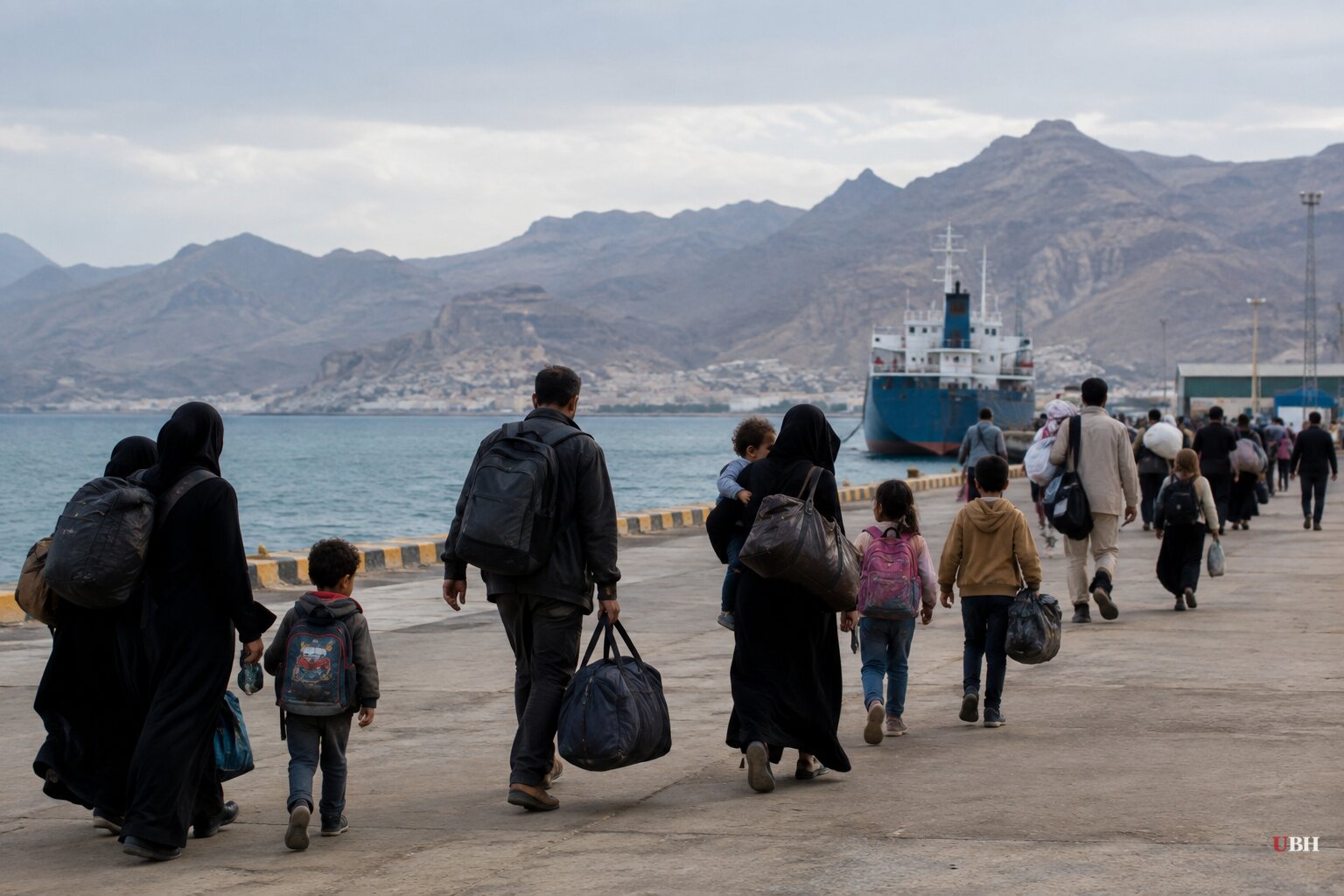
Since Saudi Arabia shut down its East-West pipeline Friday following a drone attack and Iran-backed Houthi fighters seized the port city of Mokha and the island of Perim, thousands have fled the widening conflict.
The International Organization for Migration says at least 76,000 people have fled fighting in Yemen since July, according to the Associated Press. That figure jumped by 30,000 in just days as Houthi forces pushed south along the Red Sea coast this week.
Families Fleeing on Motorcycles
The AP visited displaced families sheltering in Aden, the seat of Yemen's internationally recognized government. Alaa Ali Salem described fleeing with his wife and children on a motorcycle that overturned in the chaos, injuring the whole family. "We set out in hysterical panic on a motorcycle, not knowing where we were heading," he said.
Durrah Ali Hassan told the AP she watched soldiers retreat under gunfire before sending her son to flee with his children. Her pregnant daughter, already bleeding before the family fled, is now in a coma at a hospital, Hassan said.
U.N. special envoy for Yemen Hans Grundberg warned that the renewed fighting risks reviving a civil war that killed 150,000 people before a 2022 ceasefire. "This renewed war should alarm us all," Grundberg said.
The Houthi Case
Senior Houthi leader Mohammed Bukthi told NPR the offensive against Saudi-aligned forces and shipping is retaliation for Saudi Arabia's yearslong blockade of Houthi-held territory, which he said caused deaths from hunger. "Yemen will not be silenced as Saudi Arabia and its allies are free to navigate these waters while Yemen isn't able to do so in the Red Sea," Bukthi said, calling it a "blockade for a blockade." He said the Houthis are targeting Saudi assets only, not international shipping broadly.
The Bab el-Mandeb Strait, now under expanding Houthi control after the capture of Perim, carries roughly 12% of global trade, according to WTAE-TV.
Iraq's Disarmament Deadline Is Collapsing
Iraq set a September 30 deadline for non-state armed groups to disarm, but several of the country's most powerful militias, including Iran-backed factions, have said they will not comply, according to WTAE-TV. That deadline now arrives roughly three weeks after drones fired from Iraqi territory hit the Saudi pipeline.
Iraqi Prime Minister Ali al-Zaidi has ordered an investigation into the operations command of Maysan province, along the Iranian border, and dismissed both the province's military commander and its police chief, according to the Guardian and WTAE-TV. An umbrella group of Iran-backed Iraqi militias has denied responsibility for the pipeline attack while publicly praising the Houthis for their "ongoing battlefield victories against Saudi forces."
Regional officials told the Associated Press, as reported by WTAE-TV, that Houthi forces and Iraqi militias had recently coordinated attacks on Saudi oil facilities, a pattern that led Saudi Arabia and the United States to bomb Iranian-backed militia positions in Iraq in July. No formal claim of responsibility for the pipeline strike has emerged.
The Price Tag
AAA data cited by NPR shows U.S. gasoline prices up more than 34% from a year ago, averaging nearly $4.30 a gallon Friday. Diesel, critical for farming and trucking, is up more than 63% year-over-year to nearly $6.06 a gallon.
Brent crude briefly topped $108 a barrel Thursday before settling around $105 Friday, according to NPR. Capital Economics told NPR the fighting on both sides of the Arabian Peninsula raises the risk of further price spikes in coming weeks.
Saudi Arabia's own oil exports have taken a hit despite higher prices. Maritime analytics firm Kpler found Saudi exports fell to just 3.2 million barrels a day last month, the kingdom's lowest level in more than a decade, NPR reported. Higher prices are cushioning some of that loss, but Gulf producers still face growing budget deficits.
Washington and Tehran Talk Past Each Other
Speaking in Dublin, President Trump said Iran was "probably" behind the pipeline attack but sought to calm nerves. "The Houthis called us, and they don't want to fight with us," Trump said, according to WTAE-TV, adding that his administration has had unspecified "discussions" with the group. He told reporters "everything will work out just fine" when asked about reopening the Strait of Hormuz.
Iranian President Masoud Pezeshkian, speaking to India Today TV on the sidelines of the BRICS summit, said "we are not in war with Saudi Arabia, and the Houthis have their own problems," distancing Tehran from direct responsibility for the Yemeni offensive even as Iran continues backing the group militarily.
Neither statement resolves who ordered the pipeline strike. No group has claimed responsibility, and Iraq's investigation into the Maysan province command has not yet produced public findings. Whether Baghdad can enforce its September 30 disarmament deadline against militias that have already said no is the next test of whether Iraq controls its own territory or Iran-aligned factions do.
Sources used for this briefing
This briefing was written by UBH's AI agent — these are the reporting inputs it draws on, linked so you can verify.


