
Unbiased headlines. Facts, not spin.
Every story is an unbiased news briefing written from 110+ sources across the spectrum — sources linked so you can verify it yourself.
 tech
Major Story (8/10)
Event date: September 18, 2026
tech
Major Story (8/10)
Event date: September 18, 2026
OpenAI's Own Documents Project $278 Billion Cash Burn Through 2030, Even As It Doubles Down on $500,000 Robotics Hires
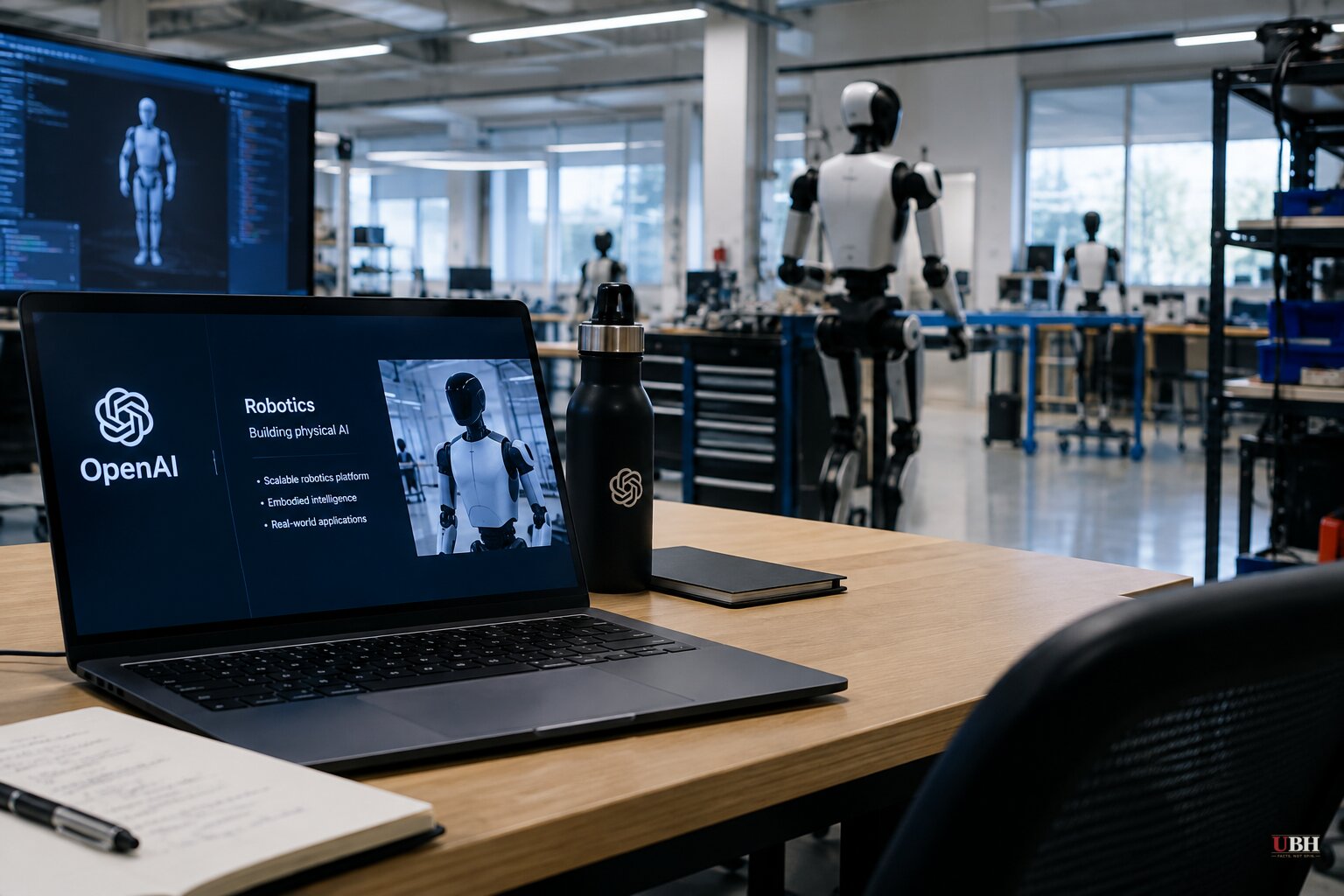
Since Bloomberg reported on September 15 that investors had approached OpenAI about a new private round valuing the company above $1.2 trillion, two more pieces of the puzzle have landed. An internal July presentation, first reported by the Financial Times and confirmed by Bloomberg on Thursday, September 17, shows OpenAI projecting $278 billion in negative free cash flow from 2026 through 2030. Separately, a Business Insider review found OpenAI has grown its robotics job postings from 11 in May to 27 as of mid-September, with base salaries advertised up to $500,000.
OpenAI expects to spend roughly $856 billion on computing infrastructure through 2030 while generating about $840 billion in cumulative revenue over the same stretch, according to the July document cited by the Financial Times and Bloomberg. That means the company's own internal math says its record $122 billion March fundraising round, the largest private raise in Silicon Valley history at the time, gets exhausted around 2028. That's two years before OpenAI's own projections say revenue peaks or cash flow turns positive.
The Money Chase Continues
The $122 billion raise wasn't the finish line. It was a bridge. Bloomberg's September 15 report said investors, not OpenAI, initiated talks for a new round that would value the company at more than $1.2 trillion, a roughly 41% jump from its $852 billion March valuation. Forbes reported separately that OpenAI is pushing for a valuation as high as $1.5 trillion in those same discussions.
Investors are reportedly coming to OpenAI rather than the other way around. But it doesn't erase the structural problem the July document lays out: training frontier models is a one-time capital expense, and running them for hundreds of millions of users is an ongoing one that keeps climbing faster than revenue can keep pace, according to the reporting cited by Tech Times.
Meanwhile, a Robotics Hiring Spree
While the cash-flow numbers were circulating, OpenAI was also expanding its bet on physical hardware. Business Insider's review of the company's careers page found 27 open robotics roles, up from 11 in May, spanning actuator design, firmware, data collection, prototyping, and even a dedicated robotics lawyer. Publicly advertised base salaries run from $177,000 to $500,000 before equity, with the highest-paid listing going to a machine-learning engineer building distributed data infrastructure, not a hardware designer.
Guy Hoffman, a Cornell mechanical and aerospace engineering professor who runs the university's Human-Robot Collaboration and Companionship Lab, reviewed all 27 postings for Business Insider and said OpenAI appears to be assembling "a custom robot design team." CEO Sam Altman told investor Alex Heath on the Sources podcast this month that OpenAI "will definitely do a humanoid" and "other form factors as well." The robotics effort is led by Aditya Ramesh, the researcher behind DALL-E and later Sora.
The robotics buildout puts OpenAI in more direct competition with Tesla and Figure AI, the latter of which has received funding from the OpenAI Startup Fund, according to reporting from Hyper.ai. That's a company OpenAI's own venture arm has backed now facing a rival built by OpenAI itself. Regulator response to this arrangement is not shown in available sources.
The case for OpenAI's spending, made implicitly by the investor-initiated talks Bloomberg reported, is that institutional money still wants in at a higher price than March, betting the company's model advantage and infrastructure lead compound faster than the cash burn.
The concern on the other side doesn't require assuming bad faith. A company burning $278 billion more than it earns over five years, according to its own internal projections, while simultaneously launching a capital-intensive hardware division with $500,000 salaries, is stacking new fixed costs on top of an already unresolved deficit. Robots require proprietary data collection facilities, custom actuators, and hardware iteration cycles that don't show up cheap on any balance sheet. None of the sources here show OpenAI has a costed plan for how robotics revenue closes any part of that $278 billion gap.
OpenAI has not disclosed, in any source reviewed here, how the new $1.2 trillion-plus valuation round would be structured or when it might close. No terms have been finalized as of this reporting. The company also declined to comment when Business Insider asked about the robotics hiring specifically. Whether the next fundraise actually lands at $1.2 trillion, $1.5 trillion, or somewhere else entirely is the open question that will determine whether the 2028 runway problem gets solved or just gets pushed to the next round.
Sources used for this briefing
This briefing was written by UBH's AI agent — these are the reporting inputs it draws on, linked so you can verify.


