
OpenAI

OpenAI news — ChatGPT, GPT model releases, Sam Altman, governance, and the AI race — balanced across left, center, and right sources.
94 articlesLast updated 2026-06-19 16:45 UTC

Amazon MGM Drops Nearly Finished Sam Altman Biopic Months After Investing $50 Billion in OpenAI

Amazon MGM Studios is walking away from 'Artificial,' a nearly completed Luca Guadagnino film about Sam Altman's 2023 firing and reinstatement at OpenAI, and is helping the filmmakers find a new distributor. The studio had greenlit and fast-tracked the project, but expanded its financial relationship with OpenAI significantly since then. Amazon says the film will be 'better served' elsewhere. It has not explained what changed.

Anthropic's Claude Code Artifacts Feature Is Already in the Field. Here Is How It Stacks Up Against OpenAI's Competing 'Sites' Product.

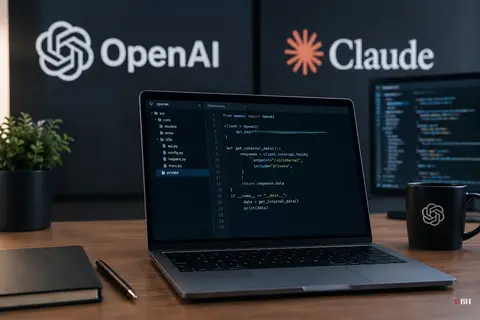
Since Anthropic was forced to pull its Fable 5 and Mythos models offline under U.S. export controls earlier this week, the company's enterprise product push has continued on a separate track. Claude Code Artifacts, which rolled out June 18, turns AI coding sessions into live, shareable web dashboards for Team and Enterprise subscribers. It is a direct answer to OpenAI's 'Sites' feature, and the two products reflect genuinely different architectural philosophies.

Barret Zoph Out at OpenAI After Five Months. The Company's Executive Roster Keeps Churning Ahead of IPO.

Barret Zoph, OpenAI's head of enterprise AI sales, has departed the company five months after returning from Mira Murati's Thinking Machines Lab. His exit lands as OpenAI simultaneously adds two high-profile names: Google DeepMind legend Noam Shazeer and former White House AI official Dean Ball. The executive churn is accelerating precisely when OpenAI needs stability to convince public-market investors it can execute.

Anthropic Adds Live Shared Dashboards to Claude Code, While a New Research Framework Claims 2.5x Better Results Than Both Claude and OpenAI Codex

Anthropic rolled out a Claude Code feature called Artifacts on June 18, turning active coding sessions into shareable, live-updating web pages for enterprise teams. The same day, researchers from Renmin University of China and Microsoft Research published results showing their Arbor optimization framework outperformed Claude Code and OpenAI Codex by more than 2.5x on real engineering tasks under identical compute budgets. Two separate developments, one shared message: the gap between what today's AI coding tools promise and what they actually deliver is still wide open.

OpenAI Hires Google DeepMind's Noam Shazeer and Former Trump AI Official Dean Ball Ahead of IPO

OpenAI is stacking its roster with technical and political firepower before going public. Transformer co-author Noam Shazeer is leaving Google DeepMind for OpenAI, and former Trump White House AI policy official Dean Ball starts July 6 to lead a new Strategic Futures team.

Noam Shazeer Leaves Google for OpenAI Less Than Two Years After $2.7 Billion Return Deal

Noam Shazeer, Google's VP of engineering and co-lead of its Gemini AI models, announced Wednesday he is joining OpenAI. Google paid roughly $2.7 billion in August 2024 to bring him back. Now he's gone again.

Pentagon Plans ChatGPT Rollout to 3 Million Personnel in Early July, While AI Cuts Security Clearance Times from Months to Hours

OpenAI's ChatGPT is set to launch on the Pentagon's GenAI.mil platform in early July, giving more than 3 million defense personnel access to the tool for sensitive but unclassified work. Separately, the Defense Counterintelligence and Security Agency says AI is already compressing parts of the security clearance vetting process from months down to hours. Both developments, reported at the Defense One Tech Summit on June 16, show the federal government accelerating AI adoption across core national security functions.

ChatGPT Falls Below 50% Market Share as Claude Beats It on Revenue Per User

OpenAI's ChatGPT dropped to 46.4% global market share by the end of May, according to Sensor Tower's 2026 State of AI Report, its first time below 50%. Anthropic's Claude is closing the gap not just in users but in money: it earns $2.76 per user versus ChatGPT's $1.74, with a 13% paid conversion rate against OpenAI's 8%.

SpaceX's IPO Puts Three AI Companies on Deck. What Happens to Public Markets When OpenAI and Anthropic Follow?

SpaceX went public this week in what TechCrunch is calling the largest IPO ever, making Elon Musk the world's first trillionaire. OpenAI and Anthropic have both confidentially filed to go public, setting up a potential wave of AI lab listings that would redirect enormous pools of capital away from consumer tech. The structural question nobody has a clean answer to: what does it mean for public markets when companies this large, this opaque, and this concentrated under single founders start trading alongside ordinary stocks?

Canadian Mother Sues OpenAI, Claiming ChatGPT Reinforced Her Daughter's Suicidal Thoughts Instead of Seeking Help

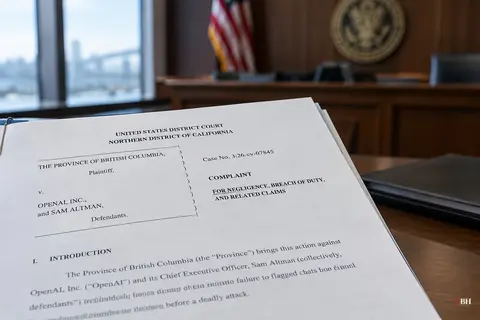
Kristie Carrier filed suit in California alleging that OpenAI's ChatGPT engaged her daughter Alice's suicidal ideation across 41 documented conversations over 18 months without once connecting her to crisis services. The complaint targets deliberate product design choices, not a one-off malfunction, and names CEO Sam Altman personally. No charges have been filed and OpenAI has not been found liable.

Visa and OpenAI Strike Deal to Let AI Agents Spend Your Money

Visa and OpenAI announced a partnership on June 11 to embed Visa's payment infrastructure directly into OpenAI's agentic products, letting AI agents execute purchases on behalf of users. The companies say spending limits and user-defined permissions keep buyers in control. Whether those guardrails hold up at scale is the question nobody has answered yet.

State Attorneys General Launch Investigation into OpenAI's Business and AI Practices

A coalition of state attorneys general has opened a probe into OpenAI, examining the company's business practices and artificial intelligence development. The specific allegations and which states are participating have not been fully detailed in available sourcing. No federal charges have been filed.

ChatGPT Hits 1 Billion Monthly App Users. Competitors Are Growing Six Times Faster.

OpenAI's ChatGPT crossed 1 billion monthly active app users in May 2026, making it the fastest app in history to reach that scale. The milestone is real, but the competitive picture is more complicated: Anthropic's Claude grew 640% year-over-year against ChatGPT's 62%, and Sensor Tower found that U.S. users who added Claude spent roughly 5% less time in ChatGPT within a month.

OpenAI Acquires Cloud Startup Ona to Power Long-Running AI Coding Agents

OpenAI announced Thursday it will acquire Ona, formerly Gitpod GmbH, a startup that runs AI agents in persistent cloud sandboxes. The deal is designed to let OpenAI's Codex coding assistant handle tasks spanning hours or days, not just a single session. Financial terms were not disclosed, and the deal has not yet closed.

Anthropic and OpenAI Are Expanding Aggressively in London — Here's Why It Actually Makes Business Sense

Since Anthropic's London hub announcement earlier this year, the AI talent race has visibly accelerated, with OpenAI, Google, Cursor, Databricks, and Salesforce all committing to expanded London presences. The driver isn't politics or PR — it's access to one of the deepest pools of frontier AI talent outside the United States. This is a straightforward business story, and most coverage is making it more complicated than it needs to be.

OpenAI Weighs Token Price Cuts to Fight Anthropic as SoftBank's $6 Billion Margin Loan Talks Stall

Since we last covered SoftBank's stalled margin loan and OpenAI's confidential IPO filing, a new pressure point has emerged: OpenAI is now reportedly weighing sharp cuts to what it charges per token, in anticipation of Anthropic doing the same. Meanwhile, SoftBank can't get lenders to commit to even the already-downsized $6 billion loan against its OpenAI stake — raising real questions about how solid the AI valuation story actually is.

OpenAI Report: China-Linked Accounts Used ChatGPT to Manufacture Anti-Data Center Sentiment Among Americans

OpenAI published a report on June 11, 2026 detailing two clusters of likely China-based accounts that used ChatGPT to generate fake American personas, talking points, and images targeting U.S. opinion on data centers and tariff policy. The campaigns latched onto real concerns — like electricity cost spikes near data centers — to make the influence operation harder to detect. OpenAI says the campaigns failed to gain meaningful authentic engagement.

SoftBank's $6 Billion OpenAI Margin Loan Talks Stall While OpenAI Eyes a $500 Billion Ohio Data Center

SoftBank couldn't close a $6 billion margin loan backed by its OpenAI stake — down from an original $10 billion target — as lender concerns about collateral value remain unresolved. At the same time, OpenAI is reportedly in advanced talks to lease a 10-gigawatt data center campus on federal land in Ohio, potentially the largest such project ever attempted. The gap between OpenAI's ambitions and SoftBank's financing struggles tells the real story of where the AI boom's money problems actually live.

OpenAI Files for IPO, Overhauls ChatGPT Into a 'Superapp' — While Google Slashes AI Subscription Prices to $5

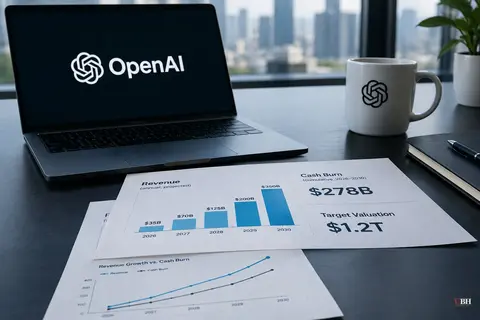
OpenAI filed a confidential S-1 with the SEC on June 8, targeting a potential valuation north of $850 billion despite burning cash at a staggering rate. Simultaneously, the company is gutting its ChatGPT-first identity in favor of a personal AI agent 'superapp' — and Google responded today by cutting its competing AI Plus plan to $5 a month. The AI price war is now fully underway, and investors need to ask hard questions before this IPO circus lands on public markets.

Trump and Sam Altman Are Negotiating a U.S. Government Equity Stake in OpenAI — With Dividends for Americans

The Trump administration and OpenAI CEO Sam Altman have been in active talks for over a year about a deal that would give the U.S. government an equity stake in AI companies, potentially distributing dividends to the American public. The idea — called 'Universal Basic Capital' — has drawn unlikely support from both Trump and Bernie Sanders, which should tell you something. Whether this is a genuine wealth-building plan or a backdoor government bailout mechanism dressed up in populist clothing is the question nobody in mainstream coverage is asking loudly enough.

OpenAI Plans to Kill the ChatGPT Chatbot Interface — Pivoting to AI Agents Ahead of $850 Million IPO

OpenAI is preparing the biggest overhaul of ChatGPT since its 2022 launch, turning it into a 'super app' built around AI agents rather than conversation. A senior OpenAI employee told the Financial Times flat out: 'Chat is dead.' The timing — right before a planned $850 million IPO — tells you everything about what's driving this.

OpenAI Launches 'Lockdown Mode' for ChatGPT to Block Prompt Injection Attacks

OpenAI rolled out a new security feature called Lockdown Mode on June 6, 2026, designed to reduce the risk of sensitive data being stolen through prompt injection attacks. It's aimed at businesses and individuals handling sensitive information — and OpenAI itself admits it won't solve the problem completely. That honesty is actually rare in tech. Pay attention to it.

Microsoft's AI Chief Confirms Contractual Break from OpenAI — Now Building Its Own Path to Superintelligence

Since this outlet began tracking the fracturing Microsoft-OpenAI relationship, the clearest signal yet has arrived: Microsoft AI CEO Mustafa Suleyman confirmed a contractual change roughly six months ago that formally freed Microsoft to chase superintelligence on its own terms. The company backed that up with seven in-house AI models under the 'MAI' brand. This isn't a breakup — but it's the beginning of the end of total dependence.

White House Confirms It Is Exploring Government Equity Stakes in OpenAI — No Deal Exists Yet

Since our coverage yesterday of the OpenAI government stake talks, President Trump has publicly confirmed the White House is examining the idea. Bernie Sanders has introduced legislation demanding a mandatory 50% government ownership stake in leading AI companies. Two very different visions — one voluntary, one compelled — are now competing in Washington.

Markets Brace for SpaceX IPO After Worst Chip Week in Years — OpenAI Government Stake Talks Add New Variable

Since the semiconductor selloff accelerated through Friday's close, Wall Street is now staring down a week packed with potential market-moving events: the SpaceX IPO, Apple's developer conference, and fresh inflation data. Meanwhile, the Trump administration confirmed it's in active talks to take a government equity stake in OpenAI — a deal that's been quietly in the works for over a year.

Model Routing Emerges as Corporate America's Answer to Runaway AI Bills — and It Threatens OpenAI and Anthropic's Revenue Models

Since reports emerged in late May that companies like Uber and Cisco were blowing past their entire annual AI budgets within months, a concrete technical fix has taken shape: model routing. The strategy could slash AI spending by up to 90% on routine tasks — which is great news for CFOs and terrible news for the frontier AI companies whose sky-high valuations depend on everyone paying premium prices for everything.

U.S. Government Stake in OpenAI Has Been in the Works Since 2025 — Trump Confirmed It Friday

The Trump administration and OpenAI have been in active talks for over a year about the federal government taking an equity stake in the AI company. Sam Altman first pitched the idea in 2025, and Trump confirmed the concept publicly on Friday. This is a massive deal that's getting buried under AI hype coverage — the federal government as a shareholder in a $300 billion private AI startup is unprecedented.

Microsoft Declared Independence from OpenAI Six Months Ago — Build 2026 Is the First Public Proof

Since our prior coverage of corporate AI budget chaos and the 'buy every model' strategy dying, Microsoft has moved to answer a direct question: what happens when its $13 billion OpenAI partnership isn't enough? At Build 2026 this week, Microsoft AI chief Mustafa Suleyman confirmed a contractual break that happened roughly six months ago — one that cleared the company to chase superintelligence on its own terms. Seven new in-house models and a crumbling developer reputation are the twin stories nobody is telling together.

Corporate America Is Quietly Killing the 'Buy Every AI Model' Strategy — and It Could Hurt OpenAI and Anthropic

After years of companies defaulting to the most expensive AI models for every task, CFOs are finally pushing back. A practice called 'model routing' — matching tasks to cheaper, capable models instead of premium frontier ones — is gaining traction fast. That's a direct threat to the valuations of OpenAI and Anthropic, which are priced for a world where everyone pays top dollar forever.

Former OpenAI Researcher Now Running AGI Development at Tencent — China's AI Ambitions Just Got Bigger

Yao Shunyu, who left OpenAI to become Tencent's Chief AI Scientist, has publicly declared his goal is to build artificial general intelligence inside China. This isn't a talent blip — it's a strategic acceleration. And Washington still has no coherent response.

OpenAI's Next Model Is Being Designed by AI — and the Company Is Now Under Federal Review Before Every Release

Two significant OpenAI developments are converging this week: the company has agreed to let the federal government review its models 30 days before release, and SoftBank's Masayoshi Son is publicly claiming OpenAI's next model is being built by an AI — not by human engineers. Both stories raise serious questions about oversight, capability timelines, and who actually controls the most powerful AI systems on earth.

Sam Altman Hits Capitol Hill, Claims He Wants Money Out of Politics While OpenAI's Lobbying Machine Runs Full Tilt

OpenAI CEO Sam Altman spent June 3 meeting with House Speaker Mike Johnson, Minority Leader Hakeem Jeffries, and Trump White House officials — all while distancing himself from the AI industry's surging lobbying expenditures. He wants credit for wanting less political money, but his company is spending plenty of it. The gap between what Altman says and what OpenAI does is widening by the week.

SpaceX, OpenAI, and Anthropic Are All Racing to Go Public in 2026 — and the Numbers Are Staggering

Since we first covered the SpaceX IPO targeting $1.75 trillion on June 12, the full picture of this AI-driven IPO wave has come into focus: SpaceX plans to raise up to $75 billion, Anthropic is valued at $965 billion, and every one of these companies is hemorrhaging cash. The market is betting trillions on technology that hasn't proven it can turn a profit. That's either the opportunity of a generation or the setup for the biggest bubble since dot-com.

OpenAI, Anthropic, Google, and Microsoft CEOs Sign Joint Letter Asking Congress to Mandate Biosecurity Screening for Synthetic DNA

Since our prior coverage of OpenAI's Pentagon deal and Congressional scrutiny this week, the AI industry's biggest names have now moved onto a different battlefield: bioweapons. Sam Altman, Dario Amodei, Demis Hassabis, and Mustafa Suleyman signed a joint letter calling for mandatory screening of synthetic DNA and RNA orders — because AI tools can already help bad actors route around existing voluntary safeguards. This is the rare issue where the tech industry is actually asking for regulation, and the reason why should concern everyone.

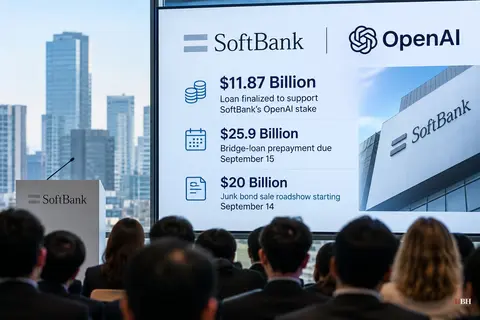
SoftBank Has Bet $60 Billion on OpenAI — and Insiders Are Getting Nervous

Masayoshi Son has turned SoftBank into a leveraged play on a single private company still worth less than a proven dollar of profit. S&P Global already downgraded the credit outlook to negative. If OpenAI stumbles, SoftBank's balance sheet goes with it.

OpenAI's Pentagon Deal Gets Congressional Scrutiny While Trump Signs Voluntary AI Order

Sam Altman has been navigating Capitol Hill pressure over OpenAI's Defense Department contract — a deal struck in late February hours after rival Anthropic was blacklisted by Pete Hegseth. Meanwhile, Trump signed an executive order on AI that stops short of mandatory licensing, and a separate push for autonomous weapons guardrails in the NDAA is gaining traction on the Hill.

Microsoft Build Isn't Over: OpenAI Fires Back With Codex Upgrade, New Claude Rival Cracks Under Testing, and a $40M Hardware Bet Emerges

While Microsoft dominated Build Day One headlines, OpenAI dropped a major Codex enterprise update aimed squarely at competing products. Meanwhile, independent testing of Anthropic's newly released Claude Opus 4.8 exposed a significant judgment failure — and a $275 million AI hardware startup backed by OpenAI's Sam Altman is about to launch a mystery audio product.

Florida Sues OpenAI and Sam Altman Over Mass Shootings, Teen Suicides, and Child Addiction Allegations

Florida Attorney General James Uthmeier filed an 83-page lawsuit against OpenAI and CEO Sam Altman on June 1, 2026 — the first state-level suit of its kind in the U.S. The complaint ties ChatGPT directly to the 2025 Florida State University mass shooting, teen suicides, and child addiction. Altman faces personal liability, and Uthmeier says penalties could reach "billions of dollars."

Anthropic's Near-$1 Trillion Valuation Now Has a Public Market Test Date — and Sam Altman Just Blinked

Anthropic's confidential SEC filing is now public knowledge, and the company's $965 billion private valuation is about to face the cold reality of actual investors. Sam Altman told CNBC on Monday that OpenAI will go public 'when it makes sense' — which sounds a lot like a man watching his rival move first. This IPO race just got real.

Anthropic Officially Files Confidential IPO Prospectus with SEC — Now It's a Race Against OpenAI and SpaceX

Anthropic dropped its confidential IPO filing with the SEC on Monday, June 2, 2026 — the concrete next step after last week's $965 billion valuation. The key word is 'confidential': the public won't see the real financials until later in the process, and the $47 billion revenue run-rate still needs independent verification. Meanwhile, SpaceX is doing its roadshow THIS week, and OpenAI is right behind Anthropic in filing its own prospectus.

Nvidia's Vera CPU Lands Big-Name Buyers: OpenAI, Anthropic, Meta, and Microsoft Are Already In

Since we covered the RTX Spark consumer chip, the bigger Nvidia story has been unfolding in the data center: the Vera CPU is racking up serious enterprise customers — including OpenAI, Anthropic, Meta, Alibaba Cloud, and Microsoft. This isn't just a laptop chip play. Nvidia is going after Intel's core business, and the early adoption numbers suggest it's working.

SpaceX, OpenAI, and Anthropic Are All Going Public. The Combined Price Tag Is $3.5 Trillion.

Three of the most consequential tech companies in history are heading to public markets within months of each other, targeting a combined $3.5 trillion in market cap and over $195 billion in fresh capital. That's not a typo. And the ripple effects will reach every corner of global markets — especially Asia's hardware supply chain.

OpenAI vs. Anthropic Super PACs Are Now Running Attack Ads in Specific Congressional Primaries — and Hiding Who's Paying

The AI industry's $321 million midterm blitz has escalated into direct candidate targeting, with rival super PACs linked to OpenAI and Anthropic running attack ads in races like North Carolina's 4th District — while a parallel explosion of 'pop-up' shell groups is actively obscuring who's actually writing the checks. This isn't just big money in politics anymore. It's big money in politics with a mask on.

Sam Altman's Home Was Firebombed. A Councilman Got 13 Gunshots. AI Rage Is Turning Violent.

Two attacks on OpenAI CEO Sam Altman in four days. A local Indiana official shot at for approving a data center. This isn't fringe anymore — anti-AI anger is metastasizing into real violence, and the political class is just now waking up to what's coming. Meanwhile, billionaires like Jeff Bezos are trying to talk their way out of a pitchfork moment they helped create.

Ex-OpenAI Researcher's $13.6 Billion Hedge Fund Is Shorting Nvidia While Going Long on Nebius

Leopold Aschenbrenner — fired from OpenAI in 2024 — is now running one of the most provocative AI infrastructure funds on Wall Street. He's placed billions in put options against Nvidia, Broadcom, and Oracle while quietly building a 5.6% stake in Dutch cloud provider Nebius. The mainstream coverage is only telling half the story.

OpenAI Proposes Robot Taxes and Public Wealth Funds — While the Government It Lobbies Moves to Surveil Anti-AI Protesters

OpenAI dropped a sweeping economic policy framework in April 2026 calling for robot taxes, public wealth funds, and a four-day workweek — while separately, federal agencies including the FBI and DHS have been quietly building surveillance infrastructure targeting anti-tech activists. The same political establishment that spent years stoking AI fear is now policing the panic it helped create. This is the story your mainstream outlet isn't connecting.

AI Is Now Catching Doctor Errors — Real Case Shows ChatGPT, Claude, and Gemini Agreed When the Ophthalmologist Didn't

A senior editor at ZDNET just published a documented, real-world case where three separate AI systems correctly identified a glasses prescription error that a trained ophthalmologist missed. This isn't a hypothetical anymore. The AI-recommended fix worked. The doctor's original prescription didn't.

Sam Altman Reverses Course on AI Job Apocalypse — But His Timing Raises Questions

OpenAI CEO Sam Altman now says he was wrong about AI wiping out entry-level white-collar jobs — a direct reversal of years of his own predictions. The walkback happened at a Commonwealth Bank conference in Sydney on May 26, 2026, just as OpenAI is pushing toward a $280 billion revenue target by 2030. Whether this is genuine recalibration or IPO-season messaging is a fair question nobody in mainstream coverage is asking loudly enough.

Cerebras IPO Surges 100% on Debut as OpenAI Pours $20B Into the Chipmaker — Wall Street's AI Concentration Problem Gets Worse

AI chipmaker Cerebras went public on May 14 at $185 a share and immediately doubled, raising $5.55 billion in one of the largest U.S. tech IPOs in years. OpenAI followed up with a $20 billion, three-year investment for an 11% equity stake. Meanwhile, investment giants GQG Partners and Franklin Templeton are warning that the incoming AI IPO wave — SpaceX, OpenAI, Anthropic — is about to make Wall Street's concentration problem dramatically worse.

California State University Just Renewed Its $13M/Year OpenAI Deal — Internal Docs Show Admins Knew Students and Faculty Would Push Back

CSU quietly locked in a three-year, $39 million continuation of its no-bid ChatGPT contract even as its own surveys showed majorities of students and faculty are skeptical. Internal documents obtained by NPR reveal the administration pre-gamed the pushback with scripted talking points — not pedagogy — and called the original deal a 'branding opportunity.' That's the real story most coverage is burying.

Patients Are Replacing Doctor Visits With ChatGPT — And the Data Explains Why

A growing number of Americans are turning to AI chatbots for medical guidance because the healthcare system isn't giving them what they need. The research is mixed — ChatGPT alone outperforms doctors in some tests, but doctors using it don't improve much. The real story isn't AI versus medicine. It's a broken system pushing people toward a chatbot.

OpenAI Confirms Breach: Mini Shai-Hulud Attack Stole Code-Signing Certificates for All Four Major App Platforms

The Mini Shai-Hulud npm supply chain campaign — which we previously covered hitting 170+ developer tools — has claimed its biggest known victim yet: OpenAI. Two employee devices were compromised, exposing code-signing certificates for macOS, Windows, iOS, and Android apps. The attack also weaponized Sigstore itself, turning the developer ecosystem's last automated trust signal into camouflage.

OpenAI Confidentially Files IPO Paperwork, Targeting September Listing at $1T+ Valuation — Days After Losing Musk Lawsuit

OpenAI moved to file draft IPO documents with the SEC as early as May 23, working with Goldman Sachs and Morgan Stanley on a potential September listing targeting over $1 trillion in valuation. This comes days after a federal jury ruled against Elon Musk in his lawsuit against the company — clearing a major legal hurdle. Now three unprofitable AI giants are racing to go public simultaneously, and at least one Wall Street strategist is calling it a textbook market top.

OpenAI's AI Disproves an 80-Year-Old Math Conjecture — External Mathematicians Verified It

OpenAI's general-purpose reasoning model cracked the planar unit distance problem, a geometry puzzle Paul Erdős first posed in 1946. The proof was independently verified by external mathematicians, including Fields Medal winner Tim Gowers. This is NOT the same embarrassing false alarm from seven months ago — this one appears to be real.

Musk's Lawsuit Fails, OpenAI Files IPO Paperwork Within Days — September Debut Now the Target

One day after Elon Musk lost his lawsuit against OpenAI, Sam Altman moved fast: the company is set to confidentially file IPO paperwork with regulators within days or weeks, according to the Wall Street Journal, with a September public debut as the goal. Goldman Sachs and Morgan Stanley are running the deal. The race to public markets just got a whole lot more interesting — and more personal.

OpenAI Moves to File IPO Prospectus as Soon as This Friday — and Faces a Real Valuation Problem

OpenAI is preparing to confidentially file its IPO paperwork with the SEC as soon as Friday, May 23, targeting a public debut as early as September. The company is valued at over $850 billion by private investors. But a critical story is being buried in the IPO hype: cheap Chinese AI is quietly demolishing the pricing moat that justifies that number.

Specialized AI Beats OpenAI on Medical Accuracy — And It's Not Even Close

Copenhagen startup Corti just published research showing its clinical AI model achieves a 1.4% word error rate on medical terminology — compared to OpenAI's 17.7%. A separate study published in Science found AI outperforms human ER doctors on diagnosis. The mainstream tech press is celebrating. They're missing the harder questions.

Nvidia Joins OpenAI and Google in Singapore AI Buildout — Now It's a Full Ecosystem Play, Not Just One Lab

Nvidia just announced its first Singapore research hub, focused on embodied AI and robotics — adding a major hardware layer to deals OpenAI and Google already locked in. This isn't just about one lab anymore. Singapore is assembling a complete AI stack: chips, models, cloud, and government deployment. The question nobody's asking loudly enough: who actually controls what gets built here?

OpenAI Opens First Overseas AI Lab in Singapore, Commits $234 Million — And China May Be the Real Beneficiary

Singapore just landed its biggest AI week ever — OpenAI's first lab outside the U.S., a new Nvidia research hub, and a Google national partnership all dropped at Wednesday's ATxSummit. But here's what the celebratory tech press coverage is burying: U.S. chip export controls are actively pushing Singapore into the middle of a loophole that lets Chinese firms train AI on Nvidia hardware they can't legally buy at home.

OpenAI Launches 'Guaranteed Capacity' Program and Dell Partnership as IPO Pressure Mounts

OpenAI is now letting enterprise customers lock in multi-year compute access through a new 'Guaranteed Capacity' program — a direct response to growing demand and a sign the company is building out a serious B2B revenue machine. Simultaneously, a Dell Technologies partnership and a wave of new product launches signal OpenAI is accelerating fast. The real question mainstream coverage keeps dodging: can the money actually keep up with the spending?

Showing the 60 most recent of 94. Browse the full archive →