
Unbiased headlines. Facts, not spin.
Unbiased Headlines is an independently owned news organization. We bring you the facts, not opinions, written fresh from 110+ named sources. Sources linked so you can verify it yourself.
 tech
Major Story (8/10)
Leaked Visa and Mastercard Files Hold No Card Numbers but Do Contain Phone Numbers and Bookings, SOCRadar Says
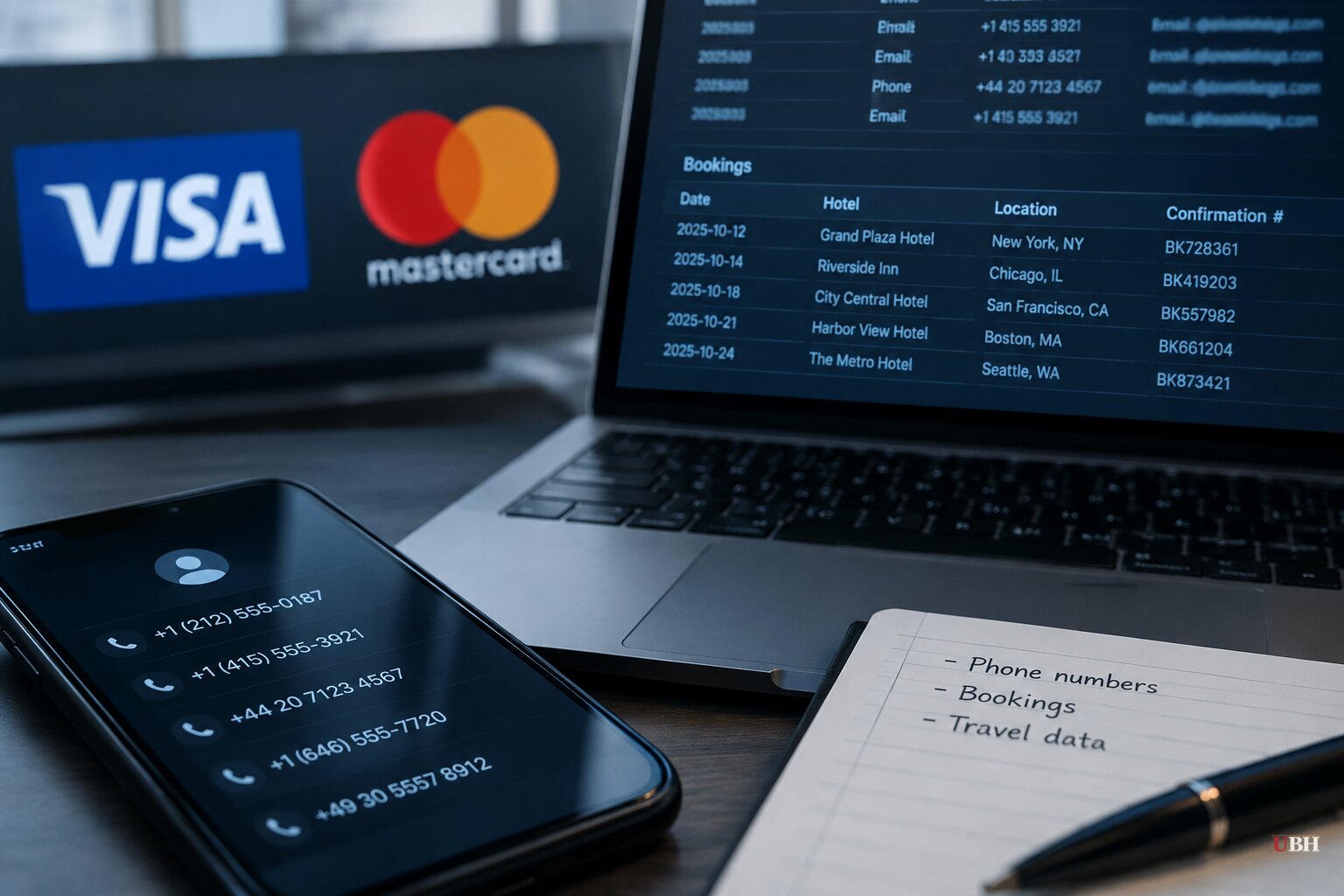
Since Visa, Mastercard and JPMorgan Chase confirmed on Thursday, Nov. 19, that third-party vendors had been breached, the open question has been what the thieves actually have. A first look at the leaked files gives a partial answer: nothing that lets a criminal empty a bank account, but plenty that helps one impersonate a bank.
SOCRadar, a threat-intelligence firm that has tracked the extortion group n0n since it emerged in September, parsed all 14 files in the group's published Visa and Mastercard archives.
"We found no card numbers, expiry dates, CVVs, passwords, dates of birth, or home addresses in any file," said Ensar Seker, SOCRadar's chief information security officer. "Visa's statement that no card numbers were affected matches our scan."
What is in the files
The files do contain mobile numbers, Bank Identification Number (BIN) prefixes, and dated airline, hotel and restaurant bookings. A BIN prefix is the first digits of a card number and identifies the issuing bank.
Seker said that combination is what a fraudster needs "to pose as a concierge desk or a bank" in an email or voice-phishing attack. A caller who can name a recent hotel stay or restaurant visit sounds credible.
Mastercard had described the exposure more narrowly. The company said a "limited amount of information from a subset of cardholders enrolled in a specific benefit program" was taken, with no impact on its payment network. It characterized the data as a "limited amount of email addresses," which it called non-payments information.
Visa said no payment data such as card numbers was affected and that the incident involved a third-party service provider in the Asia-Pacific region.
JPMorgan said attackers targeted outside service providers and likely accessed marketing data, potentially including customer names and email addresses. The bank said the leak has "no connection" to the account-access and payment problems customers reported earlier in the week, which it blamed on a software update.
All three companies have said their own networks were not breached.
Only a sliver has been released
Seker estimated the published files at about 0.4% of what n0n says it took: roughly 4.3 GB and 1.9 million marketing events. "So a further release is possible," he said.
Data-theft crews typically leak samples ahead of an extortion deadline to pressure victims into paying. No payment or deadline has been disclosed by n0n, Visa, Mastercard or JPMorgan in the material reviewed.
SOCRadar has not analyzed the JPMorgan Chase customer data that n0n also claims to have published. Its findings cover only the Visa and Mastercard archives.
One provider, two card programs
Seker said both datasets appear to come from the same upstream provider. They share a 27-column booking layout, the same placeholder text and the same CRM ID format. The most recent record in each ends 69 seconds apart on Oct. 26.
"This looks like two card programs run on one provider's platform," Seker said. "The pattern looks like a batch copy from a marketing and reporting store."
None of the stolen files name the vendor, and none of the three financial firms has named it either.
SOCRadar points to timing. Wiz, working with Google's Mandiant and the data security company Sentra, disclosed a supply-chain campaign earlier this month against Qubole. The threat hunters said it began Oct. 14, when attackers used compromised identity and access management credentials tied to Qubole's AWS account to reach dozens of downstream customers' environments and steal secrets and other sensitive data from S3 buckets. N0n has also claimed that attack.
Seker was explicit that the link is SOCRadar's assessment, not a confirmed finding. "If it's right, Qubole would be the access path rather than the holder of the data, and the files point to a concierge-services operator behind the brands," he said.
Qubole's parent company, Idera, did not respond to The Register's inquiries.
The gap between "no card numbers" and "no risk"
The companies' framing is accurate as far as SOCRadar's scan goes: no card numbers, no payment-network compromise. Seker's point is that this is not the same as no exposure. A leaked mobile number tied to a bank's BIN and a dated booking is the raw material for a targeted social-engineering attempt, even with zero financial data in the file.
There is also a scope question. Mastercard spoke of email addresses; the files SOCRadar examined include mobile numbers and booking records. Whether the full 4.3 GB holds more than the sample is something only n0n, the vendor and the affected companies can say.
The next developments to watch are whether n0n releases more of the 1.9 million records, whether the Chase files match the pattern SOCRadar found in the Visa and Mastercard samples, and whether Visa, Mastercard, JPMorgan or Idera identify the vendor that held the data.
Sources used for this briefing
7 links from 5 independent newsrooms (syndicated copies of the same report count once)
These are the sources it draws on, linked so you can verify.


