
Unbiased headlines. Facts, not spin.
Unbiased Headlines is an independently owned news organization. We bring you the facts, not opinions, written fresh from 110+ named sources. Sources linked so you can verify it yourself.
 tech
Major Story (8/10)
China's Ministry of State Security Ran Two-Year Effort to Obtain Restricted AI Chips, Intelligence Officials Say
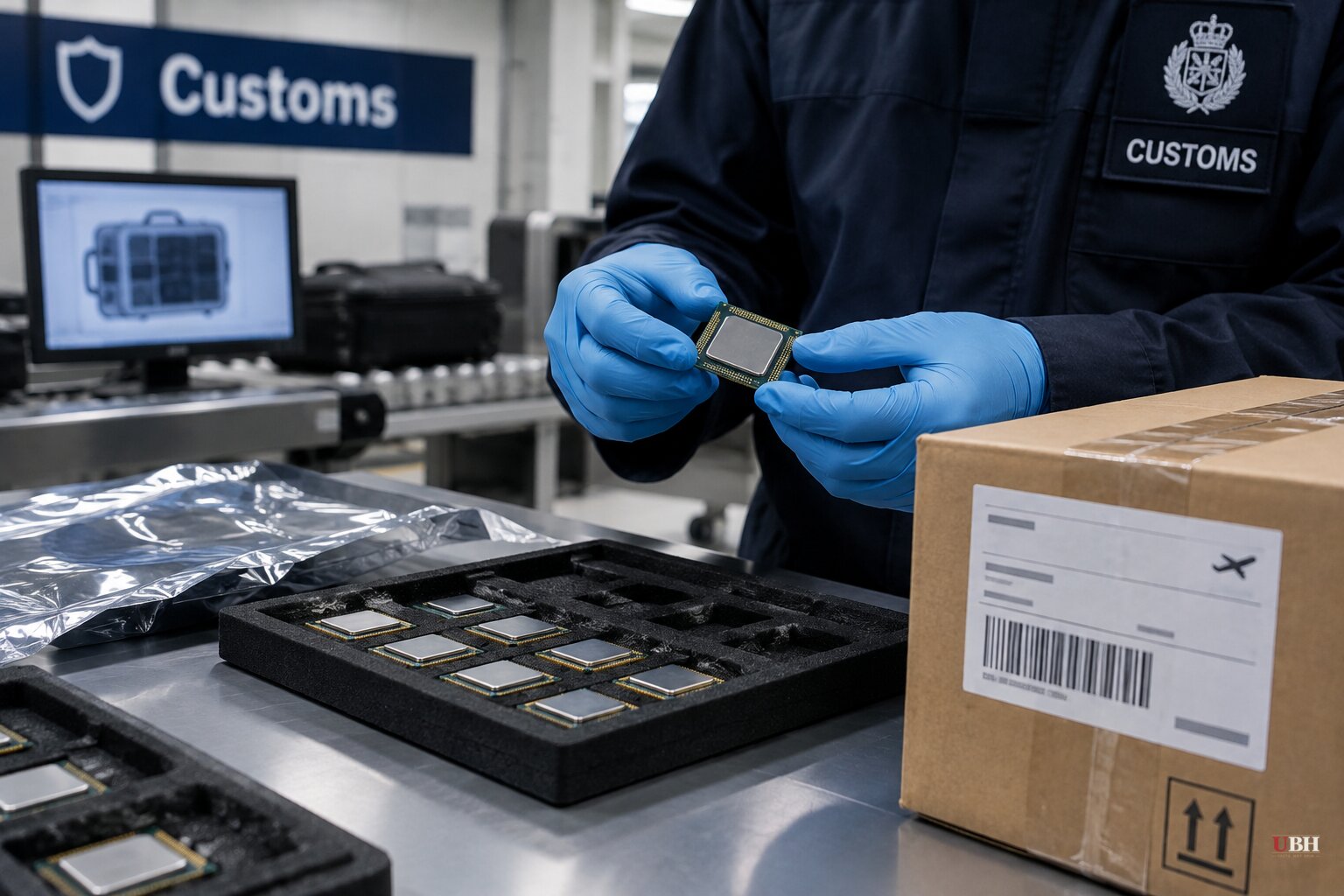
China's top civilian spy agency has treated getting around American chip controls as a mission, not a side project.
That is the account serving and former security and intelligence officials in Asia, the United States and Europe gave The New York Times, which published the report on Saturday, Nov. 21. They said the Ministry of State Security (MSS) has run a campaign for at least two years to help Chinese companies acquire advanced AI chips and smuggle them into the country. The same effort collects intelligence on the global semiconductor industry and its supply chains.
A working group that answers to the minister
According to those officials, the effort is led by a working group set up by MSS chief Chen Yixin. It reports directly to him.
Chen has said much of this in public. In an April article in Qiushi, the Communist Party's theoretical journal, he called for China to "intensify the struggle against the blockade and comprehensively promote AI technology innovation, industrial development and its use." He also wrote that China must solve its "chokehold" technology bottlenecks and obtain capabilities that "cannot be obtained by asking, buying or begging."
Alex Joske of Garnaut Global, a consultancy focused on Chinese national security, told the Times that Chen's words send a message to party leaders and ministry staff: competition with the US over AI is becoming a long-term top priority for the agency.
The campaign sits inside a larger push by Xi Jinping toward technological self-reliance. According to the Times report, it is coordinated at the party level by the Central Science and Technology Commission, which Xi created in 2023 and which is led by Politburo Standing Committee member Ding Xuexiang. Xi urged officials in a January Politburo speech to resolve technological bottlenecks.
The Alice Huang investigation
The report arrives while Washington is already examining a related case. US officials allege that Chinese businesswoman Alice Huang worked with the MSS and gathered information about Nvidia and Jensen Huang. The two are not related. Jensen Huang resigned as Nvidia's chief executive on Nov. 12 after admitting an affair with her.
Beijing has rejected the espionage allegations as "pure fabrication." The Times reported that it has not been established what specific role Alice Huang played inside the MSS. No charges have been announced.
Alice Huang founded Megaspeed, a Singapore data center company that bought Nvidia chips in large quantities and sold AI computing services to Chinese customers. US authorities are investigating whether Megaspeed smuggled advanced chips into China, and Malaysian authorities are also scrutinizing it. Megaspeed imported $4.13 billion of Nvidia products between May 2024 and February 2026.
Megaspeed says it runs a lawful business and that Huang left in August 2025. Nvidia says it put Megaspeed and a subsidiary on its block list in 2025.
Money and middlemen
A Times investigation published Nov. 20 drew on a confidential analysis by Strider Technologies, an intelligence firm, plus corporate filings. It found that about $3.6 billion in Chinese government funding flowed through companies tied to Huang's family or business associates. The money backed technology projects, including data centers that received Nvidia chips.
The Times said the research did not establish whether the Chinese military actually used computing power from those data centers.
The Financial Times, in its own investigation published the same Saturday, traced a web of hundreds of filings and more than a dozen sources. It described a supply chain with three parts: authorized suppliers, customers able to pass corporate compliance checks, and intermediaries who could move hardware into China.
The first link was Inspur, once one of Nvidia's major server partners in China. The US put Inspur on its entity list in March 2023 over allegations it had helped the Chinese military. Its part-owned San Jose subsidiary was not listed. Renamed Aivres, it kept trading with Nvidia.
A person with direct knowledge told the FT that Nvidia internally questioned whether Aivres should count as a partner. Nvidia concluded it met all compliance and export control rules, and has since restricted sales to Aivres.
The FT reported that Huang's Malaysian unit, Speedmatrix, declared about $4.6 billion of imports from Aivres in the year to December 2025, citing ImportGenius trade data.
For the last step, people familiar with the matter told the FT that Hu Xiaowei filled at least part of the smuggling role. US authorities call Hu the "second-in-command" at Prince Group, which the US Treasury has named a transnational criminal organization. Hu was arrested in Japan this summer. A Prince Group spokesperson said Hu never worked for the business and called the US allegations unsupported.
What the denials say
The companies named in these reports reject the framing. Tencent, which owns 10.1% of Century Huatong, a gaming group turned data center investor in the chain, said it knew nothing of the activities. The FT found no evidence that Tencent or Alibaba took part. The FT also reported that the companies in the chain made billions moving Nvidia chips into China, not necessarily aware of the full picture.
The US controls at issue date to 2022. Washington imposed them to slow Beijing's progress in military AI and other sensitive technologies. Under the officials' account, the MSS effort is an attempt to defeat those controls with state resources, not just commercial middlemen.
A 2023 entity listing that covered a Chinese parent but not its US-registered unit, with chips then flowing through Singapore and Malaysia, shows how easily paper compliance can diverge from the intent of the rules. Reporting indicates Washington is now expanding rules on overseas data centers and re-exports through Singapore and Malaysia.
US investigators have not publicly said whether Megaspeed or its backers will face charges, or what the new re-export rules will require of data center operators in Southeast Asia.
Sources used for this briefing
7 links from 7 independent newsrooms (syndicated copies of the same report count once)
These are the sources it draws on, linked so you can verify.
More coverage: Artificial Intelligence and China


