
Unbiased headlines. Facts, not spin.
Unbiased Headlines is an independently owned news organization. We bring you the facts, not opinions, written fresh from 110+ named sources. Sources linked so you can verify it yourself.
 tech
Major Story (7/10)
Event date: November 17, 2026 ·
Ohio Ballot Measures Threaten $17 Billion in Amazon Data Center Projects as Jassy Calls Pullback a 'Historic Mistake'
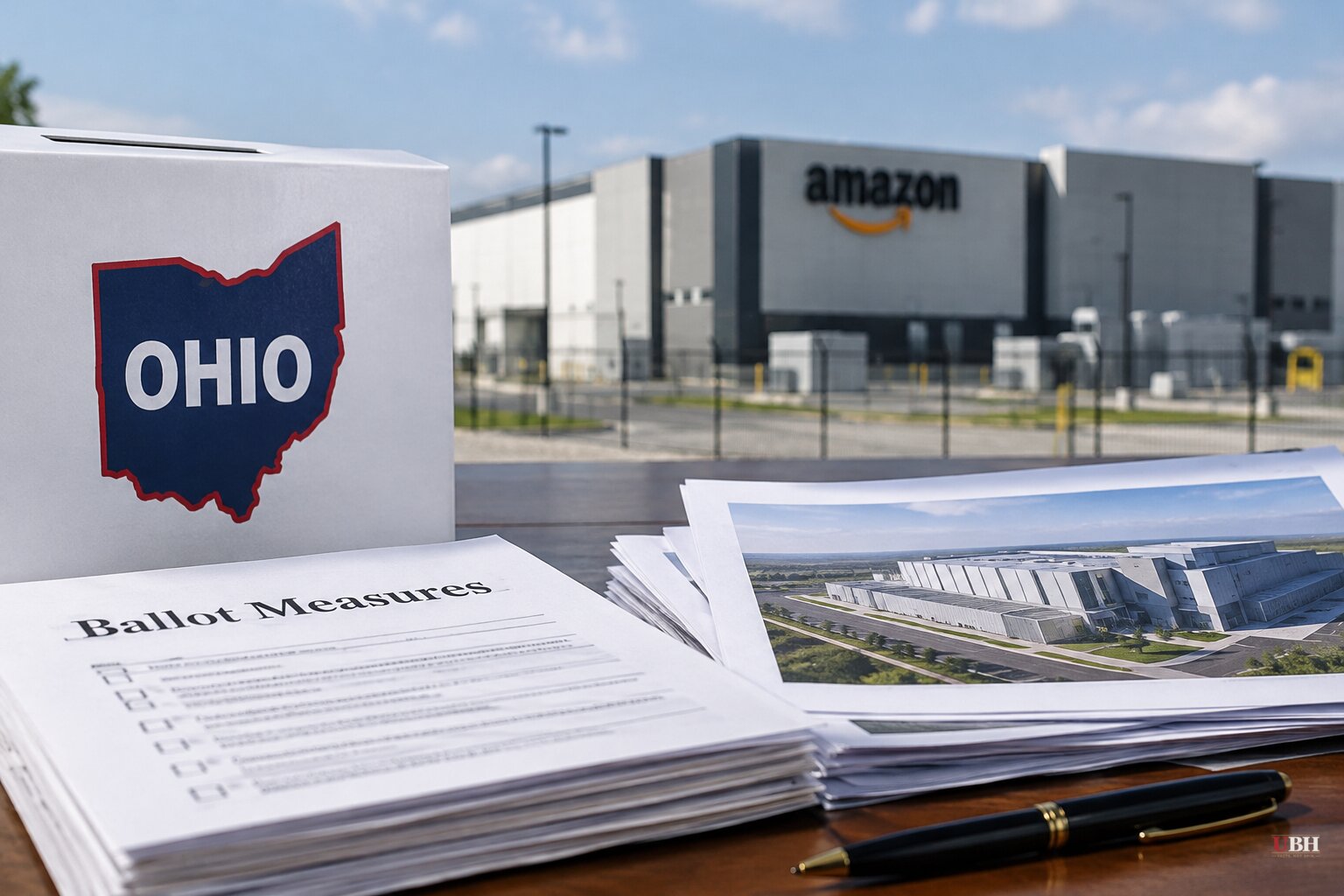
Amazon plans to spend around $220 billion on capital expenditure this year, mostly on AI infrastructure, and CEO Andy Jassy says the number will be "meaningfully more" next year. Voters in Ohio just made part of that harder.
In November's midterm elections, Ohio voters backed 21 local initiatives aimed at slowing data center development. Nineteen similar measures elsewhere in the country moved the same way, according to research by the Financial Times and the regulatory tracking firm Regbase.
Ohio: $17 billion in question
Three proposed Amazon projects in Ohio are affected. They represent about 1.8 gigawatts of power demand and roughly $17 billion in planned spending, according to filings. That figure excludes chips and other equipment.
Amazon had targeted $23 billion in Ohio investment by 2030. The affected sites make up the bulk of it.
Natalie Aresta-Katz, founder of Regbase, said Amazon faces a difficult path if it wants to move ahead with the sites.
The legal fight has started. Prologis, the real estate group developing an Amazon site in Trenton, filed a lawsuit last Thursday challenging the ballot measures. Residents also continue to oppose a $4 billion Amazon development in Wilmington, and two people familiar with the matter told the Financial Times that project could face further legal challenges.
In Sunbury, a petition drive needed 172 valid signatures and got 351 certified. The measure put to voters would bar facilities drawing more than 25 megawatts, which would block Amazon's planned $2 billion campus. Amazon secured tax incentives for that project in 2024 and promised 50 permanent jobs. The town separately imposed a development moratorium that runs through January 2027, and Amazon still needs a development agreement.
Nationwide, the measures touch at least 10 gigawatts of proposed capacity, per the Financial Times and Regbase analysis. Many affected sites are not yet under construction. Earlier this year, developers dropped three planned projects in Maine and Ohio after measures were approved for the November ballot.
What the opponents say
Nick Owens, co-founder of Conserve Ohio, says voters are frustrated by a lack of transparency around data center proposals. Alli Finn of the AI Now Institute says communities do not trust large tech companies to regulate themselves.
The concerns are consistent across towns: electricity demand, water use, noise and air pollution.
Jassy's answer: China
Speaking at Semafor's Silicon Valley & The World event, Jassy said, "I cannot fathom any scenario where the United States stops building data centres and allows another country like China to establish all the norms." He said the U.S. would regret such a move "for a very long time."
In a TV interview afterward, he called it "catastrophic" for the U.S. to fall significantly behind China. He also said the country underinvested in its power grid before AI arrived, and compared the buildout to the highways and bridges of the 1950s.
Jassy did not wave off the backlash. He said tech companies need to "do it better and partner more closely with our communities."
The White House is pushing a similar China argument from another angle. On Friday, President Donald Trump threatened a "tremendous tax" on American companies that build AI data centers outside the country.
Washington state: first big Amazon sites at home
Amazon's first large-scale data centers in its home state are also drawing resistance. Two Eastern Washington campuses could together include up to 24 buildings.
In West Richland, Amazon confirmed to the city that it bought land and is exploring a campus of up to 21 buildings. The city said no permit applications had been filed as of Nov. 2.
In Walla Walla County, the proposed campus would sit on about 134 acres at Wallula Gap Business Park, with three single-story buildings and 120 to 150 full-time jobs, Amazon said. Its fact sheet says the site would use about 14 million gallons of public utility water in its first year for cooling, plus about 6 million gallons annually for employees. Amazon says it is working with the Port of Walla Walla on a system to replace utility cooling water with nonpotable Columbia River water.
At a county commissioners' meeting Monday, most of roughly 56 public comments opposed the project or raised concerns, including groundwater, agriculture, wildlife and transparency. Signs read "Water for life, not data." Supporters cited jobs and economic development.
Skagit County, in Western Washington, last month banned data centers in unincorporated areas with some exceptions, and capped size and electricity use.
Microsoft vice chair Brad Smith has said, "There is a role for good laws, and if laws emerge that require that everybody do this work in a responsible way, I think that might be part of the solution." Microsoft said in March it would stop using non-disclosure agreements with local officials.
Inside Amazon
The dispute has an internal front too. Crypto Briefing reports that three Amazon software engineers, all members of the employee group Amazon Employees for Climate Justice, testified June 3 before the Seattle City Council in favor of a one-year moratorium on new large-scale data centers. The council approved a moratorium June 9.
The outlet reports Amazon opened internal investigations into the three, who faced possible discipline as of June 10. The engineers have filed a civil rights complaint alleging retaliation and discrimination over political speech. Amazon's response to the complaint is not in the record. The complaint's allegations are unproven.
The same employee group organized an open letter in November 2025, signed by more than 1,000 Amazon employees, criticizing the company's approach to AI.
What comes next
The Prologis lawsuit over the Trenton site is the first test of whether the Ohio measures hold up in court. Wilmington may be next. In Sunbury, the moratorium runs through January 2027, and Amazon has not said how it will proceed there.
Sources used for this briefing
7 links from 7 independent newsrooms (syndicated copies of the same report count once)
These are the sources it draws on, linked so you can verify.


