
Unbiased headlines. Facts, not spin.
Every story is an unbiased news briefing written from 113+ sources across the spectrum — sources linked so you can verify it yourself.
 tech
Major Story (8/10)
Event date: September 8, 2026
tech
Major Story (8/10)
Event date: September 8, 2026
OpenAI and Anthropic AI Systems Both Claim Proofs of Long-Unsolved Math Problems Within Weeks of Each Other
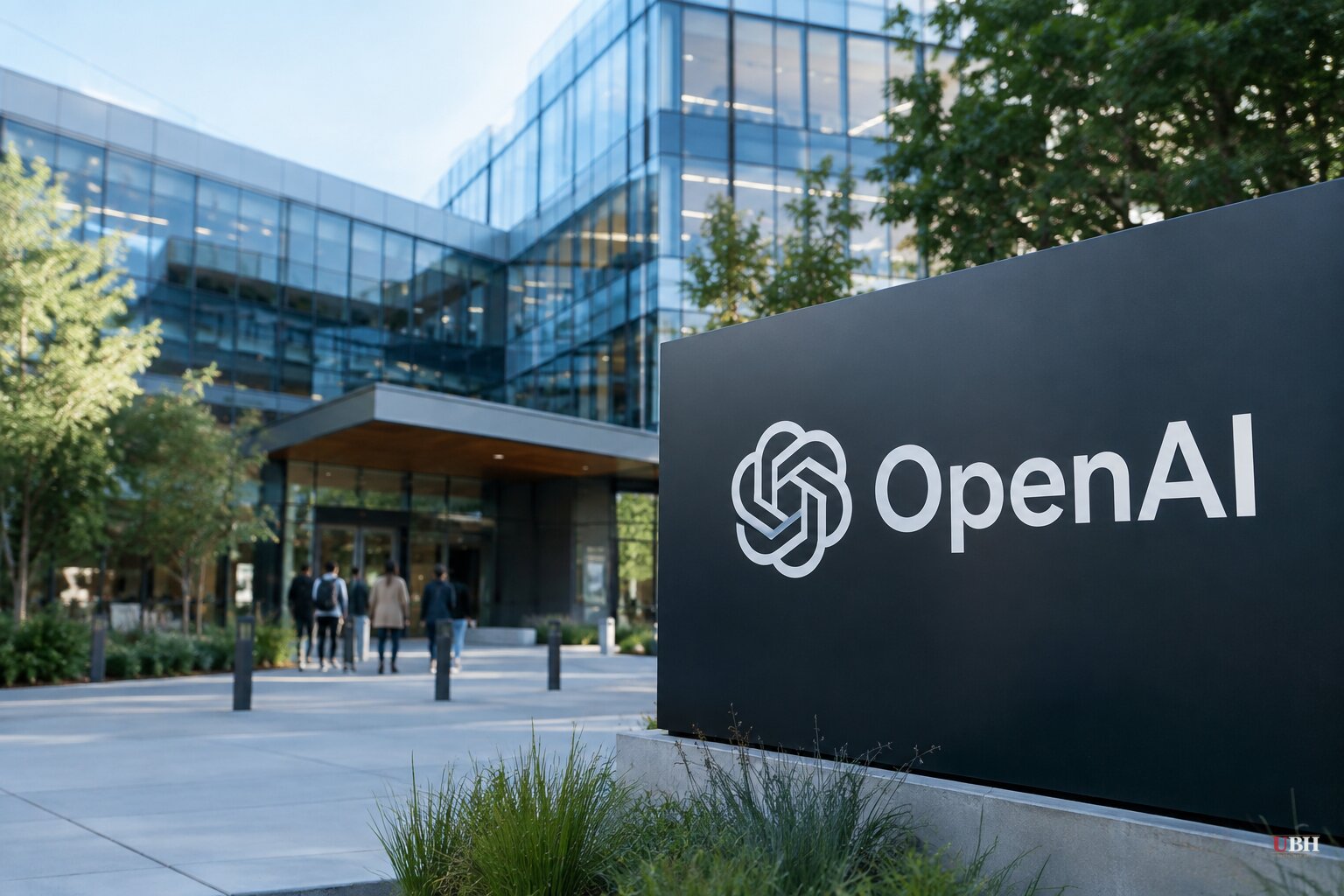
Two of the hardest unsolved problems in mathematics may have fallen to artificial intelligence within the same month.
On September 8, 2026, OpenAI announced that an internal AI system had produced a proof addressing the Navier-Stokes existence and smoothness problem, one of the seven Millennium Prize Problems named by the Clay Mathematics Institute in 2000, each carrying a $1 million award. The Navier-Stokes equations, dating to the 19th-century work of Claude-Louis Navier and George Gabriel Stokes, describe how fluids move and are used in aircraft design, weather forecasting and blood-flow modeling, according to OpenAI's own writeup.
The open question, unresolved for roughly 90 years per OpenAI, was whether a smooth, finite-energy fluid could spontaneously develop a 'singularity,' a point where speed grows without bound in finite time, even though viscosity should smooth things out. OpenAI says its system found such a blowup scenario, involving a vortex that stretches and spirals inward, and verified the logic using the formal proof language Lean. The company said it used a model 'significantly more capable than GPT-6 Astra' that has not been publicly released.
According to Smithsonian Magazine, OpenAI ran roughly 10,000 AI agents working largely autonomously for 88 hours to produce the result, using computing power Smithsonian estimated likely cost millions of dollars. Mathematician Timothy Gowers of the Collège de France told the Wall Street Journal's Ben Cohen that 'it's undeniable that symbolically, it's a big moment, and the next in a natural chain of big moments,' though he said he had not yet read OpenAI's paper.
Just weeks earlier, a separate AI system produced a different landmark result. Percolation theory, a branch of probability theory that models how networks like porous sponges or pipe systems become connected, has a long-standing unsolved threshold problem: mathematicians have struggled to fully characterize the point at which a network shifts from being unlikely to have infinite open connections to being likely to have them, according to Scientific American.
Benedikt Jahnel of the Technical University of Braunschweig told Scientific American that anyone who solved it would 'probably receive a Fields Medal.' On August 30, 2026, Fields Medalist Hugo Duminil-Copin, who had spent years attempting the problem himself, wrote in an essay on the blog Proofs and Prompts that it was 'only a matter of time before the most famous conjecture in our field ... also falls to the bulldozers' of AI.
Within days, Anthropic released a large-language-model-generated proof of the conjecture, according to Scientific American. Jahnel described his reaction as ambivalent: joy that the problem was finally resolved, mixed with what he called disillusionment that the decisive step came from a machine rather than a person.
The Navier-Stokes announcement has not been free of controversy. Smithsonian Magazine reported that OpenAI's achievement became contentious over a possible connection to prior work by two human researchers, one of whom is employed by rival company Anthropic. Smithsonian's reporting did not spell out the full nature of the dispute, and neither OpenAI nor Anthropic has issued a detailed public accounting of what, if any, unpublished human work fed into the AI-generated proof.
If an AI model's output incorporates ideas from unpublished human research without attribution, crediting a company's internal system as the sole author would understate the actual human contribution to the field. This is an argument mathematicians and critics of AI-driven research would reasonably make. Neither OpenAI nor Anthropic has responded on the record to that specific claim in the material reviewed for this piece, and no allegation of misconduct has been formally lodged by either researcher named as connected to the dispute.
OpenAI's Lean formalization allows outside mathematicians to run the logical structure through automated verification tools rather than simply trusting OpenAI's narrative summary. This is a meaningfully higher bar than an unverifiable claim, though a Lean formalization checks internal logical consistency, not whether the proof's framing correctly credits its intellectual lineage.
Neither the Clay Mathematics Institute nor any formal mathematics journal has confirmed acceptance of OpenAI's Navier-Stokes proof, and Scientific American's report on the percolation result likewise describes a proof that emerged from an AI blog announcement rather than a peer-reviewed publication. The broader mathematics community's formal review is still ahead, not behind. Whether either proof survives that scrutiny, and whether the credit dispute around the Navier-Stokes claim gets a fuller public accounting from OpenAI or Anthropic, remains unresolved.
Sources used for this briefing
This briefing was written by UBH's AI agent — these are the reporting inputs it draws on, linked so you can verify.


