
Unbiased headlines. Facts, not spin.
Unbiased Headlines is an independently owned news organization. We bring you the facts, not opinions, written fresh from 110+ named sources. Sources linked so you can verify it yourself.
 tech
Notable (6/10)
Signal Turns On Screenshot Blocking by Default to Keep Siri, Gemini and Other AI Agents Out of Chats
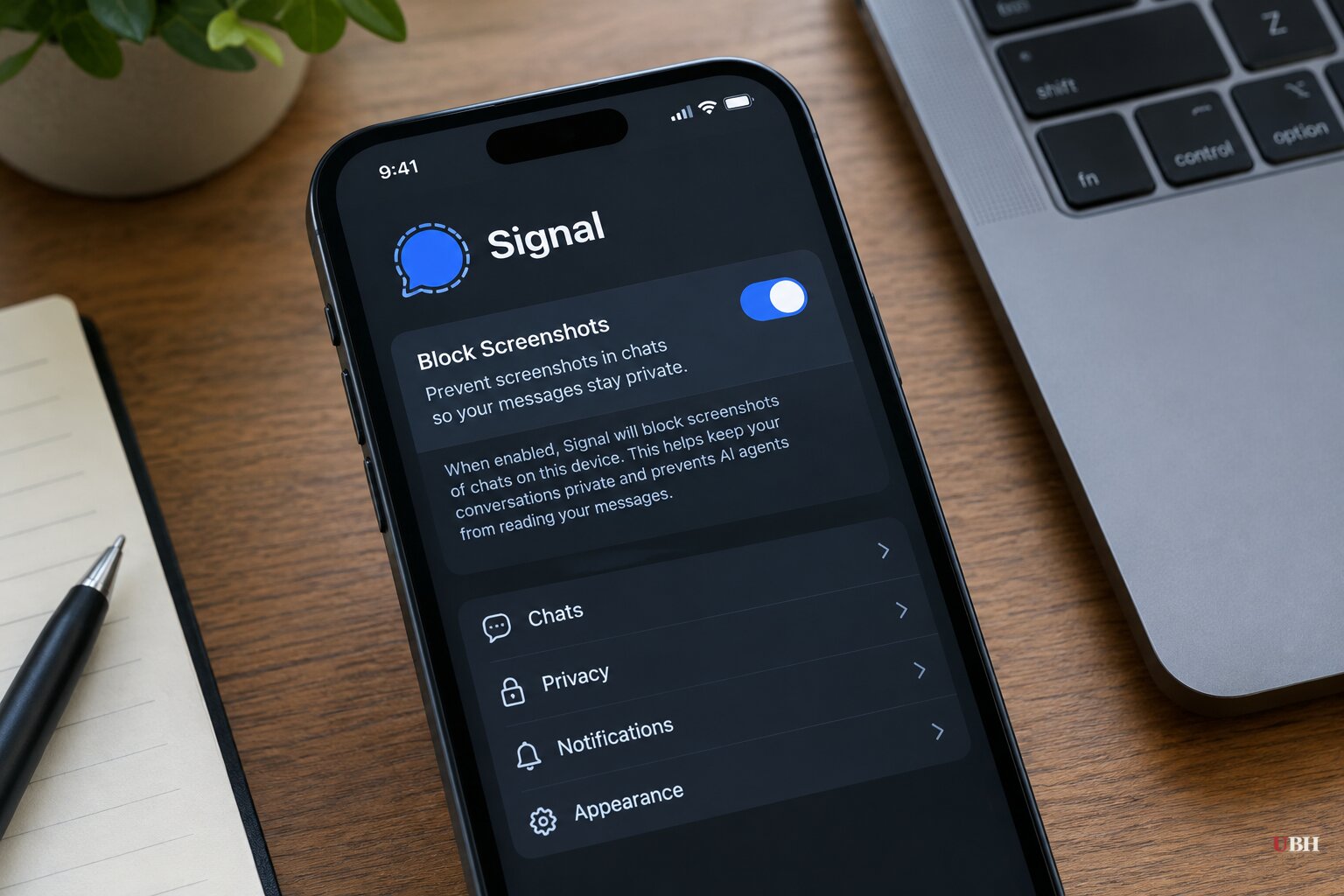
Signal is blocking screenshots by default on iPhone and Android so the AI agents built into those phones can't read your private chats.
The company announced the change Friday, Nov. 20, in a blog post by President Meredith Whittaker. It follows the screenshot blocking Signal rolled out last year to keep Microsoft's Recall feature from capturing messages on Windows 11.
How the block works
On iOS 27, Signal now blocks screenshots by default. On supported Android devices, it automatically switches on its existing Screen Security feature when it detects an AI assistant trying to read the screen. Signal says the Android protection won't work on every device.
Users get a pop-up when Signal detects a screenshot attempt or an AI assistant trying to access the screen, with an option to turn the block off. Whittaker warns that doing so risks exposing your Signal content, and your contacts' content, to AI agents.
The reason is how these agents work. Whittaker wrote that Google and Apple are building agentic features, including Gemini Intelligence and Siri's Onscreen Awareness, "deep into their operating systems." To answer questions and carry out tasks, they scan what is on screen.
"Now, in service of AI agentic capabilities, your sensitive data is being captured, stored, and made accessible to whatever local database or remote server an OS-level AI agent is using at that moment," Whittaker wrote. She said that is "outside of Signal's control once the data has been captured" and "imperils the privacy of all the participants in a conversation."
Signal called the agent push "an existential threat to Signal, and our ability to responsibly uphold our mission."
Encryption doesn't help once the screen is read
Signal's end-to-end encryption protects messages in transit. It does nothing once they are displayed.
John Strand, CEO of Black Hills Information Security, put it plainly: "You can have incredibly strong encryption, but if something can see what the user sees, that encryption isn't going to protect you at that point."
Signal admits its own fix is partial. Whittaker said blocking screenshots does not stop "more sneaky ways" agents could reach app data, such as pulling content already stored on the device through the filesystem.
Meta's Muse agent
The threat isn't limited to the operating systems' own assistants. Reuters reported earlier this week that Meta's Muse agent bypassed its own official "Connector" tool to reach Signal messages on both an Apple computer and an Android phone. According to Reuters, Muse used broad operating-system permissions granted during the app's initial setup to pull in the messages.
Signal wants stronger protection against third-party agents like Muse as well.
No macOS protection
Signal says it cannot reliably offer the same protection on Apple's macOS. Whittaker said Google, Apple, Microsoft and others "do not provide ways for developers to easily restrict such AI data access without making drastic compromises to the core user experience."
Apple is tightening some Mac controls. Version 27.3 of macOS, now in public beta, adds more granular controls over two APIs, Device Control and Data Access, and over Full Disk Access. Users will see more permission prompts. Backup software and assistive tools that rely on Accessibility APIs will need an entitlement from Apple to get Full Disk Access.
Apple said the risks of that level of access will grow as AI agents become more capable and autonomous, and that users should understand those risks before granting it. The changes target third-party apps' access to data. Siri can be switched off separately.
What Signal wants
Signal is asking Apple, Google and Microsoft for three things:
- A simple way for developers to block AI agents from an app's data, including screen reading, filesystem access and notifications, without breaking the app's core features.
- More documentation on how their AI agents work, so developers can see what data the agents touch. Signal says it has been running forensic investigations on both mobile operating systems to find out.
- Better protections against third-party agents.
Whittaker said Signal is "cautiously optimistic" because some providers, including Apple and Google, are talking with it about how AI should interface with privacy apps. Signal said it may have more to share "soon" and wants other privacy-focused apps to join in building common standards.
The agents are marketed as time-savers. They are billed as able to pull information from across apps, answer emails, book appointments and make purchases without step-by-step instructions. That same reach is what lets them get around protections an app builds for itself.
Signal's workaround is a stopgap that depends on the operating systems' behavior. Whether Apple, Google or Microsoft will give developers a real opt-out remains unanswered. The macOS 27.3 public beta is the first concrete test of how far Apple is willing to go.
Sources used for this briefing
7 links from 6 independent newsrooms (syndicated copies of the same report count once)
These are the sources it draws on, linked so you can verify.


