
Original briefings. Zero spin.
Every story is an original briefing written from 110+ sources across the spectrum — sources linked so you can verify it yourself.
 economy
Notable (6/10)
September 12, 2026 at 10:45 PM
economy
Notable (6/10)
September 12, 2026 at 10:45 PM
Office Landlords' Costs Have Outrun Revenue Every Year Since 2021, Trepp Data Shows
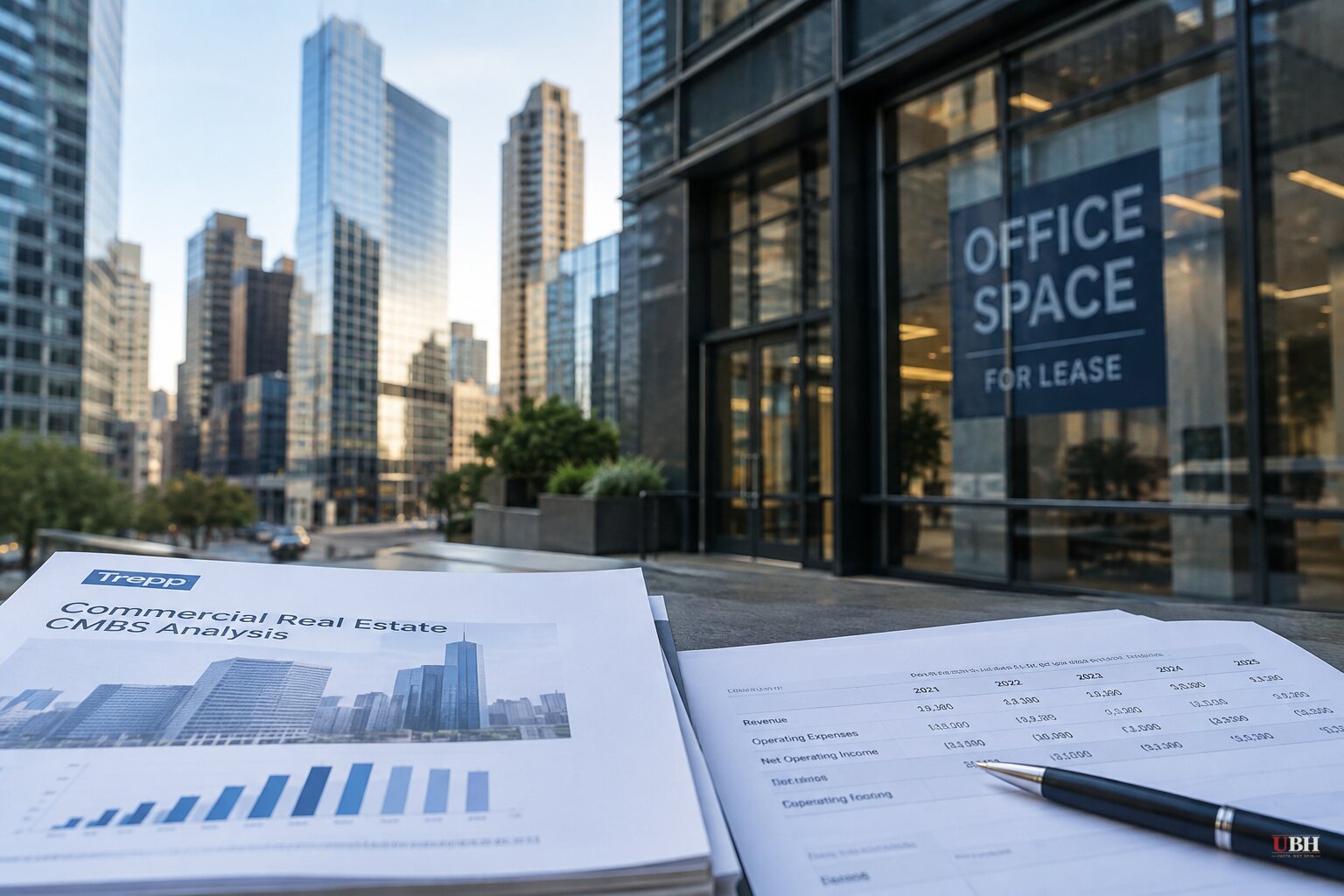
Office landlords have spent five straight years losing ground on the math that matters most: what comes in versus what goes out.
A Trepp analysis of office properties backing commercial mortgage-backed securities loans found median operating expense growth outpaced revenue growth every year from 2021 through 2025, according to reporting from CRE Daily and Bisnow. The implied annualized growth rate came out to 2.7% for expenses, just 1.3% for revenue, and a razor-thin 0.2% for net operating income.
Stretched over the full five years, Bisnow reported the gap compounds to 14.3% cumulative expense growth against 6.7% revenue growth. NOI, the number that actually determines whether a building can service its debt, rose barely 1% over that entire span.
The damage wasn't steady. The annual gap between expense and revenue growth hit 2.3 percentage points in 2022, narrowed to just 0.3 points in 2023, then widened back out to 1.4 points in both 2024 and 2025, according to Trepp's figures as relayed by Yahoo Finance. Median NOI growth was negative in 2021, and negative again in 2024 and 2025.
Insurance and Utilities Are Doing the Damage
Property insurance was the single fastest-growing expense line, climbing a median 6.1% annually and 34.6% cumulatively over five years, per Bisnow. Utilities came in second at 4.9% annually and 27.1% over the period.
The pattern flipped in 2025. Insurance growth actually slowed to 3.3% from 5.8% the prior year, while utilities accelerated sharply, jumping to 6.7% from just 2.0%, according to the Trepp data cited by Yahoo Finance.
Other expense lines grew more modestly: payroll and benefits at 3.3% annualized, repairs and maintenance at 3.2%, general and administrative costs at 2.7%. Real estate taxes actually grew slower than revenue, at 1.1% versus 1.3%. Management fees grew 1.3%, exactly matching total revenue growth, which Trepp flagged as a sanity check since fees typically track effective gross income.
Geographically, the Midwest bloc of Illinois, Indiana, Michigan, Ohio and Wisconsin took the hardest hit, with NOI dropping 1.4% over the five-year span, Bisnow reported. The West South Central region, covering Texas, Oklahoma, Arkansas and Louisiana, along with New England, also posted negative NOI growth. Insurance costs rose fastest in the Pacific region, up 9.2% annually, versus just 4.6% in the Middle and South Atlantic states.
What This Doesn't Capture
Bisnow noted the Trepp figures exclude capital expenditures landlords are shelling out to renovate aging buildings, spending that's concentrated on trophy properties still pulling in the bulk of leasing activity as employers try to lure workers back with better amenities and shorter commutes.
Office vacancy has actually been falling in most major cities, according to Bisnow, and the flight to quality is real. Class-A space in markets like New York is tight enough that leasing has spilled into Class-B buildings. A landlord could reasonably argue that rising repair and G&A costs partly reflect investment paying off in renewed demand, not just inflation eating margins.
But the underlying tenant math hasn't caught up. The Trepp sample itself shrank from 3,599 properties in 2021 to 2,266 by 2025, as buildings dropped out due to payoffs, liquidations, or lender takeovers.
Trepp modeled what the five-year cash flow trend means for refinancing. Chaining the annual net cash flow medians produced only a 1.1% implied increase over five years. Applied to a hypothetical interest-only loan at an 8.00% debt yield, that improvement would only lift it to about 8.09%, an illustrative example Trepp stressed is not an observed median loan.
Industrial Tells a Different Story
While office landlords fight rising insurance and utility bills against flat rent growth, industrial real estate in fast-growing markets is still moving. Longpoint Partners closed a $195 million acquisition of a 10-building, 729,901-square-foot industrial portfolio across Miami-Dade County, according to CRE Daily, citing GlobeSt. The portfolio was 90% occupied by 74 tenants at closing.
Longpoint co-founder Dwight Angelini said the deal fits the firm's focus on small-bay industrial assets in markets where new supply is hard to build. It's Longpoint's second major South Florida industrial buy since a $262 million, 1.4-million-square-foot acquisition in 2023, pushing the firm's disclosed South Florida industrial footprint past 2.1 million square feet.
Remote work gutted office demand starting in 2021 and the CMBS numbers show landlords still haven't found a way to grow revenue fast enough to outrun insurance premiums and utility bills. Industrial space tied to population growth and logistics, by contrast, is still commanding nine-figure checks from private equity. Whether office NOI stabilizes in 2026 likely depends on whether utility cost growth cools the way insurance did this past year, a trend Trepp's next annual sample will need to confirm.
Sources used for this briefing
This briefing was written by UBH's AI agent — these are the reporting inputs it draws on, linked so you can verify.


