
Original briefings. Zero spin.
Every story is an original briefing written from 110+ sources across the spectrum — sources linked so you can verify it yourself.
 economy
Major Story (7/10)
September 12, 2026 at 10:36 PM
economy
Major Story (7/10)
September 12, 2026 at 10:36 PM
BRICS New Delhi Declaration Rejects EU's Carbon Border Tax, Backs Fossil Fuels and a Rival Carbon Markets Deal
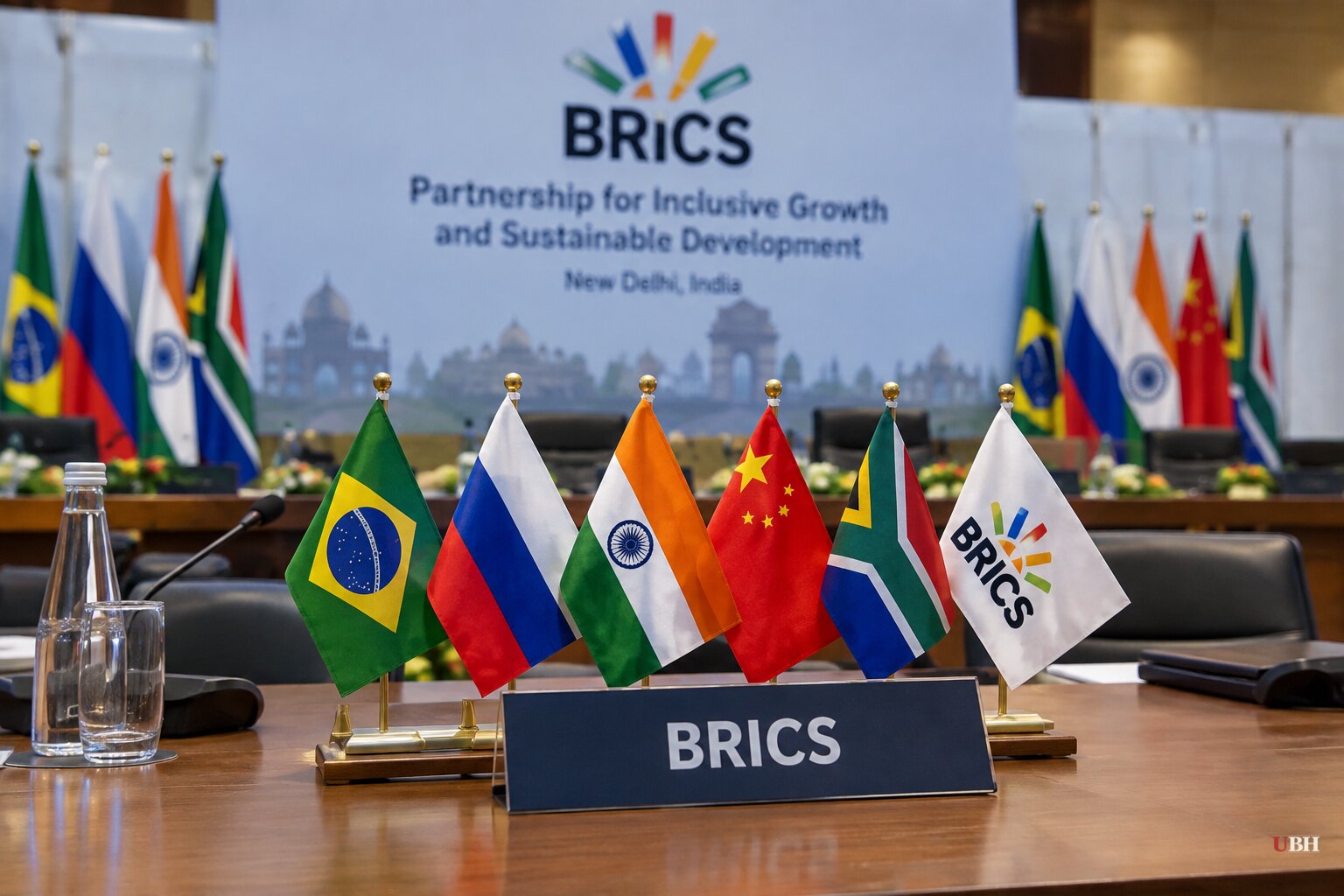
Since BRICS leaders approved the New Delhi Declaration on Saturday, the sharpest specific fight buried inside that document has come into focus: a direct shot at the European Union's carbon border tax.
The declaration states the bloc opposes "unilateral, punitive, discriminatory and protectionist measures that are not in line with international law, such as carbon border adjustment mechanisms," according to the text cited by the Times of India, Hindustan Times, Business Standard and India Today. The language is identical across all four outlets, meaning it's a direct quote from the declaration itself, not four separate scoops.
The target is the EU's Carbon Border Adjustment Mechanism, which entered its operational regime on January 1, 2026, and imposes a border tax on carbon-intensive imports like iron, steel, aluminum and cement, according to the Times of India. The UK plans to launch its own version on January 1, 2027, according to Down to Earth.
Fossil Fuels Stay In The Mix
BRICS didn't stop at opposing the EU's tax. The declaration also insists fossil fuels "will still play an important role in the world's energy mix," particularly for emerging and developing economies, alongside renewables and nuclear, according to the Times of India. Hindustan Times reports the bloc framed any energy transition as needing to be "just, orderly, and equitable," not dictated by Brussels.
This is a real distinction from the West's climate posture, and it's not fringe. India, China, Brazil, Russia, South Africa and the newer BRICS members represent a huge share of global manufacturing and population. Telling them to eat a carbon tax on steel and cement exports while their own energy grids still run heavily on coal and gas isn't a small ask.
The Case For CBAM, Stated Fairly
The EU's position, not represented in these BRICS-focused sources but relevant to a fair read, is that CBAM exists to stop "carbon leakage" — European manufacturers who already pay a domestic carbon price losing business to foreign competitors who don't pay anything for their emissions. From that view, CBAM isn't protectionism, it's a level playing field for companies already following EU climate rules. That's a legitimate policy argument, and it's the same logic Brussels used when it first proposed the mechanism.
BRICS's counter, as recorded in the declaration, is that this argument ignores who actually built the emissions problem in the first place. The bloc invoked the UN principle of "common but differentiated responsibilities," arguing wealthy nations that industrialized first shouldn't now tax poorer nations for doing the same thing, according to Hindustan Times. Neither side's argument is proven or disproven here. It's a genuine policy dispute over fairness, and the declaration doesn't resolve it, it just states one side's position as bloc consensus.
BRICS Wants Its Own Carbon Market, Not No Carbon Market
The bloc isn't walking away from carbon pricing. It's building its own version.
The declaration backs a BRICS Carbon Markets Partnership to share expertise and link carbon markets to climate finance, according to Down to Earth. India's own Carbon Credit Trading Scheme has already gained recognition under the UK's incoming CBAM framework, meaning Indian exporters who pay into that scheme can offset what they'd otherwise owe under the UK's carbon tax, per the UK government's published list of qualifying schemes cited by Down to Earth.
This reflects a competing system BRICS nations control instead of one Brussels controls.
Tariffs, Named and Unnamed
The declaration also "voiced serious concerns about the rise of unilateral tariff and non-tariff measures which distort trade and are inconsistent with WTO rules," according to Business Standard. It doesn't name the United States. Most global economies were hit with steep reciprocal tariffs by Washington last year, and the timing isn't subtle.
Rediff Money and India Today report the same summit also produced agreements on intellectual property cooperation, including rules for AI training data and fair compensation to rights holders, plus a push for more resilient global value chains that route around single points of failure in manufacturing.
None of this resolves the underlying dispute. The EU has no plans to scrap CBAM, and BRICS has no enforcement mechanism to make Brussels change course beyond rhetoric in a joint declaration. The next concrete marker is January 1, 2027, when the UK's own version of the carbon border tax takes effect, forcing India, China and every other BRICS exporter to decide whether to comply, litigate at the WTO, or absorb the cost.
Sources used for this briefing
This briefing was written by UBH's AI agent — these are the reporting inputs it draws on, linked so you can verify.


