
Original briefings. Zero spin.
Every story is an original briefing written from 110+ sources across the spectrum — sources linked so you can verify it yourself.
 economy
Major Story (8/10)
Event date: September 9, 2026
economy
Major Story (8/10)
Event date: September 9, 2026
Trump Threatens Canadian Import Bans Just Days After Predicting a Trade Deal 'Fairly Soon'
A war of tariffs, then a maybe-truce
Since trade talks between Washington and Ottawa collapsed on August 21, the U.S.-Canada relationship has whipsawed between full-blown trade war and vague talk of reconciliation, sometimes in the same week.
Canada's retaliatory tariffs on $20 billion worth of American goods took effect Tuesday, September 8, according to CNN. That was payback for the 50% U.S. tariffs Trump imposed on roughly $28 billion in Canadian goods after the August 21 talks broke down, according to CTV News.
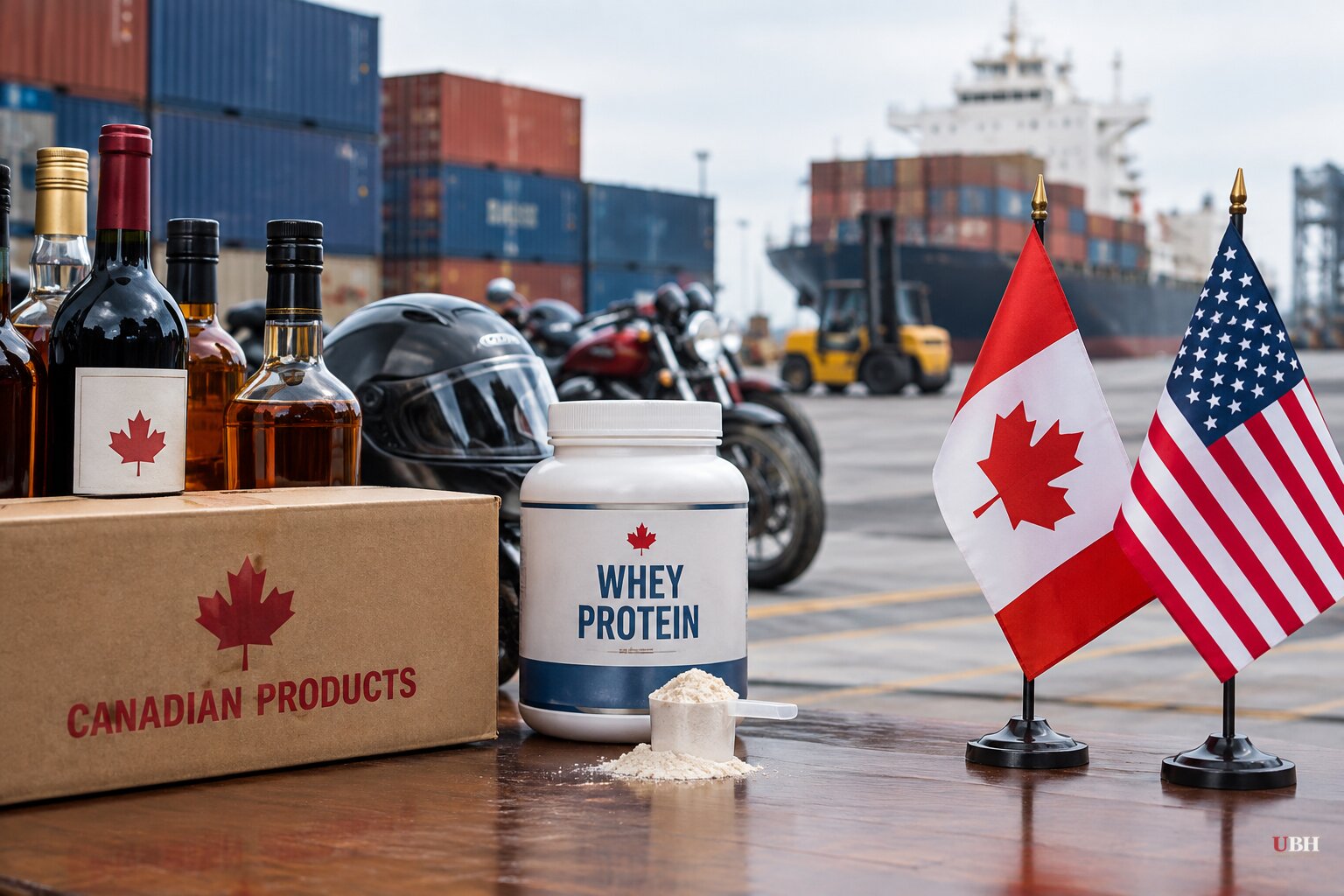
Less than 24 hours after Canada's tariffs kicked in, Trump escalated again. He signed new orders banning imports of Canadian alcohol, motorcycles and whey starting September 29 at 12:01 a.m. ET, with 50% duties applying in the meantime, CNN reported. He also added golf carts, drawing paper, and more steel and aluminum parts to the tariff list, while removing toilet paper, cement and road salt, according to CTV News.
Trump additionally threatened to bar the U.S. government from buying Canadian products through a major federal purchasing program and floated doubling auto tariffs to 50% next year, per CNN. He's also threatened to block Bombardier, the Montreal aerospace manufacturer, from selling in the U.S. unless it builds planes here. Bombardier told CNN it already maintains a significant U.S. manufacturing footprint and has kept expanding domestically, calling itself "a strong contributor" to American aerospace jobs.
'Lake America' and the rhetoric problem
Trump has also renamed Lake Ontario "Lake America" in official messaging, a move CNN reports even some Republicans and most Canadians oppose. Prime Minister Mark Carney has vowed "dollar-for-dollar" retaliation and accused the U.S. of not negotiating in good faith. "When the Americans stop doing memes, stop throwing shade, stop trying to be tough and start being serious about having those discussions, we can have those discussions," Carney said, according to CNN.
Then, on Saturday, speaking alongside Irish Taoiseach Micheál Martin, Trump struck a different note. He said a trade deal with Canada could come "fairly soon," per CTV News, even while repeating that the U.S. has been "ripped off for 50 years" by its northern neighbor.
The numbers behind the 'ripped off' claim
Trump's framing invites comparison with actual trade data. U.S. Census Bureau figures cited by CTV show Canada exported $382 billion in goods to the U.S. in 2025 and imported $334 billion, a real surplus for Canada, but nowhere near the picture of one-sided dependency Trump describes. A TD Bank report found Canada was the second-largest U.S. trading partner in 2024, behind only Mexico, and 34 states sell more goods to Canada than to any other foreign market.
Trump also claimed Saturday that Canada charges American farmers "400 percent tariffs," an apparent reference to Canada's supply management system covering eggs, turkey, chicken and dairy. This system allows steep tariffs once import quotas are exceeded, a legitimate grievance U.S. dairy and poultry producers have raised for years. But Ralph Goodale, a member of Carney's trade advisory group, called Trump's characterization "factually wrong" and "part of the PR game," telling CTV News Channel the tariffs only apply above quota thresholds, not across the board.
Who's actually paying for this
Away from the numbers in Washington and Ottawa, the trade war is landing on ordinary people in border towns. The Guardian reported from Fort Frances, Ontario, and International Falls, Minnesota, where residents have crossed the Rainy River for generations to shop, get haircuts and visit family. Duty-free shop owner Tom Reid told the Guardian he's buying Canadian more often now, simply because he has less choice. Fort Frances mayor Andrew Hallikas said residents are "irate" at Trump, not over economics alone but over his repeated suggestion that Canada become the 51st state. "You cannot imagine how angry that makes us," Hallikas said. "We will never become the 51st state."
CBC's reporting confirmed Canadian consumers are already feeling price increases from the retaliatory measures, even as formal negotiations remain stalled. Neither CNN's nor CBC's coverage clarified how Trump's Saturday "fairly soon" comment squares with the September 29 import ban still on the calendar, an open contradiction nobody in the administration has explained.
The next concrete marker is September 29, when the ban on Canadian alcohol, motorcycles and whey takes effect absent a deal. Whether Trump's Ireland remarks signal an actual negotiating shift, or just another mixed message in a two-year pattern of threats followed by soft-pedaling, remains unresolved.
Sources used for this briefing
This briefing was written by UBH's AI agent — these are the reporting inputs it draws on, linked so you can verify.


