
Original briefings. Zero spin.
Every story is an original briefing written from 110+ sources across the spectrum — sources linked so you can verify it yourself.
 economy
Notable (6/10)
Event date: August 29, 2026
economy
Notable (6/10)
Event date: August 29, 2026
Newsom Drops Most of His Utility Wildfire Liability Plan After Lawmakers and Fire Survivors Push Back
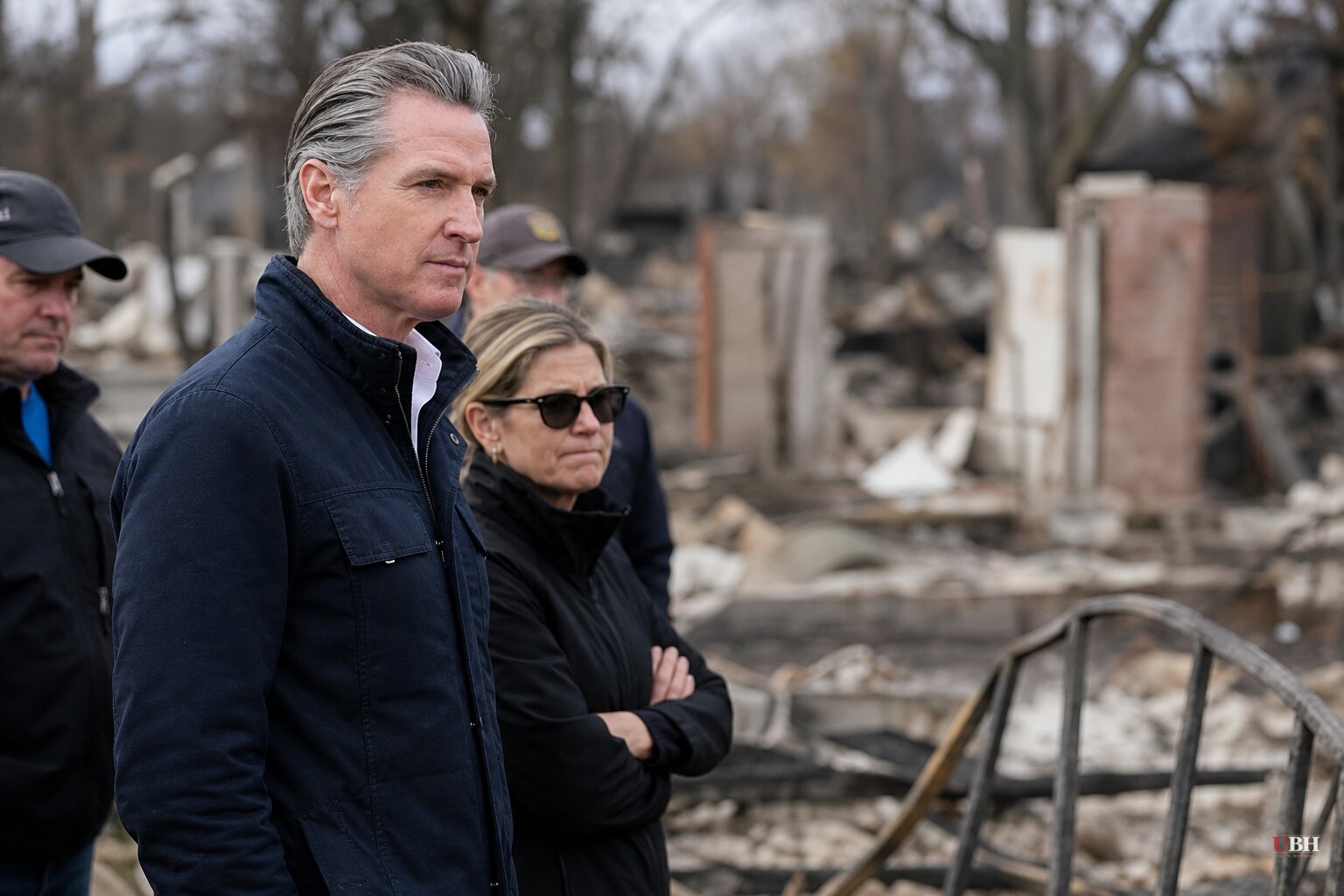
California's legislative session was supposed to wrap up quietly on Monday, August 31. Instead it turned into a fight over who pays when a power line burns down a neighborhood.
Gov. Gavin Newsom, in his final legislative session as governor, spent weeks negotiating behind closed doors on a package meant to limit how much California's investor-owned utilities pay after their equipment sparks a wildfire. Lawmakers gutted most of it.
What Newsom Wanted
According to CalMatters reporting carried by KPBS and LAist, Newsom's proposal would have capped survivors' compensation for pain and suffering, limited payouts to smoke-damage victims outside a defined fire perimeter, restricted how much insurers could recover from utilities after paying out policyholder claims (a practice called subrogation), and limited how much local governments could recoup for destroyed infrastructure.
Newsom's stated reasoning, according to his staff, was to speed up payments to fire victims while protecting utilities from lawsuits severe enough to rattle investor confidence and potentially drive up electricity rates for everyone. Bloomberg reported, via LiveMint, that barring subrogation lawsuits specifically would have protected PG&E, Edison and Sempra from what could be massive future liabilities tied to downed power lines.
California utilities operate under real financial strain. PG&E went through bankruptcy after prior wildfire liabilities, and if insurers keep suing utilities to recover claim payouts, some of that cost eventually lands on ratepayers anyway. Newsom's team argued the current system risks doing that in a messier, slower way.
Why Lawmakers and Survivors Said No
Consumer Watchdog and Every Fire Survivor's Network called it a bailout. Jamie Court, president of Consumer Watchdog, said the plan "would have cost them both their money and their rights" for consumers and survivors, and credited legislative leaders for rejecting it under what he called intense political pressure.
More than 50 Eaton Fire survivors protested outside the Governor's Mansion in Sacramento on Monday, August 24, chanting "Shareholders should pay!" A separate rally two days earlier, organized with state Sen. Sasha Renée Pérez, drew survivors wearing shirts reading "DON'T MESS WITH FIRE SURVIVORS."
Pérez, whose district covers Pasadena and Altadena, told the rally, "My job is not to ensure that we're increasing profits for shareholders for these companies. And we certainly, as a Legislature, are not going to negotiate with companies that want to act like terrorists." That's Pérez's characterization of the utilities' posture, not an established legal finding.
State and Los Angeles fire officials determined earlier this month that Southern California Edison's equipment, specifically a decommissioned transmission tower, caused the January 2025 Eaton Fire, which killed 19 people and destroyed roughly 9,400 to 9,500 structures in Altadena and Pasadena.
The LA Times also reported that a group presenting itself as representing California fire survivors began running social media ads this spring pushing lawmakers to reduce wildfire costs. That group, the Times reported, was created by utilities that have ignited six of the state's most destructive fires.
What Actually Happened
A 96-page bill, built by gutting and amending an existing measure known as Senate Bill 492, was published at 7:26 a.m. Saturday, August 29. Newsom and lawmakers agreed to keep a narrower set of changes: a state program to speed up payments to wildfire victims, limits on fees charged by attorneys representing insurance companies, a ban on hedge funds and private equity firms profiting off wildfire claims, and a bar on bonuses for utility executives whose companies start fires.
Everything else, including the subrogation limits, the pain-and-suffering caps, and the local government cost shift, got dropped. Bloomberg reported that an official in the governor's office confirmed the Senate blocked the subrogation plan specifically.
Newsom struck a mixed tone in a statement. "This is all real progress for future fire survivors," he said, while also calling the outcome incomplete: "this system needs full structural reform, not a partial one." He urged the Legislature to "build on this progress next year" on stabilizing the wildfire fund and electricity rates.
The Market Already Reacted
Before the final deal emerged, word that broader talks had collapsed hit utility stocks hard. Bloomberg, via LiveMint, reported PG&E shares fell as much as 11.75% on Friday, August 28, the steepest drop for the company since March 2020. Edison International shares fell as much as 6.4% that same day, its biggest one-day decline since July 31. Those figures reflect stock price movement tied to the collapsed talks, not a measured tally of investor losses.
What's Still Unsettled
Because California's 2016 voter-approved rule requires bills to be in print 72 hours before a floor vote, the session that was set to end Monday, August 31, now runs into Tuesday, September 1. Lawmakers still need to formally vote on the narrower package.
Newsom explicitly punted the bigger questions on subrogation, rate stabilization, and how fire victims get treated in a utility bankruptcy to whoever succeeds him as governor and to next year's Legislature. Whether that fight produces a different outcome once Newsom is out of Sacramento is an open question nobody in Sacramento answered this week.
Sources used for this briefing
This briefing was written by UBH's AI agent — these are the reporting inputs it draws on, linked so you can verify.


