
Unbiased headlines. Facts, not spin.
Every story is an unbiased news briefing written from 110+ sources across the spectrum — sources linked so you can verify it yourself.
 energy
Major Story (8/10)
Event date: September 3, 2026
energy
Major Story (8/10)
Event date: September 3, 2026
Mitsui OSK Says Hormuz LNG Transit Is Now 'Almost Impossible,' Undercutting Treasury's Pipeline Bypass Timeline
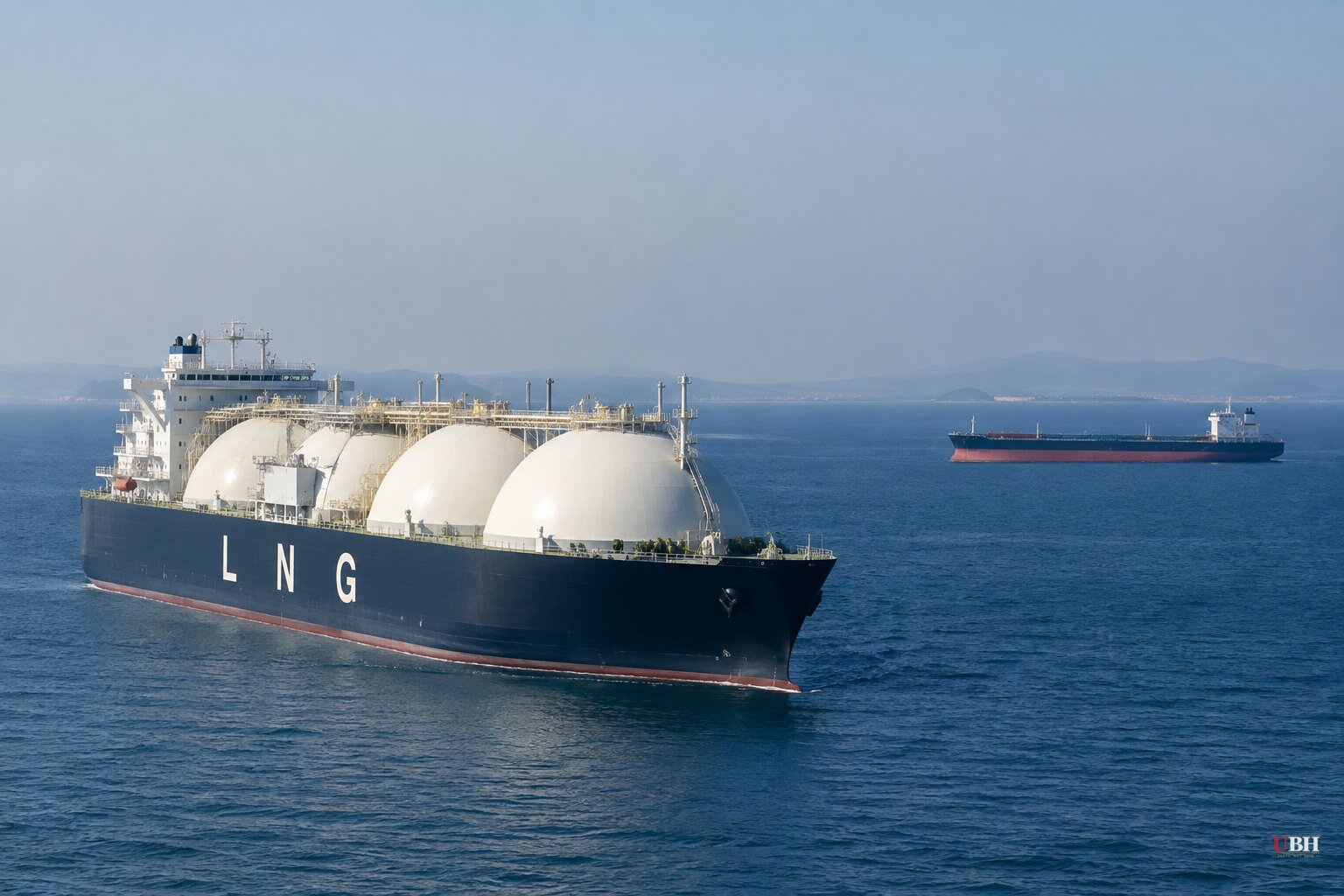
Since clashes between the U.S. and Iran escalated in February 2026 and disrupted normal Strait of Hormuz traffic, the shipping industry has stopped pretending a quick fix is coming.
Mitsui O.S.K. Lines Chairman Takeshi Hashimoto told the Gastech conference in Bangkok on September 16 that current conditions make LNG shipments through Hormuz "almost impossible." Japan's largest shipping line handles roughly 20% of the world's LNG and oil flows through that waterway, and its message to the industry is clear: stop waiting.
Hashimoto's comment builds on remarks MOL CEO Jotaro Tamura gave on September 3, when he told Bloomberg it's "difficult to see operations resuming in any form by the end of the year." Tamura said the risk "continues to be well beyond the level of risk we can accept." MOL had previously assumed a phased restart in October with normal operations by January, according to The Japan Times. That timeline now appears likely to slip, with Tamura saying it's "difficult to say by how much."
Washington's Pipeline Bet Faces Pushback
Treasury Secretary Scott Bessent has been selling a different story. He told an NBC affiliate this month that "the strait is going to become irrelevant" within two years, predicting 50% to 70% of energy products normally shipped through Hormuz would move through underground pipelines instead, according to NPR.
That's the administration's stated fix: sanction Iran's grip on the strait while regional producers build around it. It's a real plan with real money behind it. The UAE expects a $3 billion pipeline expansion to its port of Fujairah to come online next year, NPR reported.
But the International Energy Agency isn't buying the "irrelevant" framing. IEA senior oil market analyst Rebecca Schulz told NPR that even after major pipeline projects finish, more than 10 million barrels a day — about half of prewar volume — will still need to cross the strait for Gulf exports to return to normal. Energy analyst Robert McNally called Bessent's prediction "way too strong and overstated," telling NPR the strait remains "the most relevant chokepoint on the planet." Former State Department energy envoy David Goldwyn went further, saying the disruption looks like "a somewhat permanent feature for the next few years" because Iran wants to get paid for its exports and the U.S. hasn't achieved a military outcome that forces open navigation. Goldwyn added that new pipelines expected to come online in coming years will amount to only about 10 million to 12 million barrels a day, well below the roughly 20 million barrels per day that passed through the strait before the war.
Bessent's team has actual pipeline capital committed. The IEA and independent analysts are saying the math doesn't close even if every project finishes on schedule. Bessent is describing a directional shift already underway, while the IEA is describing a volume gap pipelines can't close for years.
The Money Is Already Reacting
Whatever happens to the diplomatic timeline, freight markets have already priced in a long disruption. Supertanker earnings on the Middle East-to-China route hit nearly $800,000 a day, a record, according to Bloomberg reporting carried by gCaptain. Very large crude carriers on the U.S. Gulf-to-Asia run have been chartered for lump-sum fees of $29.5 million, close to $15 a barrel before war-risk premiums, gCaptain reported. Data firm Kpler projects VLCC daily earnings will stay above $100,000 into next year, more than double the roughly $45,000 that was once historically normal. Morgan Stanley projected two-year leasing rates for VLCCs could climb another 20% to 30%.
Equinor's global head of crude trading, Alex Grant, said at the Asia Pacific Petroleum Conference in Singapore that "there's quite a few bottlenecks all at the same time." Repsol's Max Tay put it more bluntly: "I'm sort of enslaved to the freight market." HPCL-Mittal Energy's Manu Sehgal said the crude volume exists, but "what's hampering it is the transit, what's hampering it is the shipping."
Japanese refiners, who sourced more than 90% of their crude from the Middle East before the war, are drawing down strategic stockpiles and chasing barrels from the U.S. and West Africa, according to The Japan Times, which also cited Nippon Yusen CEO Takaya Soga confirming the company was in talks with refiners about importing oil from Latin America and Africa as well.
None of the pipeline capacity Bessent is counting on exists yet at scale. The question now is whether it gets built fast enough to matter before winter demand hits, or whether tanker rates near $800,000 a day become the new normal well into next year.
Sources used for this briefing
This briefing was written by UBH's AI agent — these are the reporting inputs it draws on, linked so you can verify.


