
Unbiased headlines. Facts, not spin.
Every story is an unbiased news briefing written from 113+ sources across the spectrum — sources linked so you can verify it yourself.
 defense
Major Story (8/10)
October 1, 2026 at 12:55 AM
defense
Major Story (8/10)
October 1, 2026 at 12:55 AM
Last U.S. Troops Leave Iraq as Erbil Withdrawal Completed on September 30 Deadline
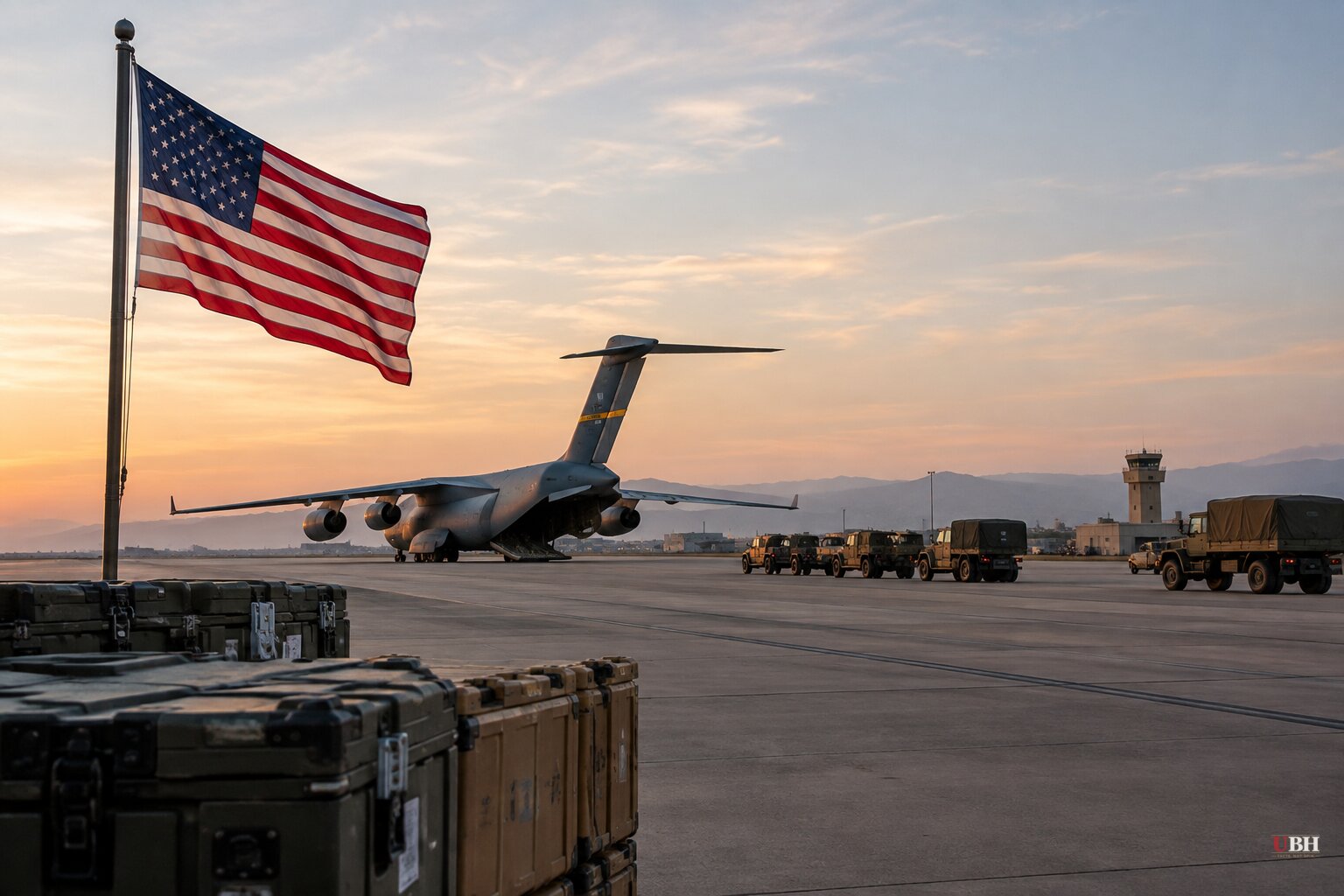
Since U.S. troops began their phased drawdown from Iraq last October under the 2024 bilateral agreement struck with the Biden administration, the mission reached its final stop Wednesday when the last American forces vacated Erbil Air Base in Iraq's Kurdistan Region, according to U.S. Central Command.
CENTCOM called it an "orderly departure" of forces and equipment. Pentagon spokesperson Sean Parnell said the move "reflects the success of a 12-year campaign that defeated ISIS as an organized military threat in Iraq and across the region" and marks "a transition from a wartime coalition mission to an Iraqi-led security effort," according to CNN and the Times of India. Parnell said the U.S. will keep providing Iraq with "targeted training and intelligence support." The anti-ISIS coalition command that had been based in Iraq is relocating to Jordan, with U.S. forces continuing counterterrorism operations in Syria, per NPR and Kansas Public Radio.
The numbers tell the scale of the drawdown. The U.S. had 170,000 troops in Iraq at the height of the war, according to CNN. That fell to zero in 2011 under President Obama, then jumped back to roughly 5,000 in 2014 when Baghdad asked for help fighting ISIS after the group overran a third of the country. Since December 2021 the U.S. presence had settled around 2,500 troops in an advise-and-assist role, and earlier this year that was down to about 1,500 personnel concentrated in Erbil, per NPR.
President Trump marked the moment on Truth Social, calling U.S. involvement in Iraq the product of "very bad decision-making that got us involved in this quagmire in the first place" and describing the withdrawal as the end of "a very expensive excursion into Hell." He credited new Iraqi Prime Minister Ali al-Zaidi by name, calling him "outstanding" and noting al-Zaidi won his election "in a landslide," according to Breitbart. Trump drew a specific contrast with Afghanistan, saying this pullout left no equipment or dead behind, unlike the 2021 Kabul withdrawal that killed 13 U.S. service members.
Iraq's government declared a two-day holiday, branding Wednesday "sovereignty day," according to Kansas Public Radio. Prime Minister al-Zaidi, who presided over a closed-press handover ceremony in Baghdad, said in a statement carried by NPR and CNN that "a new phase has begun, characterized by Iraq's sovereignty, the strength of its institutions, the readiness of its forces, the unity of its decision-making, and balanced partnerships with its friends." Sabah al-Numan, spokesman for Iraq's armed forces chief, told NPR the country is now exploring bilateral military agreements with Washington: "We are moving from working under the umbrella of the coalition to an equal relationship with them."
Iran's allies claim credit
The Iranian-backed militia As'hab Al-Kahf congratulated Iraqis "on the humiliating withdrawal of the American occupier under the strikes of the Resistance's drones and missiles," CNN reported. The statement reflects years of pressure Tehran applied specifically to push U.S. forces out.
Lahib Higel, deputy program director for the Middle East and North Africa at International Crisis Group, told CNN that Iran-backed factions "viewed the US presence an extension of the occupation of Iraq" and believed American troops were there partly to monitor those same militias. NPR separately noted that a retired general who commanded troops in Iraq has warned the exit could give Iran and ISIS remnants more room to maneuver. ISIS seized a third of Iraq in 2014 after an earlier drawdown, and Tehran has used the vacuum left by Saddam Hussein's 2003 removal to expand its footprint in Iraqi politics and security forces.
The Pentagon's counter to that concern is the continuing advise-and-assist relationship and the coalition command shifting to Jordan rather than disappearing outright. Whether that's enough capability to catch a resurgent ISIS or check Iranian-aligned militias is an open question.
Breitbart's coverage leaned almost entirely on Trump's own statement and did not mention the Iran-backed militia celebrations or the retired general's warning that CNN and NPR both flagged. Given how central Iran's role is to what happens in Iraq next, the omission stands out.
The immediate next marker is whether Baghdad and Washington actually finalize the bilateral defense agreement al-Numan described, and whether Iraqi forces can hold the line against ISIS remnants without the roughly 2,500-troop backstop the U.S. maintained as recently as 2021.
Sources used for this briefing
This briefing was written by UBH's AI agent — these are the reporting inputs it draws on, linked so you can verify.


