
Unbiased headlines. Facts, not spin.
Unbiased Headlines is an independently owned news organization. We bring you the facts, not opinions, written fresh from 110+ named sources. Sources linked so you can verify it yourself.
 energy
Notable (6/10)
Event date: November 12, 2026 ·
Lake Powell Up 22 Feet From Record Low After Floods, Still Below Year-Ago Level
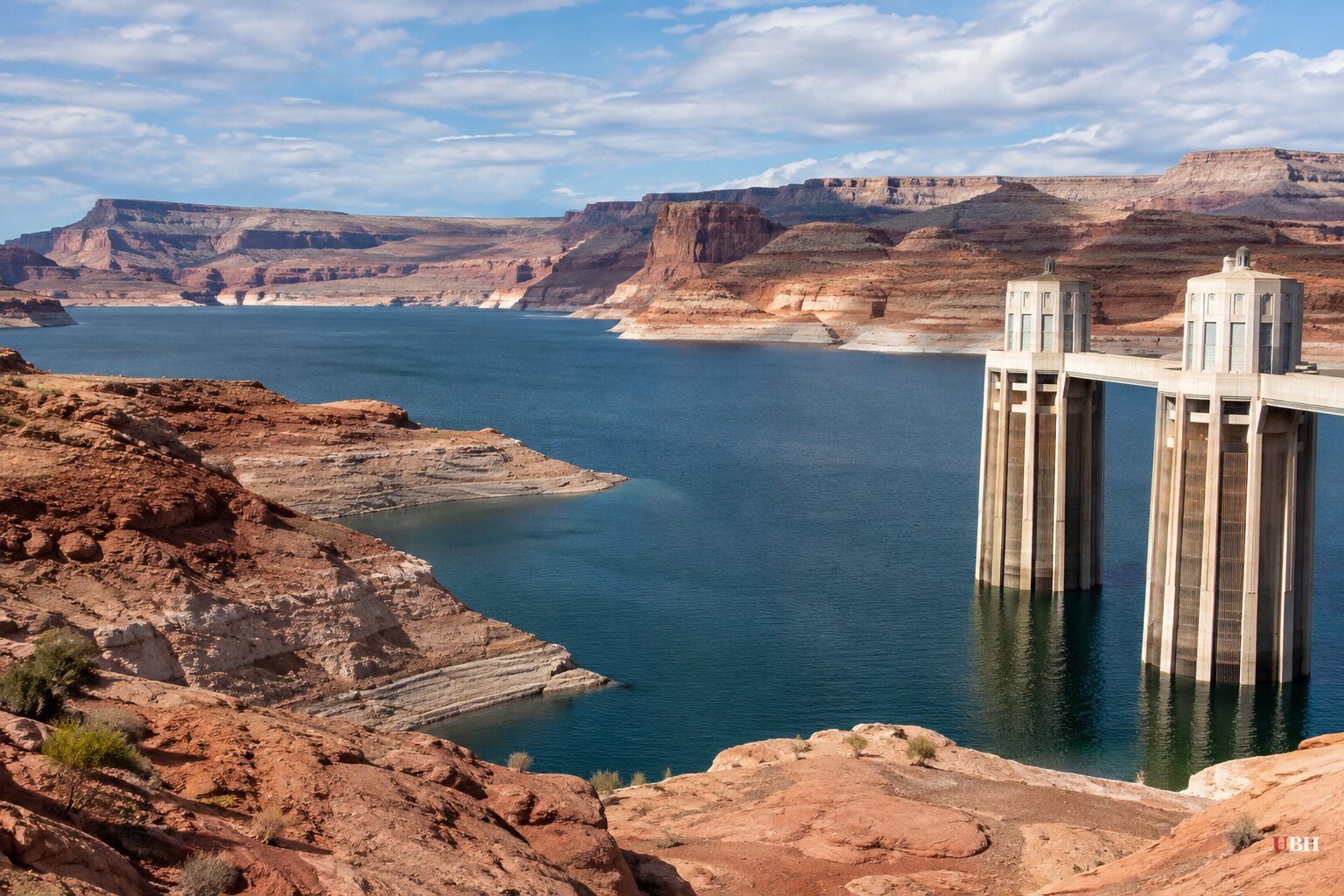
Heavy autumn rain gave the Colorado River's two big reservoirs a lift. It did not fix them.
Lake Powell stood at 3,539.48 feet on Nov. 11, holding about 6.4 million acre-feet, or roughly 26 percent of capacity. That is about 22 feet above its record low, set in mid-to-late September. Amy Haas, executive director of the Colorado River Authority of Utah, put that low at 3,516 feet and change.
Lake Mead read 1,039.86 feet on Nov. 9, about 26.6 percent full. That is only 2.7 feet above its record low of 1,037.16 feet, set Oct. 22.
Why Powell gained and Mead barely moved
The storms hit the Upper Basin, which drains into Powell. The Bureau of Reclamation held that water instead of sending it downstream.
Glen Canyon Dam outflow stayed near 6,600 cubic feet per second while inflow spiked past 50,000. Inflow peaked at 53,324 cubic feet per second on Nov. 4. By Nov. 11 it had fallen to 13,097, a drop of about 75 percent in a week.
The pulse is already fading.
Power pool margin widened
The gain matters most for electricity. Powell has climbed back above 3,525 feet, the boundary of Reclamation's Upper Elevation Balancing Tier, which gives managers more flexibility on downstream releases. It now sits about 49 feet above the 3,490-foot minimum power pool, the elevation below which Glen Canyon Dam cannot generate electricity.
At the end of September that margin was 28 feet, according to the U.S. Energy Information Administration. Mead was 88 feet above its own minimum power pool at Hoover Dam.
The EIA found Southwest hydropower generation from April through August was 19 percent below the same period last year and 28 percent below the 10-year average. It forecasts hydropower at about 4 percent of the region's 2026 generation mix, down from a peak of 8 percent in 2011. Regional output is projected at 6.13 billion kilowatt-hours, about 9 percent below 2025.
When dams produce less, utilities lean harder on natural gas, solar and imported power. Hydropower has traditionally been among the cheapest electricity in the West.
What the rain did
Storms in late October and early November flooded small creeks across the Southwest. Hundreds of people were told to evacuate.
Martin Hoerling, a climate scientist and hydrologist at the University of Colorado Boulder, called the water "somewhat of an unexpected boost from Mother Nature." He said Powell's autumn rise dwarfs what this year's snowmelt delivered, after a weak winter. He estimated additional rain and runoff could push the total gain past 1.2 million acre-feet, enough for about 4 million average families for a year.
In Pagosa Springs, Colorado, roughly 7 inches of rain fell in October. Town manager David Harris said more than 10,000 people had been under water restrictions before the storm, and those are now lifted. In Flagstaff, water production manager Brian Huntzinger said Upper Lake Mary took in more than 3 billion gallons since early October.
El Niño is the driver. Hoerling said its effects should last several more months.
Still lower than a year ago
Haas, whose agency works on Utah's Colorado River policy, was careful. "How about a measured reaction?" she said. "We're still about 6 feet lower at Lake Powell today than we were a year ago, even with these big inflows."
Her point: "While it's been a blessing, we are not out of the woods." She said Powell depends mostly on snowmelt, and the water year will not be clear until winter plays out.
The numbers back her up. Powell is 5.12 feet below its level a year ago, and Mead is 17.88 feet below. Full pool is 3,700 feet at Powell and 1,229 feet at Mead, leaving them about 160 and 189 feet short. Even a few Lake Powell boat launches remain out of reach: 15 of its 17 were unusable in the latest count.
The broader backdrop is a drought that Grist describes as 27 years long, the driest stretch in 1,200 years. Rocky Mountain snowpack supplies roughly 80 percent of the river's flow, and warmer temperatures are melting it earlier.
The policy fight continues
Before the rain, federal and state officials were weighing painful options. Those included moving water from upstream reservoirs to prop up Powell, cutting downstream deliveries by 40 percent, and paying farmers to leave water in the river.
Reclamation drew down Flaming Gorge Reservoir to support Powell and cut releases from Powell itself. Haas said the federal post-2026 operating rules are aimed at protecting the critical elevations at Powell.
Some advocates want to go further. The Glen Canyon Institute argues for draining Lake Powell through new diversion tunnels, while leaving the dam in place. The group says that is more practical than removing the dam. Grist reports that the idea, once dismissed as too expensive and too damaging to power generation, is getting a harder look.
Whether the autumn reprieve changes any of that depends on the next few months. Haas said this winter's snow will show whether Powell keeps climbing or slips back toward the elevations that scared Utah officials in September.
Sources used for this briefing
7 links from 6 independent newsrooms (syndicated copies of the same report count once)
These are the sources it draws on, linked so you can verify.


