
Unbiased headlines. Facts, not spin.
Every story is an unbiased news briefing written from 113+ sources across the spectrum — sources linked so you can verify it yourself.
 defense
Breaking / Critical (9/10)
September 28, 2026 at 03:59 PM
defense
Breaking / Critical (9/10)
September 28, 2026 at 03:59 PM
Khamenei Vows to Push US Forces Into the Arabian Sea as Hormuz Talks Resume in New York
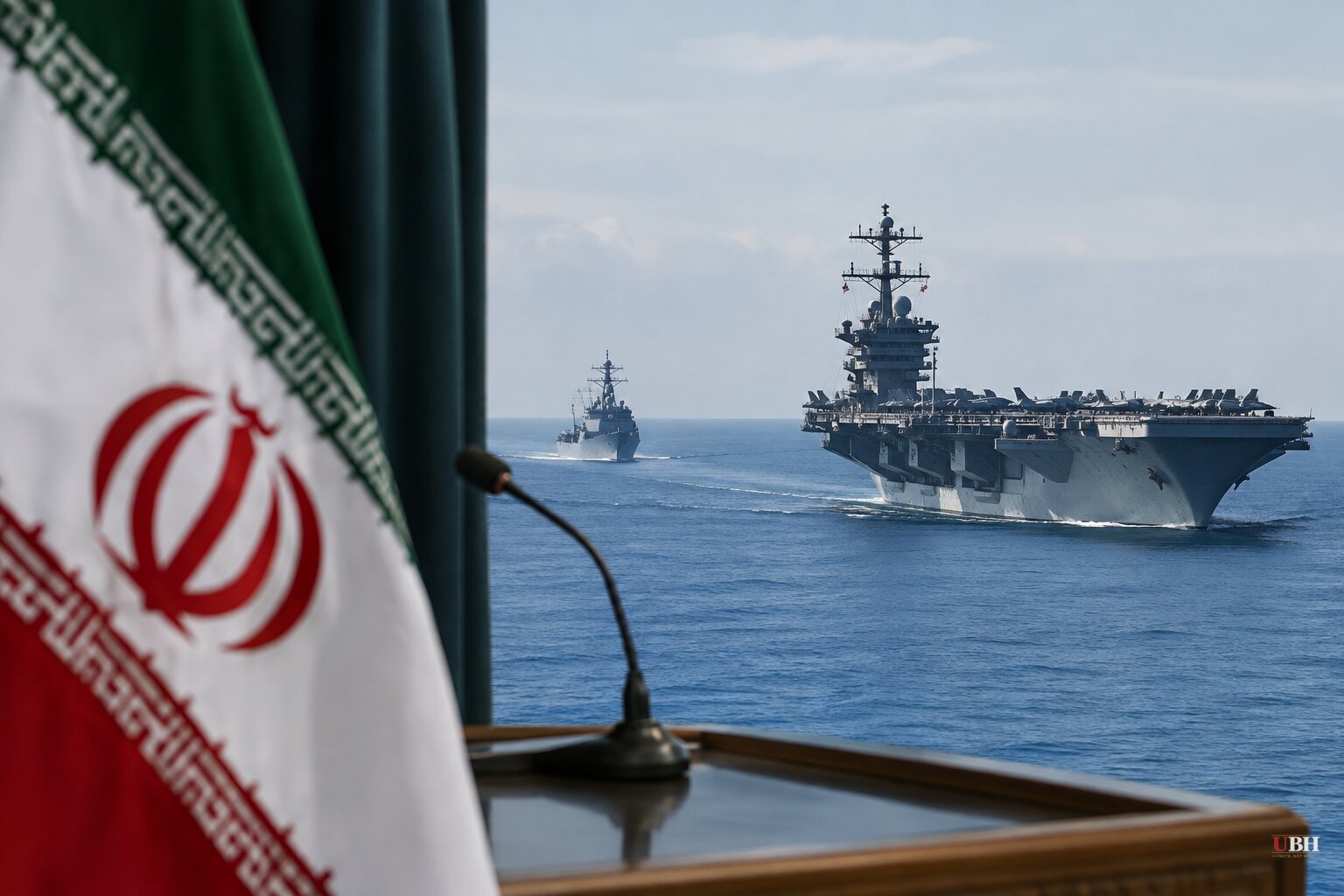
The war between the United States and Iran is entering its eighth month, and Monday brought two contradictory signals at once: fiery rhetoric from Tehran's Supreme Leader and quiet, still-alive diplomacy in New York.
Supreme Leader Ayatollah Ali Khamenei marked Sacred Defense Week, Iran's annual commemoration of the 1980-1988 Iran-Iraq War, and the second anniversary of Israel's killing of Hezbollah leader Hassan Nasrallah, with a message claiming Iranian forces had already driven American assets out of waters off southern Iran and into the Arabian Sea, according to Shafaq News. "They dare not venture beyond the Arabian Sea," Khamenei said, adding that "the time is fast approaching when the Arabian Sea, too, will be cleared of their presence."
Khamenei also claimed more than 30 million Iranians had declared willingness to sacrifice themselves for the country, and that over 500,000 renewed that pledge within the first 100 minutes of a follow-up call, per Shafaq News. He compared the current conflict to the Iran-Iraq War and what he called two more recent "imposed wars" in June 2025 and February 2026.
None of that is independently verifiable. It's a regime talking to its own public on a solemn national holiday, and regimes exaggerate on solemn national holidays. Take it for what it is: propaganda with a political purpose, not a battlefield report.
While Khamenei was talking tough, his own foreign minister was doing the opposite. Abbas Araghchi stayed behind in New York after last week's UN General Assembly session specifically to meet with Qatari mediators Monday morning, according to Iran's semi-official ISNA news agency as reported by CBS News. No U.S. officials were set to attend that meeting.
This follows President Trump's weekend rejection of Iran's latest proposal, a seven-day plan to reopen the Strait of Hormuz in exchange for the U.S. lifting its naval blockade of Iranian ports, releasing frozen Iranian assets and waiving oil sanctions. Trump called it "unacceptable," telling reporters Iran "overplayed their hand" and that the offer resembled something Washington "would have maybe agreed to a year ago," according to CNN.
But behind-the-scenes mediation never stopped despite Trump's public rejection. Four officials, including a senior U.S. official, told the Associated Press (via the Los Angeles Times and Arab News Japan) this much. Two officials said the U.S. has not formally rejected the current proposal at all, and that Trump's comments may have been a negotiating tactic rather than a final answer.
The draft being discussed would reopen the strait under terms Iran has separately been negotiating with Oman, with no transit tolls, something Tehran has pushed for throughout. It would lift the U.S. blockade first, then work toward removing sanctions. A third official told the AP the sticking point is nuclear inspections: Washington wants Iran to let inspectors back in, consistent with the June memorandum of understanding that collapsed within days of being signed.
Iran's position isn't unreasonable. Araghchi has said Tehran's demands are "nothing more" than what was already in that June memorandum, and a country whose ports are blockaded and whose assets are frozen asking for those things back before restarting inspections isn't a crazy ask. The real dispute is sequencing and speed, not the substance.
But U.S. Ambassador to the UN Mike Waltz laid out Washington's core objection on CNN's "State of the Union" and NBC's "Meet the Press": Iran is "asking for everything up front" while only promising to talk later, which Waltz called "a pretty cynical attempt to put something on the table that they knew was unacceptable." He also raised a legitimate structural problem: Washington doesn't know who actually speaks for Khamenei. "Who's calling the shots in Iran right now? Is it the IRGC? Is it the president? Is it the foreign minister?" Waltz asked. That's a fair question when the Supreme Leader hasn't been seen publicly since the war's start, and Tehran's negotiators keep shifting.
Separately, oil exports out of the Persian Gulf and Gulf of Oman have been climbing over the past week even as Iranian officials threaten renewed strikes on shipping, according to ZeroHedge. That's the tension in one sentence: trade is quietly resuming while both governments talk like the war is about to widen.
In London, Metropolitan Police Assistant Commissioner Laurence Taylor confirmed five British men arrested over the weekend near an RAF base used to launch U.S. strikes on Iran were released on bail following "extensive interviews," with the investigation ongoing and the men still under movement restrictions, CBS News reported. British authorities are examining a possible Iran link, though no charges have been filed and no connection has been established publicly.
Mediators were expected to hold separate sessions with each side Monday or Tuesday focused on an amended version of the seven-day proposal Iran floated at the UN. Whether that produces anything more than another round of "positive signals" and "slight progress," the language multiple anonymous officials used with the AP, is the open question heading into this week.
Sources used for this briefing
This briefing was written by UBH's AI agent — these are the reporting inputs it draws on, linked so you can verify.


