
Unbiased headlines. Facts, not spin.
Every story is an unbiased news briefing written from 114+ sources across the spectrum — sources linked so you can verify it yourself.
 economy
Major Story (8/10)
Event date: September 29, 2026
economy
Major Story (8/10)
Event date: September 29, 2026
Iran's Rial Hits Record Low as Global Oil Stockpiles Shrink by 2 Billion Barrels Since War Began
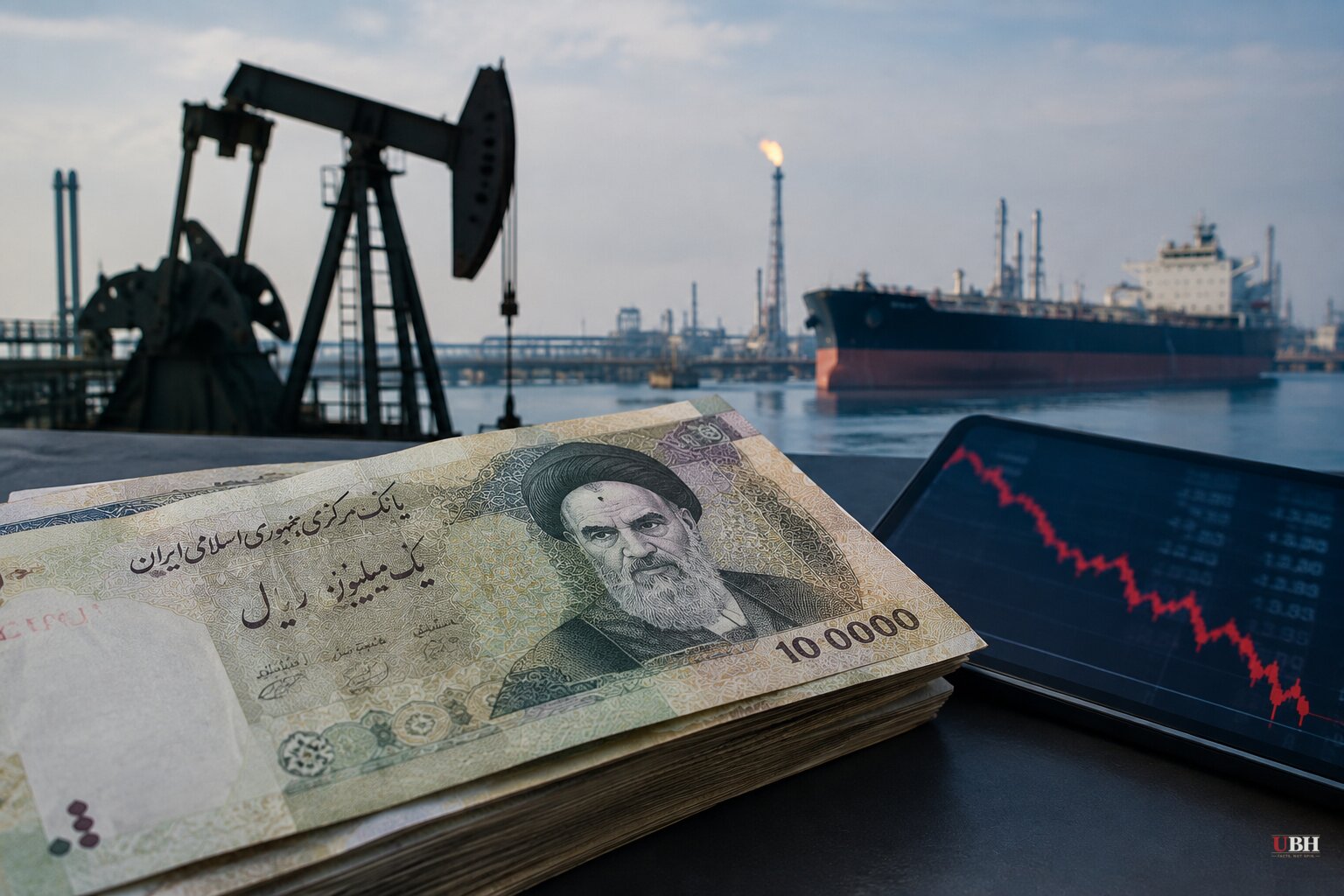
Iran's rial fell to its weakest level on record on Tuesday, Sept. 29, with traders in Tehran exchanging more than 2.5 million rials for a single U.S. dollar, according to the Associated Press, carried by PBS and Arab News. That's down from the previous record of 2.2 million rials to the dollar set just 27 days earlier, on Sept. 2.
The collapse tracks directly with Washington's economic pressure campaign. Treasury Secretary Scott Bessent said Tuesday that U.S. sanctions and a naval blockade have crippled Tehran's oil trade, pointing to the resignation of Iran's oil minister, Mohsen Paknejad, as evidence. "Iran has not loaded a single barrel of crude onto a vessel since Aug. 25," Bessent wrote on X, asking "what is the oil minister managing?" The administration calls this push "Operation Economic Outcast" — an effort to drive Iranian crude exports and revenue to zero, according to Fox News.
The Strait Is Still Moving Oil, For Now
Despite the pressure, Gulf producers are still getting crude to market. Oil and petroleum flows through the Strait of Hormuz averaged 13.1 million barrels per day last week, according to Kpler, a marine tracking service cited by CNN. That's about 80% of the 17.1 million barrels per day that moved through the strait before the war began in February. Total Middle Eastern crude flows, through Hormuz and around it, are back to 98% of prewar levels, according to JPMorgan.
Matt Smith, Kpler's director of commodity research, told CNN that volume shows "Iran is losing its influence" over the chokepoint. The flows are being sustained through military-escorted tanker shuttles, undisclosed "dark" transits, and rerouted Saudi exports that had been diverted to the Red Sea after Houthi attacks on a Saudi pipeline.
JPMorgan says global oil inventories have still dropped by roughly 2 billion barrels since the war started. Natasha Kaneva, the bank's head of global commodities strategy, told clients two weeks ago, "For the first time since the start of the Iran conflict, we don't have a baseline view. We simply don't know how to model this." That's an unusual admission from a bank whose entire business is modeling oil markets.
Tanker Rates Are Exploding
The physical strain shows up most clearly in shipping costs. Tom Baker, Vitol's managing director in Bahrain, told an industry forum in Fujairah, UAE, that the global tanker fleet is operating at full capacity because oil now has to travel longer, more circuitous routes. Spot earnings for very large crude carriers were approaching $642,000 per day at the end of September, according to Clarksons Research, cited by ua.news.
Baker also said Middle Eastern refining capacity is recovering from war-related shutdowns, but about 2 million barrels per day of Russian refining capacity remains offline, and Chinese refining volumes have also declined. S&P Global Energy forecast average Middle East refining throughput this year at about 8 million barrels per day, 1.6 million below 2025, tightening gasoline, diesel and jet fuel supplies.
The Gulf of America Storm and the Energy Crisis Argument
Adding to the squeeze, Fox News reported forecasters expected a developing weather system in the Gulf of America to intensify into the first Atlantic hurricane of the season within 48 hours, on a track threatening offshore installations responsible for 15% of U.S. crude production and 5% of natural gas output. Brent crude was trading near $101.51 a barrel and U.S. WTI near $90.25 as that storm warning circulated.
Some conservative commentators argue this adds up to something bigger than a temporary price spike. Daily Wire's opinion coverage warns that fuel infrastructure, like pipelines and refineries, requires a minimum operating "floor" of throughput to function without physical damage, and that the system is approaching that floor. Pipelines can lose pressure and refineries can be forced into emergency shutdowns if throughput drops too low for too long. Whether the current strain is actually close to that threshold is a claim the piece attributes to an unnamed White House official, not to any named analyst or published model, so it should be read as a warning, not a confirmed forecast.
Negotiations Continue, Slowly
Diplomacy hasn't stalled. Iranian Foreign Minister Abbas Araghchi said indirect talks aimed at reopening the Strait of Hormuz have become "more serious," with Qatari mediators expected to re-engage Washington soon, according to the AP. Trump rejected an earlier Iranian proposal to reopen the strait within seven days in exchange for lifting the U.S. blockade, releasing frozen Iranian assets, and waiving oil sanctions.
Vice President JD Vance told Reuters any deal requires Iran to actually reduce its enrichment capacity rather than promise future drawdowns. "If you don't want a nuclear weapon, then why do you need 60% enriched fuel?" Vance said, adding that Washington remains uncertain "how their country makes decisions."
Meanwhile, IRGC spokesman Gen. Hossein Mohebbi called on ordinary Americans to protest the war, a message the AP notes arrived weeks ahead of the U.S. midterm elections. Whether that appeal shifts any domestic political pressure, or whether Qatari mediation produces an actual Hormuz deal, remains to be seen. JPMorgan's own commodities team says it can't yet model the answer.
Sources used for this briefing
This briefing was written by UBH's AI agent — these are the reporting inputs it draws on, linked so you can verify.


