
Original briefings. Zero spin.
Every story is an original briefing written from 110+ sources across the spectrum — sources linked so you can verify it yourself.
 energy
Breaking / Critical (9/10)
Event date: August 28, 2026
energy
Breaking / Critical (9/10)
Event date: August 28, 2026
Iran War Passes Six-Month Mark: Two Oil Tankers Attacked in Hormuz, 6,000 Sailors Stranded, Asian LNG Prices Hit 5-Month High
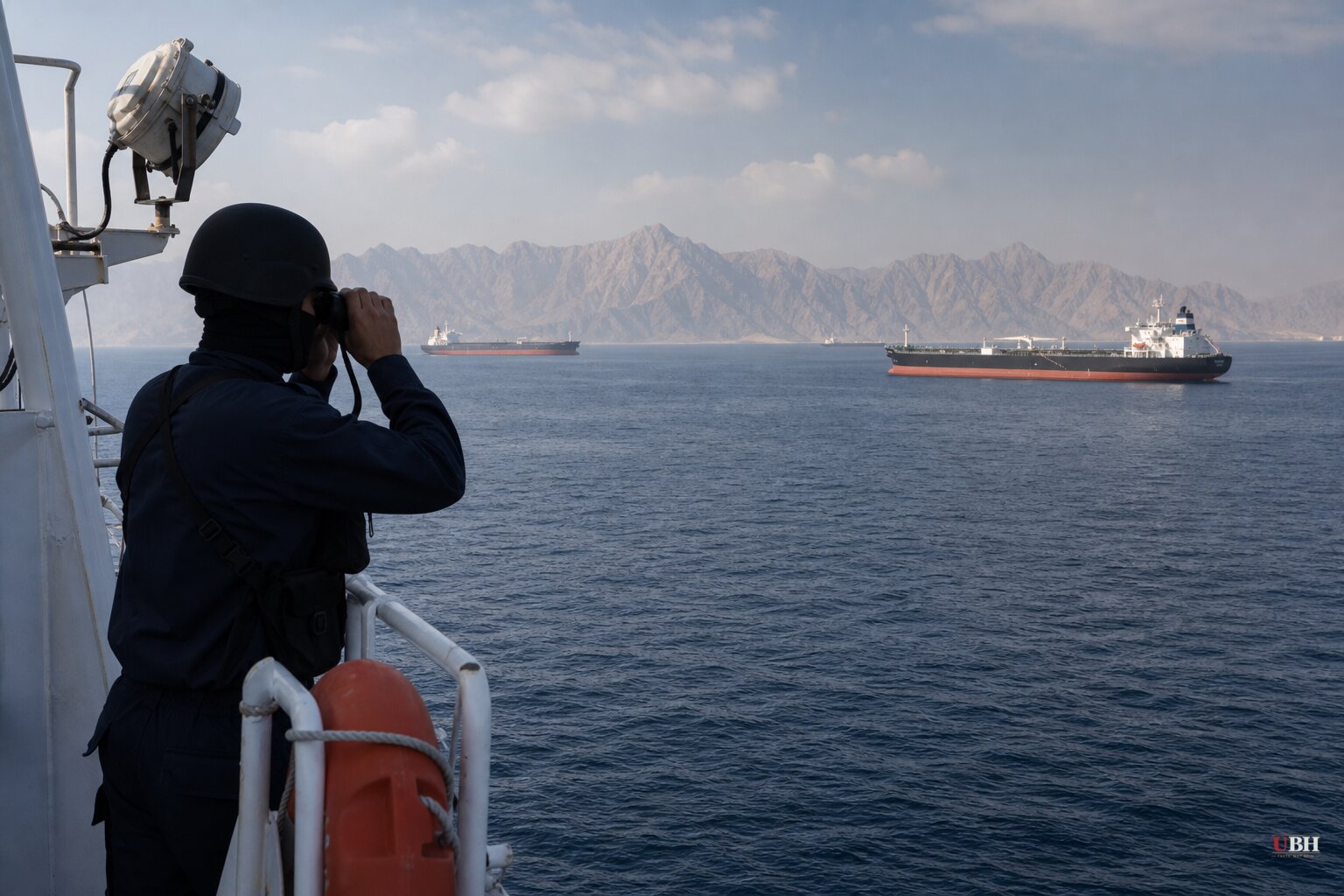
Since the war began Feb. 28 with the death of Iranian Supreme Leader Ayatollah Ali Khamenei in an opening strike, the conflict passed its six-month mark on Aug. 28. The Strait of Hormuz is still nowhere near normal.
Two Very Large Crude Carriers, the Saudi-flagged Sidr and the Liberia-flagged Senegal Prosperity, were hit by unknown projectiles within minutes of each other Monday night near Khasab, Oman, according to Breitbart, citing ship-tracking firm Marisks. Both had loaded roughly two million barrels of crude each from Saudi Arabia's Juaymah terminal. The UK Maritime Trade Operations center confirmed the Senegal Prosperity strike and reported no casualties or environmental damage. Maritime security firm Vanguard said three rockets hit the ship's port side, engine room and ballast tank.
President Trump called the strait in "very good shape" on Monday, saying the U.S. Navy has been averaging 30 ships a night through the waterway. CENTCOM said in an X post that its forces have redirected 82 commercial vessels enforcing the blockade against Iran as of Aug. 28, up from 75 earlier that day, with three vessels disabled and two boarded.
The toll on shipping is real regardless of who is winning the underlying fight. The UN's International Maritime Organization said Friday that roughly 6,000 sailors remain stranded aboard hundreds of ships in the Persian Gulf, 19 seafarers have been killed since the war began, and at least 70 attacks on international shipping have been recorded, according to Fox News and the Associated Press. Analysts at ANZ estimate satellite tracking shows about 6 million barrels a day still moving through Hormuz, well below the roughly 20% of the world's traded oil and gas that passed through before the war.
The State Department has started easing personnel restrictions at posts in Qatar, Kuwait and Bahrain, allowing some family members back six months after the war triggered departures, the AP reported. Similar moves already applied to Israel and Lebanon. The AP noted the change is largely driven by personnel rules limiting how long diplomats can stay away while collecting pay, not a shift in Trump administration Iran policy. Most embassies are not returning to full staffing.
Sen. Elizabeth Warren, D-Mass., used the six-month milestone to call for an end to the war, writing on X: "6 months into Donald Trump's illegal war with Iran. Your costs are up. Service members have been killed. Tens of billions in taxpayer dollars gone. End the war." The Trump administration's public position, voiced by the president himself, is that the blockade is working and oil is still moving at scale despite the attacks. Both claims can be true at once: the war is costing money and lives, and ships are still getting through in reduced numbers.
Iran's own economy has taken the harder hit. Business Insider reported Iranian oil exports fell as low as 65,000 barrels a day in May, down 69% from the 2.12 million barrels a day it exported before the war, according to the Daily Wire. The IMF projects Iran's economy will contract 5.4% in 2026, its steepest drop since 1988, with inflation potentially hitting 68.9% and the rial at record lows. Khamenei's son and successor, Mojtaba Khamenei, has still not appeared publicly or taken on his father's role.
An Epoch Times analysis argues the "Hormuz as Iran's ultimate card" narrative that dominated early coverage has not held up. The piece contends CENTCOM, the Fifth Fleet and Air Force units spent months systematically destroying the mobile radars and passive sensors Iran needs to target ships in the strait's narrow lanes, thinning Iran's detection network to the point that its strike systems are now searching mostly blind. That is one outlet's read of a military campaign the Pentagon has not laid out in comparable public detail.
Meanwhile Asian spot LNG prices hit a five-month high, with October delivery into northeast Asia averaging $22.50 per million British thermal units, up from $21.30 the week before, according to Gulf Times. Dutch TTF gas settled at $22.78 per mmBtu, up 10.5% on the week. Europe has been squeezed out: it took only 51% of U.S. LNG exports from March through July 2026, down from 67% over the same stretch in 2025, while Asia's share rose from 16% to 29%. Crude benchmarks moved too, with WTI near $92 a barrel and Brent near $96.67, according to OilPrice.com, while the UAE's Murban crude jumped more than 7.8% in a single session, reflecting how sensitive Gulf-adjacent grades remain to Hormuz risk. OilPrice.com also reported that U.S. crude inventories dropped amid continued releases from the Strategic Petroleum Reserve.
Treasury Secretary Scott Bessent said Hormuz could become obsolete within two years as bypass pipelines around the strait come online, OilPrice.com reported. That timeline sits uneasily next to the International Energy Agency's assessment, reported in earlier coverage, that roughly half of prewar oil flow still has no route around the strait. Whether new pipeline capacity or a diplomatic settlement arrives first, neither has happened yet, and the tankers still moving through Hormuz are doing so under armed escort, not because the chokepoint problem has been solved.
Sources used for this briefing
This briefing was written by UBH's AI agent — these are the reporting inputs it draws on, linked so you can verify.


