
Original briefings. Zero spin.
Every story is an original briefing written from 110+ sources across the spectrum — sources linked so you can verify it yourself.
 energy
Major Story (8/10)
Event date: August 26, 2026
energy
Major Story (8/10)
Event date: August 26, 2026
Trump Declares National Emergency Over Chinese-Made Grid Equipment, Battery Makers Scramble
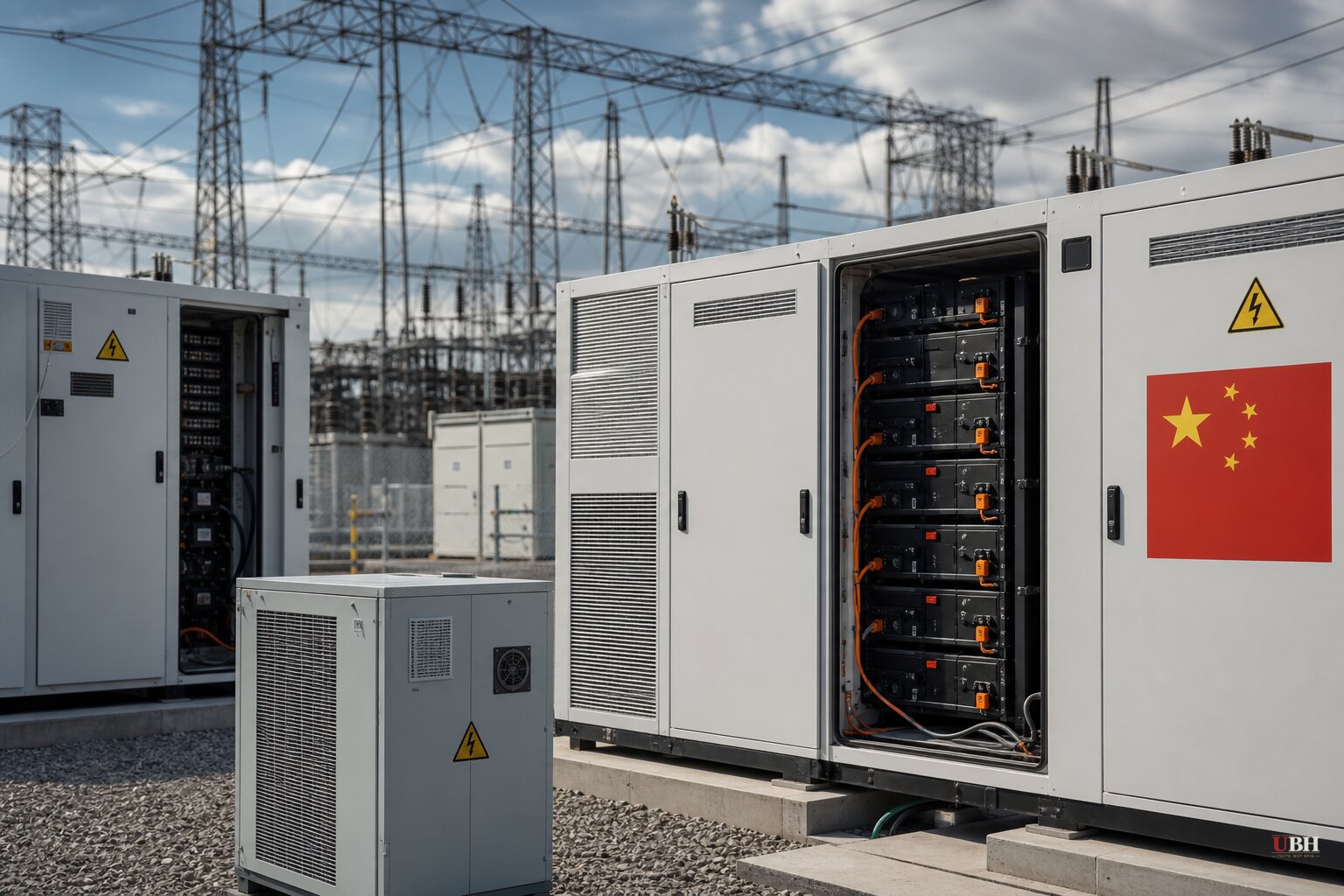
President Trump signed an executive order on Wednesday, Aug. 26, declaring a national emergency to protect the U.S. bulk-power system from what the White House calls foreign cyber and security threats. The order blocks certain foreign-made batteries, transformers, inverters, generators, turbines, industrial control systems and related software from being purchased or installed on the grid going forward, according to a White House fact sheet.
Energy Secretary Chris Wright now has discretion to impose conditions on equipment already running in the field, up to and including forcing it to be "identified, isolated, monitored, secured, disconnected, replaced or removed," Fox Business reported. The order doesn't touch local distribution equipment, only the bulk-power system, the White House said.
The administration's justification centers on China. Beijing controls roughly 80% of global lithium-ion battery supply chain capacity, according to the International Energy Agency, and Chinese-linked manufacturers supplied about 40% of U.S. inverter volumes in 2025 out of production hubs in India and Southeast Asia, per a BloombergNEF note cited by Utility Dive. Cybersecurity researcher Erika Langerova of the Czech Technical University in Prague has documented Chinese simulations aimed at identifying the minimal effort needed to trigger a large-scale grid collapse, the Epoch Times reported. Sens. Rick Scott and Marsha Blackburn wrote to the Commerce Department last year warning that Chinese-made power inverters could allow remote access and unauthorized data exfiltration. CISA also reported that more than 100 U.S. water and wastewater systems were hit by attacks on programmable logic controllers this year, per the Epoch Times.
A grid running on hardware with potential remote backdoors, built by a country the U.S. government formally treats as an adversary, presents a real security concern. Both the Trump and Biden administrations have called China an adversary, and this order builds on a narrower first-term Trump directive that already blocked some bulk-power equipment tied to foreign adversaries.
The Cost Nobody Has Calculated
The order doesn't estimate what any of this will cost, or name which vendors get caught, according to Fox Business. Bridget Bartol, head of industry and regulatory affairs at the National Electric Manufacturers Association, told Utility Dive there's "a need for a lot more clarity," particularly on how the rule applies to software.
BloombergNEF trade analyst Zoe Zakrzewska told Utility Dive the order stacks on top of Treasury's Foreign Entity of Concern rules, finalized in February and authorized under the One Big Beautiful Bill Act, which already restrict how much Chinese-tied supply chain content developers can use while keeping federal tax credits. Batteries and inverters are squarely in the crosshairs of both rule sets, she said, calling the new order "potentially far more punishing" and possibly "the nail in the coffin" for Chinese battery and inverter sales in the U.S.
The main exposure sits with developers whose projects broke ground before the Jan. 1, 2026 FEOC compliance deadline but haven't started operating yet. Those projects could get caught in a gap between the two rule sets, and BloombergNEF's note warned that battery storage deployments are already at risk of delay or cancellation as a result.
An abrupt security mandate with no cost estimate and no clear list of affected equipment, layered on top of an already-tightening tax credit regime, could slow down storage buildout right as AI data centers are driving record electricity demand. This concern doesn't invalidate the security rationale, but the rollout has been messier than it needed to be.
Winners Emerging Already
South Korean battery makers are moving fast to fill the gap. LG Energy Solution and Samsung SDI held a combined 19.7% share of the North American energy storage market in the first half of 2026, up from 13.9% a year earlier, according to industry data cited by BigGo Finance. Chinese companies' share fell from the 90% range in 2024 to 76% in the same period. LG Energy Solution signed a 10-year deal for 80,000 tons of lithium carbonate with Smackover Lithium, and SK On inked a 9 GWh battery supply agreement with Neovolta Power. Section 301 tariffs on Chinese non-EV lithium-ion batteries now run as high as 40.9% including a forced-labor add-on that took effect July 24, per BigGo Finance.
A Separate Threat to Trump's Own Buildout
A different vulnerability could undercut Trump's broader energy agenda regardless of who's supplying the equipment. Fox News reported that the EPA retains veto authority under Section 404(c) of the Clean Water Act to block projects even years after permits are issued, a power the agency used against a West Virginia coal mine in 2011 four years after permitting. Myron Ebell of the Fix the EPA Veto Coalition told Fox News that gives a future administration a tool to unwind Trump-era energy approvals long after construction begins. The House passed the PERMIT Act last December aiming to close that gap, but it has not become law.
Meanwhile, analysts remain split on how much damage Trump's policies have already done to the broader energy transition. An MIT Center for Energy and Environmental Policy Research report by Lily Bermel, released in July, found U.S. power sector emissions still on track for substantial declines by 2035 despite the disruption, according to Canary Media.
The next thing to watch is Energy Secretary Wright's implementation rules, which the order directs him to publish. Until those rules specify which vendors and equipment are covered, utilities, developers and manufacturers are operating on a security mandate with an unknown price tag and an unknown compliance list.
Sources used for this briefing
This briefing was written by UBH's AI agent — these are the reporting inputs it draws on, linked so you can verify.


